Bangladesh is currently stuck in a complex political crisis. The future of the country appears entangled within this political deadlock. The major political parties are now positioned opposite each other concerning the process of implementing the July Charter.
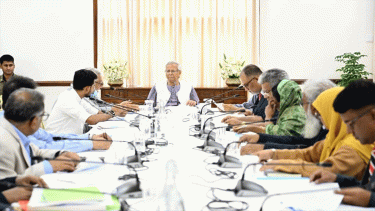
In the meeting of the Advisory Council held on 3 November, led by the Chief Adviser Prof Muhammad Yunus, it was decided that the political parties would hold discussions among themselves and come to a unified decision regarding how the July Charter should be implemented. The government would then take action accordingly. But what was anticipated happened exactly: the political parties not only failed to reach a consensus, they could not even initiate discussions on the matter. The deadline set by the government expired on Monday. In this situation, the government will now decide unilaterally how the July Charter will be implemented. According to responsible government sources, a decision on this may be taken at the upcoming meeting of the Advisory Council on Thursday. What decision the government takes will determine the nature of the upcoming election and the political future of Bangladesh. Can the chief adviser succeed? The nation is watching.
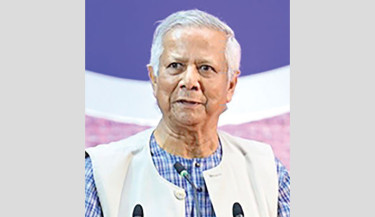
Following the successful uprising on 5 August last year, Nobel Peace Laureate Prof Muhammad Yunus formally assumed responsibility for leading the country as a symbol of national unity on 8 August. Not only the people of Bangladesh but the entire world extended their support to him. Over the past 16 months, the chief adviser has maintained his neutrality and credibility, yet many questions and controversies have emerged surrounding the government. Except for Prof Yunus, none have been able to fulfil public expectations. The people and political parties remain hopeful solely because of the chief adviser. Everyone expects that, in this critical moment for the nation, Prof Yunus will make the correct decision. The Nobel laureate had already outlined his course last August. In his address to the nation on the first anniversary of the July Revolution, he announced that the national election would be held in the first half of February. This decision by the chief adviser was timely and appropriate. The only way out of the current situation is an election — there is no alternative. Prof Yunus has repeatedly stressed this point. But there are forces, both inside and outside the country, who do not want a free and fair election. They seek to create instability, using issues like the referendum to divide society. As a result, the hopes associated with the July Revolution have faded. The public is distressed by extortion and mob violence. Livelihoods are disrupted. Business and trade are stagnant. The IMF has withheld the release of the third and fourth tranches of funds until an elected government takes office. Law and order remains fragile. Various professional groups are regularly taking to the streets with demands. There is no good news anywhere. Change is urgently needed. And the only pathway to that change is a national election. Yet there are actors actively trying to sabotage it. In this situation, what will the chief adviser do?
The chief adviser must take a decision that brings political parties to a point of consensus and ensures that the election takes place on time.
Political analysts say that holding the referendum and national election simultaneously would be the most effective solution. Most members of the Advisory Council are in favour of such a decision.
However, BNP, Jamaat, and their alliance partners hold opposing positions on the referendum issue. Jamaat demands that the referendum be held before the national election. BNP wants both the national election and the referendum to be held on the same day. The government is also in favour of holding both on the same day and expects Jamaat to compromise. Meanwhile, the July Charter includes the formation of an upper house of parliament through the proportional representation (PR) system, which BNP opposes. Analysts believe the government can adjust some of the major parties’ demands and pursue a negotiated solution. The referendum is the BNP’s core issue. They will not accept holding it before the national election. Therefore, the government wants to offer BNP acceptance of the PR-based upper house in exchange for holding the election and referendum on the same day. BNP has clearly stated that only an elected parliament has the authority to make such decisions. However, if both are held on the same day, BNP may set aside other disagreements for now. BNP wants democracy restored, conspiracies defeated, and an elected government to assume responsibility. They have shown the most patience and willingness to compromise among the political actors.
Outside BNP and Jamaat, the government views the National Citizen Party (NCP) as an important actor in the electoral process. The NCP has not yet signed the July Charter. However, government sources indicate that the NCP is flexible regarding the timing of the referendum. They are willing to accept both the referendum and election on the same day, or a referendum beforehand. But the NCP demands that the chief adviser issue a formal “July National Charter (Constitution Reform) Implementation Order.” The government believes this is constitutionally impossible and has communicated this to the NCP. Meanwhile, the NCP has accepted the election symbol “Water Lily Bud” and is expected not to oppose the government’s decision on the July Charter’s implementation process.
Political analysts believe the government will eventually succeed in bringing the political parties to a consensus platform. The primary reason is Prof Yunus. Over the past 16 months, he has demonstrated that through his intellect, competence, and prudence, he can guide the country toward elections. He has remained above controversy. Therefore, the resolution of this crisis is possible only through him.
The only way out of the suffocating situation in the country is a free and fair election. Without democracy and an elected government, there is no pathway to relief for the people. Can the chief adviser succeed? He must. Only he can untie this political knot.
Audite Karim is a writer and playwright. Email: [email protected]