
 For all latest news, follow the Daily Sun's Google News channel.


Is death at border a mere number for trigger-happy BSF?
Rajib Kanti Roy, Dhaka
Published: 05 Sep 2024, 10:32 AM
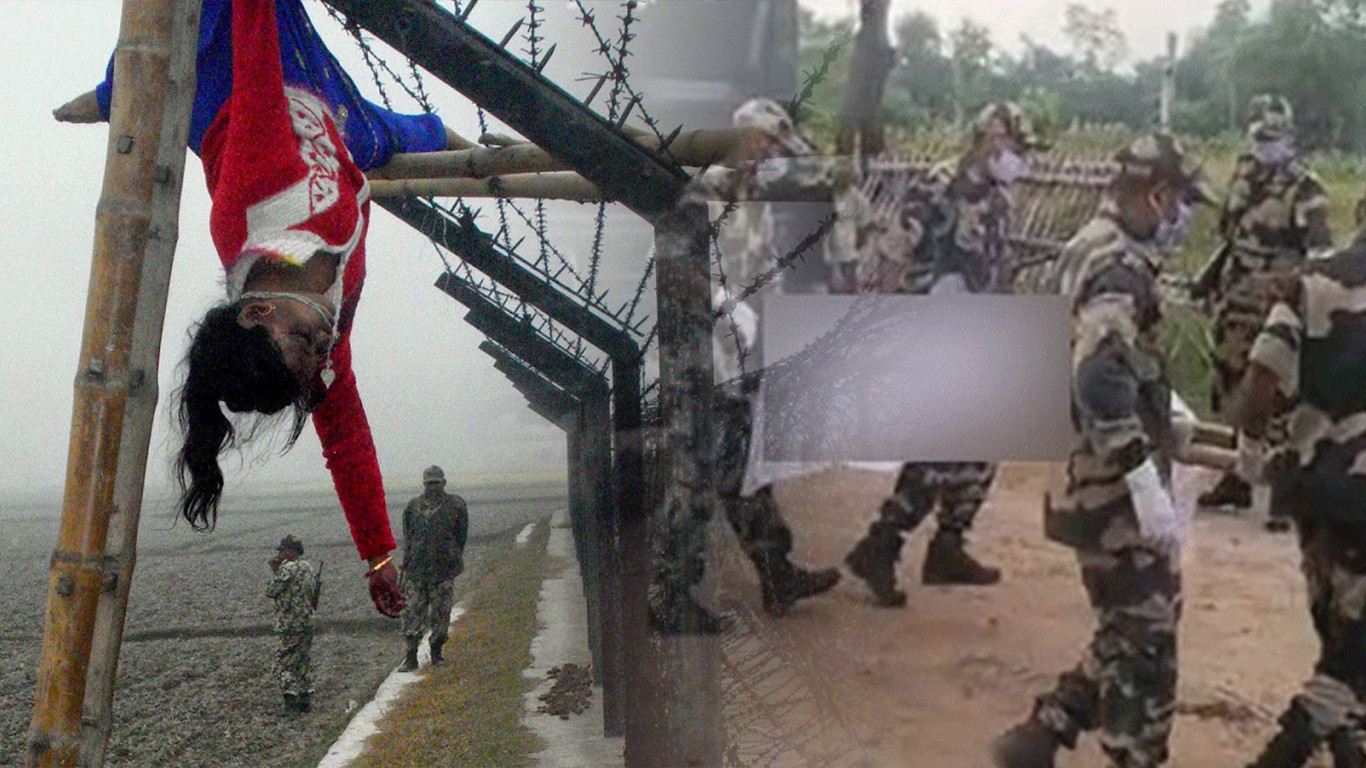
Photo: Collected
When I think of the Border Security Force (BSF) of India, the image first comes to my mind is Felani Khatun’s lifeless body hanging on the barbed wire along the Bangladesh-India border. I am sure that numerous sensitive citizens of both the countries recall the same picture which unfortunately has turned decisive in defining the relations between the two South Asian nations after the fourteen-year old Bangladeshi girl was shot dead by mindless BSF members on 7 January 2011 when she was trying to cross the fence through a ladder set by a dalal (broker) on the Anantapur border under Phulbari upazila in Kurigram to reach her country from India along with her father.
Since then much water has flown through the Ganges and Padma but Felani’s family has not been served justice. Amiya Ghosh, the BSF member who allegedly killed the teenager, faced trial first in BSF court and then in Indian Supreme Court but was acquitted on both occasions.
Civil society members, security experts and rights activists have spent much word about such unnecessary killings in border areas. In reply, BSF repeatedly assured of decreasing use of lethal weapons to reduce fatalities but they never remained true to their words.
Another fourteen-year Bangladeshi girl was killed last Sunday bringing the most recent incident of border atrocity by BSF to the forefront. Swarna Das, the victim, was fatally shot by BSF personnel as she, her mother and a few others attempted to cross into India near the Lalarchak border area of Sharifpur union in Kulaura upazila on the fateful night.
The psyche of BSF members has witnessed no change between the killings of Felani and Swarna. Numerous Bangladeshis have lost their lives in BSF shooting in the last thirteen years with no sincere efforts visible to curb the number.
According to legal aid and human rights organisation Ain o Salish Kendra, at least 13 Bangladeshis were killed by BSF on the border areas in the first six months of this year. The number was 18, 23 and 31 in 2021, 2022 and 2023, respectively. The rights organisation also estimated that earlier in a period of 11 years from 2009 to 2020 some 522 Bangladeshis died in firing or torture by BSF.
Addressing a joint press conference, following a DG-level conference between BSF and Border Guard Bangladesh (BGB) in Dhaka on 21 July 2022, the then Director General of BSF Pankaj Kumar Singh termed all Bangladeshis killed at Indian border as “criminals”.
He said all those killed were involved in various crimes, including drug trade and cattle smuggling, and every shooting incident happened at night and when BSF personnel came under attack.
But how can an unarmed teenager Felani whose clothes got stuck in barbed wire or a girl Swarna Das trying to cross the border holding her mother’s hand be a threat to the armed BSF!
In an interview, Kirity Roy, secretary of Banglar Manabadhikar Suraksha Mancha (MASUM), a rights organisation based in West Bengal, said that they have evidence that in several cases the BSF’s self-defence claim was fictitious. He also questioned the BSF’s role in preventing smuggling.
“They say cows are smuggled across the border. Smugglers are killed. It seems as if cows are born at the border and smuggled into Bangladesh. In fact, all these cows are brought from Haryana, Punjab, two and a half thousand kilometers away in India. The cows are brought on foot, by truck-train. Then no one sees and tries to prevent smuggling as BSF enjoys share. When they don’t get the expected amount of share, they kill,” he said.
The 4,096 kilometer Bangladesh and India border is heavily populated and complicated as well. There are places where the bedroom of a house is located inside the Bangladesh territory while the kitchen is on the Indian side. People of both countries often try to tress-pass the territory of the other country as they have relatives and acquaintances on the other side with whom they are connected for different reasons.
Besides, there are illegal cross-border activities, such as cattle-rustling, and trafficking in persons and narcotics issues. All these can easily be resolved through coordinated efforts of border management forces of both the countries. But having claimed each other as friends for a long time, such cases of regular shooting of citizens of a particular country by one of the security forces of a country at the border cannot be found anywhere else in the world except the Bangladesh-India border.
In 2010, Human Rights Watch (HRW) published a report, “Trigger Happy” where the international human rights organisation focused on the trigger happy attitude of the BSF and the Indian government’s reluctance in instructing them to work according to the laws.
“Because of the near total absence of effective accountability mechanisms for abuses carried out by members of the BSF, even the most serious abuses by border guards go unpunished. This sends a clear message that the Indian government finds such abuses acceptable,” the report mentioned.
No international law allows any forces to shoot or torture unarmed civilians in anywhere in the world. Bangladesh and India have Joint India-Bangladesh Guidelines for border authorities of the two countries, 1975 and Coordinated Border Management Plan 2011.
According to the article 8 (i) of the Joint India-Bangladesh Guidelines for border authorities of the two countries, 1975, “If nationals of the one country ingress the working boundary and enter illegally and commit or attempt to commit an offence, the border security forces would be at liberty to take appropriate action in the exercise of the ‘right to private defence’ preferably without resorting to fire.”
And as per the 11 (a) 11 of the Coordinated Border Management Plan 2011, “Neither side will resort to use of lethal weapons except in self defence against terrorists or smugglers. Patrols on both sides shall exercise maximum restraint; only after clear warning, may use force.”
But the BSF is neither showing respect to the mutual agreements or laws nor any international norms as deaths seem merely a number for them. If any professional force continuously kills people breaching bilateral policies and international laws, there remains no difference between them and terrorists.