
 For all latest news, follow the Daily Sun's Google News channel.


What law says about ‘suicide note’?
Nusrat Jahan Nishu, 3rd year student, Department of Law, Bangabandhu Sheikh Mujibur Rahman Science and Technology University
Published: 26 May 2024, 12:40 PM
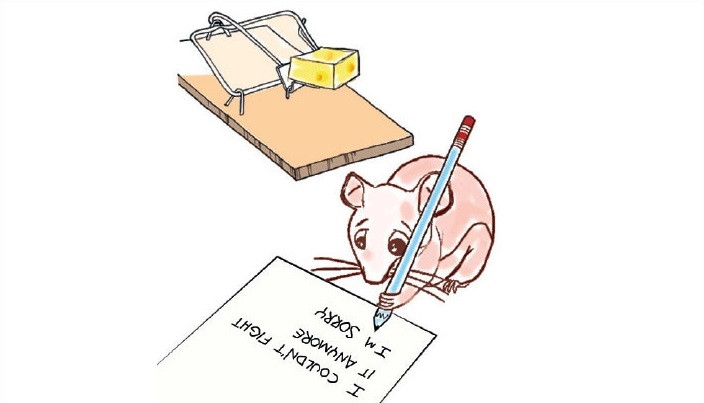
Suicide has become one of the most discussed words in the present time. And the term suicide note is intricately associated with it. ‘Can suicide note be the sole evidence to be presented before the court?’ What is its evidentiary value?
First of all, the abetment of suicide is punishable under section 306 of the Penal Code, 1860 with imprisonment for 10 years and a fine. Section 107 of the Penal Code describes the stages of abetment as instigating any person to do an act or thing; engaging in a conspiracy with one or more person for doing that thing; and intentionally aiding by any act or illegal omission.
Instigatory statement and intimidatory statement are two different terms. In case of abetment of suicide by the accused and inference of instigation, the prosecutor has to prove that
♦ The deceased or the victim have committed suicide
♦ The presence of instigation or abetment for the commission of suicide is commenced by the accused
♦ Direct involvement by the accused
Where there is no actual involvement of intention or mens rea and positive act of instigation, the accused cannot be held liable for suicide and the conviction cannot be sustained. A suicide note in the form of a dying declaration has been given evidentiary value under section 32 of The Evidence Act 1872.
Now the question is if a suicide note is fully true or not! Here comes a presumption: “A man will not meet his maker with a lie in his mouth.” But that does not mean a suicide note can be a sole evidence for a conviction.
A case of Bangladesh Supreme Court, ‘Rashed vs. The State (2019), declares that a dying declaration cannot be considered as the sole basis for the conviction and awarding sentence to the appellant. A suicide note can be a written letter, or a diary or even a Facebook status or other social media status.
In Ghulam Ahmed Khan vs. The State (1958), it was stated that dying declaration either oral or written, a letter or diary of the dead person is admissible before the court but other supplementary evidence is needed to be proved. In Shahbuddin vs. The State (2009) case, it was explicitly said that to prove a dying declaration which is either true or false, supplementary evidence shall be needed other than the dying declaration, and in this case, cross-examination is also permitted to prove if the dying declaration is true or false. As it was held in ‘Godu Mia vs. The State, 44 DLR, 246, that the dying declaration was partly true and partly false, so the presumption that a dying declaration will be true is not completely true.
Bangladesh records 513 student suicides in 2023. On 15 March 2024, a student of Jagannath University, Fairuz Abantika committed suicide after posting a status on Facebook where she mentioned that her classmate Amman Siddique of her same department and Assistant Proctor Deen Islam would be responsible for her suicide. It shall be considered as a dying declaration, but the investigation and other supplementary evidence are needed.
Lastly, the punishment for abetment of female suicide is mentioned in Nari o Shishu Nirjatan Domon Ain, 2000 in section 9(A), that if a woman commits suicide without the consent of a woman or against her will by any intentional act of a person, that person shall be guilty of the crime of inciting the woman to commit suicide by such act and shall be liable to imprisonment for a term not exceeding ten years but not less than five years. Shall be punishable with rigorous imprisonment and shall be punishable with a fine in addition.
It is noticeable that the minimum range of punishment is 5 years. To bring home the offence under section 306 of the Penal Code, the prosecution have to should establish the mens rea, instigation on the part accused in corroboration with the evidence on record. Further, the dying declaration principle has a vital effect in establishing the liability of an accused person for the offence of abatement of suicide. All the liability under section 306 of the Penal Code rests on the evidence on record and the proving of mens rea. As is expressed by English Jurist William Blackstone, “It is better that ten guilty persons escape than that one innocent suffer.”