


 For all latest news, follow the Daily Sun's Google News channel.


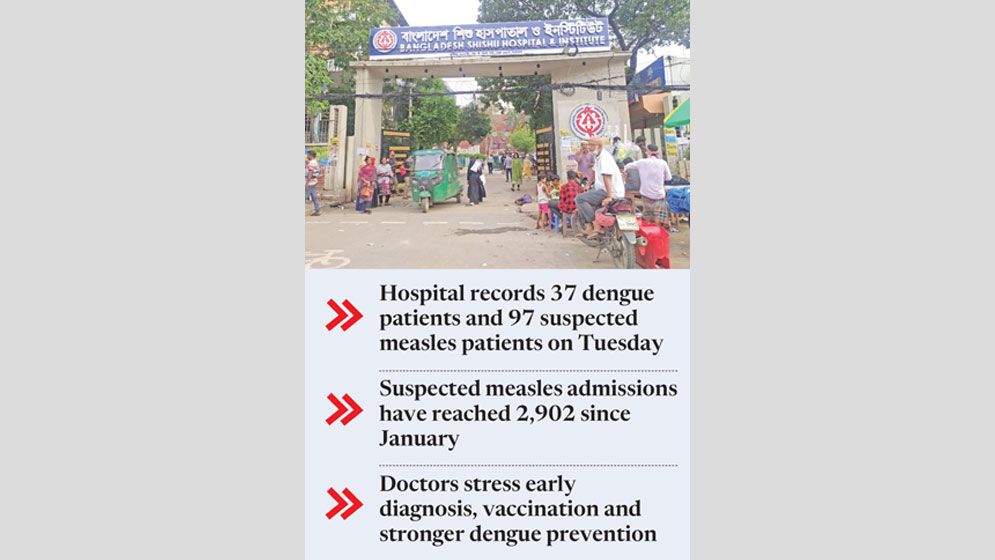
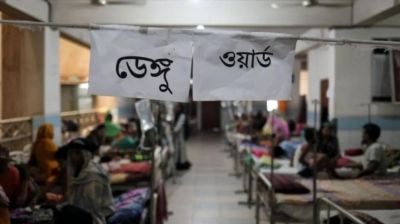
Rising dengue infections are adding to the strain on Bangladesh Shishu Hospital and Institute in the capital as it continues to deal with a sustained measles outbreak, with dozens of children requiring treatment for the two diseases alongside pneumonia and other illnesses.
In the 24 hours to Tuesday morning, the hospital admitted 20 children with suspected measles-related illness and 11 with dengue, while one measles-related death was recorded.
The hospital was treating 37 dengue patients and 97 suspected measles patients, according to its Department of Epidemiology and Research.
The hospital recorded 133 admissions and six deaths from all causes during the same 24-hour period. Its outpatient department handled 1,347 patients, including 407 through emergency services, 744 through medicine, 170 through surgery and 26 through evening specialist services.
The figures illustrate the workload facing the specialised children’s hospital as dengue and measles continue to generate new patients.
Dengue adds to the burden
Doctors say the simultaneous presence of dengue and measles makes timely assessment particularly important because both illnesses can involve fever.
“If a child has prolonged fever or their physical condition deteriorates, treating the child on the assumption that they have only one of the diseases can create risks,” a paediatrician at the hospital told the Daily Sun, stressing the importance of proper diagnosis.
The latest report recorded no dengue-related death during the 24-hour period. The cumulative number of dengue admissions at the hospital has reached 490.
A report issued on 28 September recorded 62 dengue patients visiting the outpatient department, 10 admissions and 33 patients receiving inpatient treatment.Dr Rana Chowdhury, a physician at Bangladesh Shishu Hospital, said dengue can cause significant loss of appetite, making it difficult for children to maintain adequate food and fluid intake.
He added that the number of children arriving at the emergency department with suspected dengue is several times higher than the number ultimately admitted, indicating the volume of patients being assessed.
Doctors said dengue may cause fever, vomiting, abdominal pain, weakness and loss of appetite. Severe cases can involve fluid leakage, bleeding or shock.
They also warned parents not to assume that a fall in fever means a child has recovered. The critical phase of dengue can begin after the fever subsides, making continued monitoring important.
Extreme weakness, repeated vomiting, severe abdominal pain, unusual drowsiness, bleeding, cold hands and feet, excessive sweating or reduced urination are warning signs requiring immediate medical attention.
Measles remains a major concern
Measles continues to place a substantial burden on Bangladesh Shishu Hospital.
The latest hospital report shows 20 suspected measles admissions in the past 24 hours, with 97 suspected cases currently receiving treatment.
Since January, the hospital has recorded 2,902 suspected measles-related admissions and 92 suspected measles-related deaths. Its epidemiological records also show 576 laboratory-confirmed measles cases.
A separate laboratory report linked to the hospital documented four measles-related deaths involving boys aged between three and eight months from Barguna, Pabna, Cumilla and Jashore.
Doctors have expressed particular concern about infants and the availability of appropriate treatment facilities for very young children.
Dr Habib, a physician at Bangladesh Shishu Hospital, said a Dhaka city corporation hospital had been designated as a specialised measles treatment centre, but it does not admit children below one year of age.
He estimated that 80%-90% of measles patients were under one year old and stressed the need for designated treatment centres to admit and treat children of all ages, particularly infants requiring specialised care.
Doctors also stressed the importance of measles vaccination, adequate nutrition and vitamin A supplementation. They said malnourished and incompletely vaccinated children may face a higher risk of complications, including pneumonia.
Pneumonia adds further pressure
Pneumonia is also contributing to the hospital’s workload.
Five new pneumonia patients were admitted during the latest 24-hour period, while 30 were receiving treatment. Cumulative pneumonia admissions have reached 2,138.
The hospital recorded 70 deaths associated with pneumonia and related conditions in September to date, compared with 60 in August. However, the hospital document cautions that these figures should not be interpreted as confirmed pneumonia deaths alone.
During the latest reporting period, 48 outpatients were treated for pneumonia, while 387 sought treatment for common cold and 11 for asthma.
Focus on prevention
Doctors are urging parents not to ignore persistent fever during the dengue season and to seek medical assessment rather than keeping children at home for prolonged periods without a diagnosis.
They also stressed the importance of measles vaccination, adequate nutrition and vitamin A supplementation, particularly among children aged 1-8 years.
Public health experts are meanwhile calling for stronger measures to control Aedes mosquito breeding sites around homes, construction sites, abandoned containers, rooftops and other structures where stagnant water can accumulate.
Dr Mushtuq Husain said mosquito-control measures should be strengthened before the hospital faces an even greater influx of dengue patients.
He called for a long-term, community-based approach to dengue prevention, arguing that increasing hospital capacity alone would not resolve the pressure created by continued transmission.
“The focus should not only be on whether the hospitals are adequately prepared. We must work much earlier in the chain of prevention,” he said.
He said communities should be trained to identify and eliminate mosquito breeding sites around their homes and neighbourhoods, allowing mosquito-control measures to continue beyond periodic campaigns.
The simultaneous burden of dengue, measles and other childhood illnesses, he said, underlines the need to prevent disease and identify serious cases early, before children require intensive hospital care.
Recommended Stories