



 For all latest news, follow the Daily Sun's Google News channel.


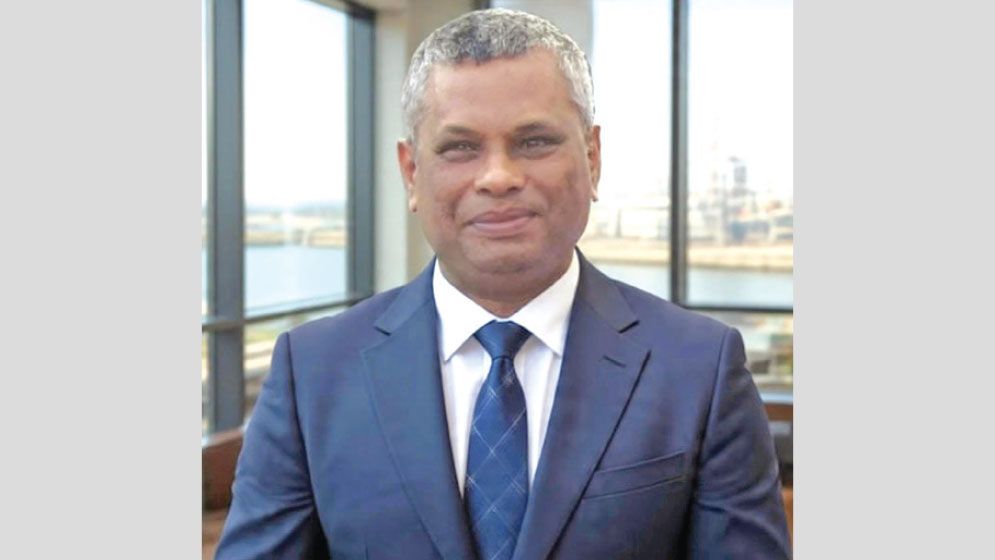
Mohammed Amirul Haque
Bangladesh cannot unlock its full economic potential without turning Chattogram into a modern regional logistics and trade hub, said Mohammed Amirul Haque, chairman of SEACOM Group and managing director of Premier Cement Mills PLC.
“The country’s economy is fundamentally based on the port and customs. So, beyond Chattogram, you must not think of anything for Bangladesh,” Haque said in an interview with the Daily Sun.
Haque, also president of the Chittagong Chamber of Commerce and Industry (CCCI), Bangladesh Cement Manufacturers Association and LPG Operators Association of Bangladesh (LOAB), said high logistics costs, weak connectivity and lengthy port and customs procedures are holding back trade and investment.
“These factors significantly increase the time and cost of doing business,” he said.
He welcomed the government’s move to form a committee involving port and customs officials to identify and remove trade barriers, but urged faster action on infrastructure and regulatory bottlenecks.
Haque particularly criticised the weigh-scale for heavy vehicles in Sitakunda, calling it “illegal and discriminatory against Chattogram”.
Three projects to reshape trade
He said faster implementation of a proposed Free Trade Zone (FTZ), the Dhaka-Laksam railway chord line and the Dhaka-Chattogram elevated expressway should be treated as priorities.
An FTZ would reduce time and costs for export-oriented and domestic industries, while faster road and rail links would improve the competitiveness of Bangladeshi businesses in international markets, he said.
Chattogram Shah Amanat International Airport also needs a major upgrade, according to Haque.
He proposed round-the-clock
operations, a 40% reduction in tariffs, a dedicated cargo village and better facilities for passenger management, transit and refuelling of long-haul flights.
Chattogram needs an integrated logistics system
Haque said Chattogram’s strategic location, industrial base, port and transport links give it the potential to become Bangladesh’s principal economic gateway and a regional logistics centre.
But that will require roads, railways, waterways, the airport, customs, FTZs and other supporting facilities to operate as one integrated logistics network rather than as separate projects.
“If you want Chattogram to emerge as a regional logistics hub, all necessary facilities and services must be developed properly and made to function together,” he said.
‘Give Chattogram Port priority’
Haque said Chattogram Port should receive greater priority in investment, expertise and management, arguing that efforts to develop other ports had not yet produced the expected economic benefits.
“The maritime sector is highly technical,” he said, calling for the introduction of a dedicated maritime cadre to build specialised expertise in port operations, shipping, supply-chain management and maritime affairs. He also urged partnerships between Bangladeshi universities and leading international institutions to develop skilled manpower, along with internationally recognised training and certification programmes.
More crew-manning institutions should also be established, while chief engineers and master mariners should be considered for relevant government positions through necessary policy reforms, he said.
Private sector role essential
Haque said the Chattogram Port Authority (CPA), which generates around Tk6,000 crore in annual revenue, should benefit from a combination of public oversight and private-sector expertise.
He proposed including private-sector representatives on the CPA board to bring practical perspectives from industries, importers, exporters and logistics operators.
Maritime-related organisations could also be brought under a coordinated umbrella structure headed by a chairman and supported by representatives of key stakeholders, he said.
Haque stressed that greater private-sector participation in energy, logistics and maritime affairs would help the government tackle current economic challenges.
“Private-sector-led economic growth is one of the best ways to overcome the current economic challenges,” he said.
He also highlighted the shortage of strong negotiation skills in the private sector, particularly for international trade and investment, and called for greater development of such expertise.
“If you want to bring about an economic revolution, we have to recognise Chattogram as Bangladesh’s economic gateway,” Haque said.
Read More