


 For all latest news, follow the Daily Sun's Google News channel.


Jinnah on the Wall, 1971 Under Erasure
Special Correspondent
Published: 15 Sep 2026, 11:42 AM
There
is something profoundly revealing about the latest controversy at Dhaka
University.
The
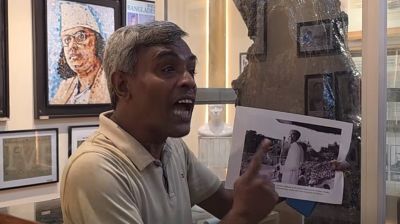
renovated DUCSU museum/archive reopened with photographs and historical
material relating to Muhammad Ali Jinnah, including an image of his 21 March
1948 declaration on Pakistan’s state language, a photograph from the 1940
Muslim League session in Lahore and a Dawn clipping relating to the 1970
election. Students protested. One student tore down Jinnah’s photographs, while
other protesters subsequently displayed a photograph of former Jamaat-e-Islami
ameer Ghulam Azam being beaten with shoes outside Baitul Mukarram in 1981. The
university administration has announced an investigation.
It
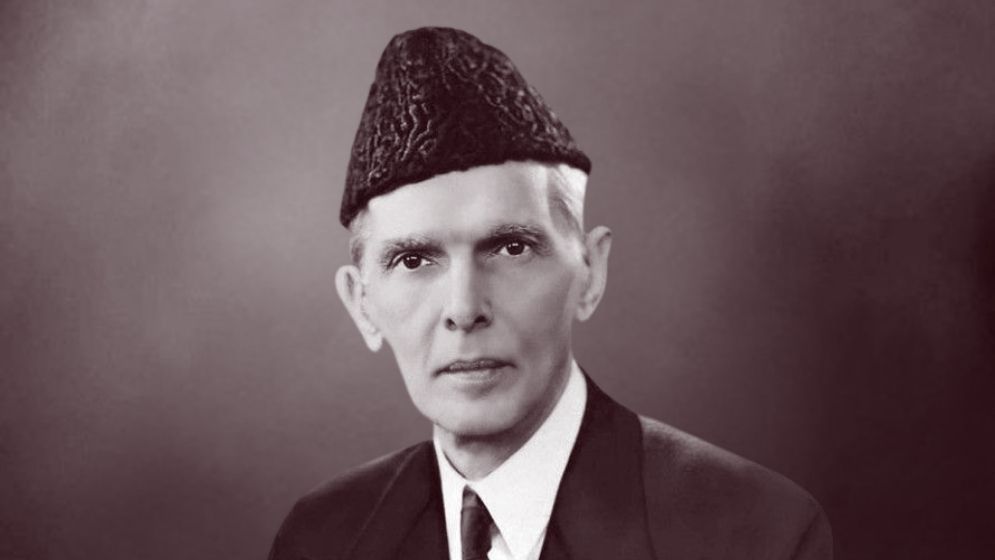
would be wrong to argue that Jinnah has no place in a historical archive. He
was the founder of Pakistan and one of the most consequential political figures
in South Asian history. But if Jinnah is placed on the wall of Dhaka
University, the historical context of his politics must be placed beside him.
And
nowhere is that context more important than the language question.
In March 1948, Jinnah insisted that Urdu should be Pakistan’s state language. His position did not amount to a prohibition on Bengali as a provincial language. But his insistence on Urdu as the sole state language of Pakistan collided directly with the emerging Bengali linguistic and political consciousness.
The
Language Movement that followed was not an isolated linguistic dispute. It
became one of the foundational experiences from which Bengali nationalism
developed.
That
history cannot be separated from the story of Bangladesh.
Pakistan
was created in 1947 on the basis of Muslim political identity. Yet the majority
population of that new state was Bengali-speaking and lived in its eastern
wing. The tensions that followed were not simply linguistic. They involved
political representation, economic inequality, provincial autonomy and,
ultimately, the right of the Bengali majority to determine its own political
future.
The
1952 Language Movement, the United Front victory, the Six-Point movement, the
mass uprising of 1969 and the Awami League’s sweeping victory in the 1970
election were stages in that political evolution.
When
the Pakistani establishment refused to transfer power after the 1970 election,
the crisis became existential.
Then
came Operation Searchlight and the Liberation War.
That
is why Jinnah cannot honestly be presented simply as an uncomplicated founding
father whose political legacy somehow leads naturally to Bangladesh.
Bangladesh
emerged from the cumulative failure of the Pakistani state to accommodate the
political, linguistic, economic and democratic aspirations of the Bengali
majority.
Yet
since the fall of Sheikh Hasina, a new contest over historical memory has
become increasingly visible.
The
Awami League’s attempt for years to monopolise the history of 1971 deserved to
be challenged. Sheikh Mujibur Rahman’s enormous historical role does not
require the suppression of the contributions of Tajuddin Ahmad, Syed Nazrul
Islam, the other political leaders, student organisations, cultural activists,
freedom fighters, ordinary citizens and millions of refugees who shaped the
struggle for independence.
But
dismantling an Awami League monopoly cannot mean handing historical legitimacy
to those who opposed Bangladesh’s independence.
That
is where the recent revival of Jinnah commemorations becomes significant.
Since
the August 2024 uprising, at least three specifically Jinnah-focused public
commemorations have been documented in Dhaka.
On
11 September 2024, the Nawab Salimullah Academy organised a programme at the
National Press Club to mark Jinnah’s 76th death anniversary. Contemporary
reports described it as the first public commemoration of Jinnah’s death
anniversary in Bangladesh since independence.
On
25 December 2024, the same organisation held a programme at the National Press
Club marking Jinnah’s 148th birth anniversary. The event was more than a simple
remembrance of a historical personality. Some speakers made claims that
directly challenged the established understanding of 1971. The reported remarks
included the assertion by Mohammad Shamsuddin, convener of Nagorik Parishad,
that Bangladesh exists because of Jinnah, alongside claims that India was
responsible for separating Bangladesh from Pakistan.
And
on 25 December 2025, the Nawab Salimullah Academy again organised a programme
to mark Jinnah’s 149th birth anniversary. Reporting from the event again quoted
Shamsuddin saying that Bangladesh exists because of the Quaid-e-Azam. The
presence of Pakistani diplomats at these events was noticed.
However,
there is insufficient evidence to claim that the Pakistan High Commission
organised or sponsored these commemorations.
That
distinction matters.
The
issue is not whether Pakistan’s diplomats or Bangladeshi citizens are entitled
to remember Jinnah. Of course they are.
The
issue is what happens when the commemoration of Jinnah becomes accompanied by a
reinterpretation of 1971.
That
reinterpretation is visible in some of the statements made at these events.
If
Bangladesh’s independence is presented as merely an unfortunate division of a
Muslim country engineered by India, then the central political meaning of 1971
disappears.
If
the Liberation War becomes simply a “war between two brothers”, then the
question of why the Pakistani state used military force against the Bengali
majority is pushed aside.
If
1947 is presented as Bangladesh’s “first independence”, the historical meaning
of 1971 is fundamentally altered.
This
is why the emergence in 2025 of “First Independence” rhetoric deserves
attention.
A
programme held in Dhaka on 14 August 2025 promoted the idea of 1947 as a “first
independence”.
There
is nothing wrong with studying 1947. Indeed, Bangladesh cannot understand 1971
without understanding Partition.
But Bangladesh did not become independent from Britain in 1947.
East
Bengal became part of Pakistan.
The
sovereign state of Bangladesh emerged in 1971.
That
distinction is not semantic. It is the difference between two entirely
different historical narratives.
In
one narrative, 1947 is the beginning and 1971 is essentially a regrettable
rupture between two Muslim communities.
In
the other, 1947 is the beginning of a political experiment that ultimately
failed in East Bengal, while 1971 is the culmination of a long struggle for
democratic, linguistic, political and national self-determination.
That
is the historical battle now taking place.
And
Jamaat-e-Islami’s political rehabilitation makes the battle particularly
sensitive.
Jamaat’s
wartime opposition to Bangladesh’s independence is not a minor footnote. The
party’s leadership opposed the creation of Bangladesh, and several senior
Jamaat figures were subsequently convicted by Bangladesh’s International Crimes
Tribunal for crimes committed during the 1971 conflict.
The
party is entitled to participate in contemporary democratic politics. Its
supporters are entitled to argue for its political programme.
But
political rehabilitation cannot require historical rehabilitation.
The
question that must remain on the table is simple: what did Jamaat’s leadership
believe about Bangladesh’s independence in 1971?
The
answer should not be rewritten because the political circumstances have
changed.
Nor
should criticism of the Awami League’s abuse of the Liberation War narrative be
used as an excuse to rehabilitate Pakistan’s political project.
Bangladesh
needs neither a Mujib-only history nor a Pakistan-friendly version of its past.
It needs the whole history—the difficult, complex and sometimes uncomfortable
story of how this country came into being.
That
means Jinnah belongs in the archive, but so does the Language Movement that
challenged the language policy of the Pakistani state. The 1970 election
belongs there, as does the refusal to honour its democratic mandate. So do
Operation Searchlight, the genocide, the resistance and the millions who were
driven into exile as refugees.
The
stories of the freedom fighters and ordinary citizens who endured and resisted
the violence must remain central to our national memory.
And
equally, Bangladesh must not shy away from the uncomfortable history of those
political forces within the country that opposed independence and supported the
Pakistani state in 1971.
Only
by confronting all these dimensions of our past can we preserve a history that
belongs not to any single political party or ideology, but to the people of
Bangladesh.
The
proper response to the DUCSU controversy is therefore not to ban Jinnah’s
photograph.
It is to demand better history.
If
Jinnah is displayed, display his March 1948 language declaration beside it.
Explain what it meant. Explain why Bengali students rejected the state’s
language policy. Explain how the language question became part of a much larger
struggle.
If
the 1940 Lahore Resolution is displayed, explain its political evolution and
what happened to the promise of provincial autonomy.
If
the 1970 election is displayed, explain why the electoral verdict of the
Bengali majority was not honoured.
An
archive should make students ask uncomfortable questions.
It
should not tell them which heroes to worship.
The
danger today is not that Jinnah’s photograph has returned to Dhaka University.
The
danger is that the photograph might return without the history that explains
why Bangladesh ultimately rejected the Pakistan he founded.
The
July uprising created an opportunity to free Bangladesh’s history from partisan
ownership.
That
opportunity must not become an invitation to erase 1971.
The
Awami League does not own the Liberation War.
Jamaat
does not own its revision.
Pakistan
does not get to reinterpret it.
And
neither should any government.
The
Liberation War belongs to the people of Bangladesh.
That
is precisely why the history of how—and why—Bangladesh came into existence must
remain non-negotiable.