


 For all latest news, follow the Daily Sun's Google News channel.


The podium Trump couldn’t empty: Silence, broadcast live
Daily Sun Report, Dhaka
Published: 21 Sep 2026, 12:00 AM
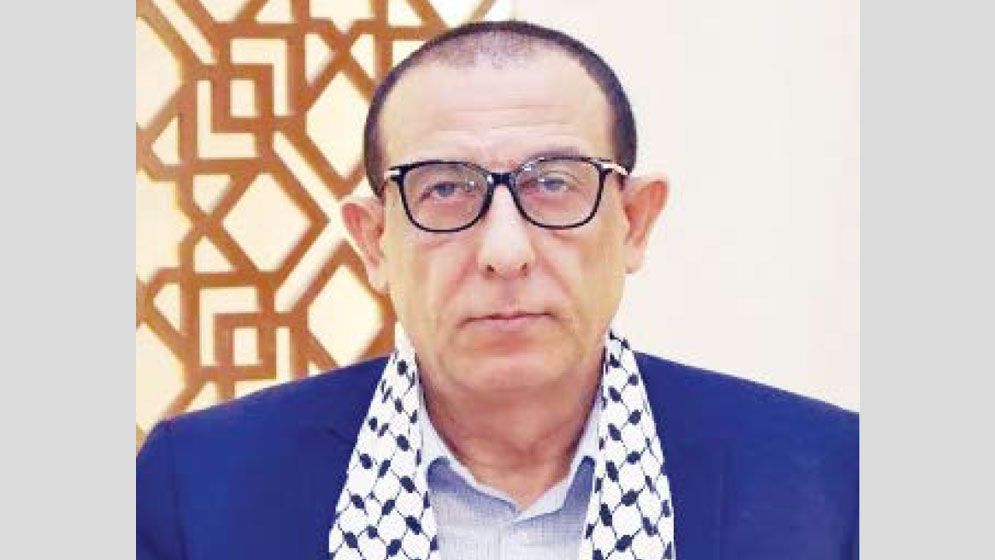
Yousef Ramadan, Palestinian Ambassador to Bangladesh
There is a particular kind of political theater that only a superpower convinced of its own untouchability can stage - barring a head of state from a podium, then acting surprised when the world simply moves the podium to him.
For the second consecutive year, the Trump administration has denied visas to Mahmoud Abbas and the Palestinian delegation ahead of the UN General Assembly’s high-level session, with the State Department saying Palestinian officials had failed to live up to their commitments under previous agreements to seek peace with Israel. The stated grounds shift slightly by outlet and by year — citing legal actions at the ICC and ICJ, continued PA stipends, or educational content; but the through-line is consistent. Washington has decided that the price of pursuing statehood through international law is exclusion from the world’s principal forum for discussing statehood.
It is worth sitting with how thin a strategy this actually is. Despite the visa denials, the Palestinians remain represented at the gathering by diplomats already accredited to the United Nations; meaning the ban does not remove Palestine from the room, it merely removes its President from the chair he is entitled to occupy. And the General Assembly, in what has now become an annual ritual of its own, responded by doing what deliberative bodies do when told they cannot hear from someone – it voted. The Assembly voted 152 to 3 to allow Abbas to deliver a video address during the debate, a landslide that dwarfs the coalition Washington could muster in opposition. Only Israel, the United States, and one other holdout stood against it — a diplomatic minority so narrow it functions less as an alliance than as an admission.
This is not new choreography. It is, in fact, a rerun with a bigger cast. Last year, when the same maneuver played out for the 80th session, the Assembly passed a nearly identical measure by a recorded vote of 145 in favour to 5 against, with 6 abstentions, invoking the Headquarters Agreement’s obligations on the host country. The Palestinian Observer at the time called the U.S. visa denial “a blatant violation of its international obligations, and a ruthless suppression of Palestinian peace efforts.” A year later, with a slightly larger majority backing Abbas, the substance of the U.S. objection has not moved an inch; and neither, notably,
has the world’s patience for it.
The European Union, never an institution prone to hasty condemnation, said the quiet part out loud this week. Brussels’s diplomatic service called on Washington to reconsider its decision, stressing that the United States, as host country for UN headquarters, has obligations under its agreements with the world body. Translated out of diplomatese – you signed a contract to host the UN, not to curate its guest list. Secretary-General added his own rebuke, warning that denying Palestinian representatives access to UN headquarters imposes restrictions on their participation in Assembly meetings that member states are otherwise entitled to. Amnesty International went further still, stating flatly that the decision to deny visas to a high-level Palestinian delegation for the 81st session “must be reversed.”
None of this pressure is likely to change the outcome. The administration has shown, across two consecutive Assembly sessions, that it is entirely comfortable absorbing near-unanimous international rebuke as the cost of a domestic and allied political calculation. But that is precisely what makes the strategy so self-defeating on its own terms. A ban engineered to marginalize a leader has instead manufactured the largest annual demonstration of multilateral solidarity that leader could ask for. Abbas will not walk to the podium in New York. Instead, 152 countries will formally arrange for him to appear on a screen in the one room where every government on Earth is legally obligated to be watching; a spectacle considerably harder to ignore than a speech nobody was forced to vote on.
There is a bitter symmetry waiting in the same hall. When Benjamin Netanyahu rises to address the Assembly, he will do so under the shadow of ongoing genocide proceedings at the International Court of Justice and an International Criminal Court arrest warrant; and he will do so with delegations free to walk out, as they have in years past, leaving rows of visibly empty seats behind cameras that miss nothing. Washington cannot script a warmer reception for its ally simply by making its adversary’s seat harder to fill. If anything, an empty chair reserved for Abbas by American decree now sits uncomfortably close, symbolically, to the empty chairs Netanyahu is likely to face by choice of everyone else.
What Trump’s visa policy actually accomplishes, then, is not suppression but amplification through inversion. Each year the ban is renewed, the Assembly’s response grows only more lopsided, the EU’s language only more pointed, and the contrast between American isolation on this specific question and near-universal international consensus only sharper. A superpower that wanted to make the Palestinian cause disappear from the world stage has instead handed it a guaranteed, recurring, standing-room-only annual slot — introduced, ironically, by the very country trying hardest to cancel it. If this is punishment, it is punishment that keeps paying dividends to the party being punished. Somewhere in Ramallah, that irony is presumably not lost on anyone.