



 For all latest news, follow the Daily Sun's Google News channel.


The incumbent government led by BNP chairman Tarique Rahman took the oath on 17 February 2026. The new government took office amid a difficult reality shaped by political instability, economic pressure, administrative weaknesses and a crisis of public confidence following the sixteen years of fascist rule. The government, therefore, faced some major challenges even from the beginning, such as restoring public confidence in the state and government, stabilising the economy, controlling prices, establishing discipline in the administration and providing relief in people’s everyday lives.
In spite of that, the new government has sailed through the first six months of its tenure, achieving success in various fields. Within this short time, it has taken initiatives that demonstrate a clear commitment to building a people-orientated, accountable and welfare-based state. Visible government activity has been seen in almost every major sector, including administration, the economy, agriculture, education, healthcare, social security, employment, the environment, energy, investment, expatriate welfare and foreign relations.
During its first six months, BNP’s main job was to restore people's confidence in the state and government. Emphasis has been placed on ensuring the rights and security of all citizens irrespective of religion, ethnicity, profession or political affiliation. The government's action plan is not limited to one or two sectors; rather, it encompasses almost every important aspect of people's lives and state administration.

One of the notable aspects of the government's first six months has been its efforts to establish discipline in the administration and promote austerity in public spending. Prime Minister Tarique Rahman has been seen maintaining office time strictly. He also has reduced state expenditure in various ways, including staying at his own residence, using a personal vehicle, and limiting VVIP protocol and ceremonial expenses. He also ensured that the cabinet members would not take duty-free vehicles and government plots.
Initiatives have included monitoring market conditions, taking action against syndicates, ensuring continued imports of essential commodities and expanding the activities of the Trading Corporation of Bangladesh (TCB). The government has prioritised reducing inflation, strengthening foreign-exchange reserves and increasing investment, while inflation has fallen to 8.71%, foreign-exchange reserves have risen to USD $36.58 billion, and remittance flow was remarkable.
The government is also working to trace overseas assets linked to 42 companies with more than Tk2 billion in defaulted loans. At the same time, efforts have been strengthened to freeze illicit assets and bank accounts and recover money allegedly transferred abroad.
The government has removed the requirement of prior approval from the central bank when foreign investors repatriate up to Tk1 billion in capital to encourage foreign investors, and plans have been taken to reopen closed government-owned factories and institutions and make effective use of underutilised economic zones, BSCIC industrial areas, hi-tech parks and industrial clusters. The government has set a target of transforming Bangladesh into a $1 trillion economy by 2034 and creating 10 million new jobs by 2030.
One of the government's major people-orientated initiatives is the Family Card. More than 37,000 low-income families are already receiving Tk2,500 per month in cash assistance. The proposed Farmer Card is another significant initiative. The government initiated measures to waive up to Tk10,000 in agricultural loans, including interest, for around 1.2 million small and marginal farmers.
The government has taken significant initiatives to fulfil the state's responsibilities toward those killed or injured during the July mass uprising. Families of those killed are being provided with Tk30 lakh in savings certificates and a monthly allowance of Tk20,000. Around Tk3.63 billion has been spent to send 154 critically injured people abroad for advanced treatment. In education, initiatives have been taken to abolish re-admission fees, double scholarship payments, and increase teacher recruitment and benefits. The government has also proposed making sports compulsory from Grade IV and providing free school uniforms, shoes and jute bags to primary school students.
In healthcare, plans have been announced to recruit 100,000 new health workers, introduce e-health cards, establish primary healthcare units in every union and provide health check-ups at people's homes. Measles vaccination programmes have also been re-launched. An initiative has been taken to introduce a Probashi Card for the welfare of migrant workers. The decision to reward 129 athletes who have achieved international success with Tk24.4 million and provide a monthly sports allowance of Tk100,000 reflects this.
To make public services easier, initiatives have been taken to introduce online applications for land services, online payment of land taxes and a broker-free mutation system and to introduce artificial intelligence technology and AI-enabled cameras for traffic management in Dhaka. For environmental protection, a programme has been launched to excavate and re-excavate around 20,000 kilometres of rivers, canals and water bodies across 54 districts. In renewable energy, the government has set a target of generating 10,000 megawatts of electricity from renewable sources, including solar power, by 2030.
During the first six months, Malaysia's labour market has reopened to Bangladeshi workers, while 17 agreements and memorandums of understanding have been signed with China, and Chinese companies have proposed initial investments worth $9.21 billion in Bangladesh. For the upcoming Hajj season, airfare has been reduced by Tk24,830 to Tk130,000. Initiatives have also been taken to introduce a Probashi Card for expatriates and a Nusuk Hajj Card for pilgrims.
Well, the achievements of the first six months can, in short, be described as an attempt to lay the foundation for a people-orientated state. Of course, six months is not enough time to make a final assessment of any government. Greater challenges lie ahead.
______________________________________
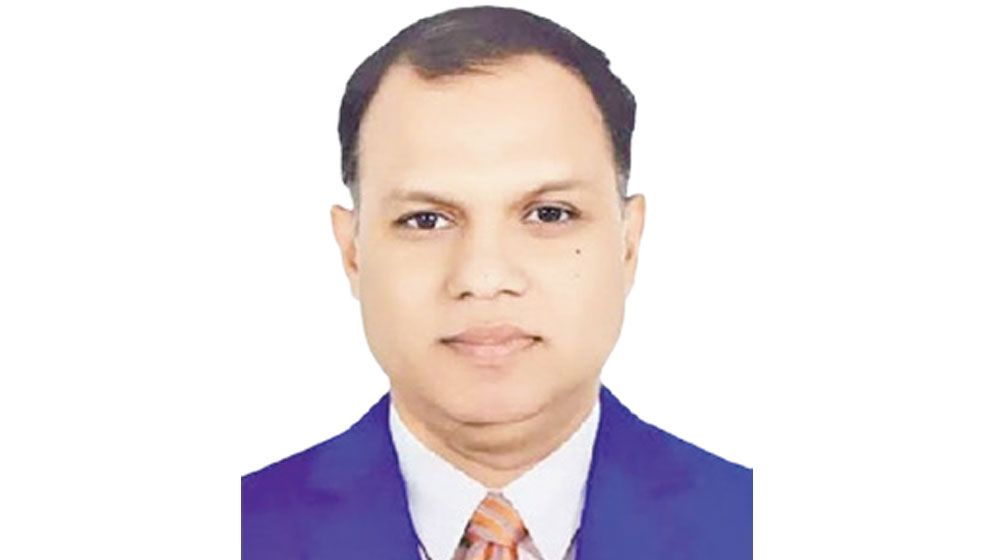
The writer is an Additional Press Secretary at Prime Minister’s Office