


 For all latest news, follow the Daily Sun's Google News channel.


Sweden’s Centre Party backs Kristersson for second term as PM
Md Mahmodul Haque, Nordic Correspondent
Published: 30 Nov 2026, 03:41 AM
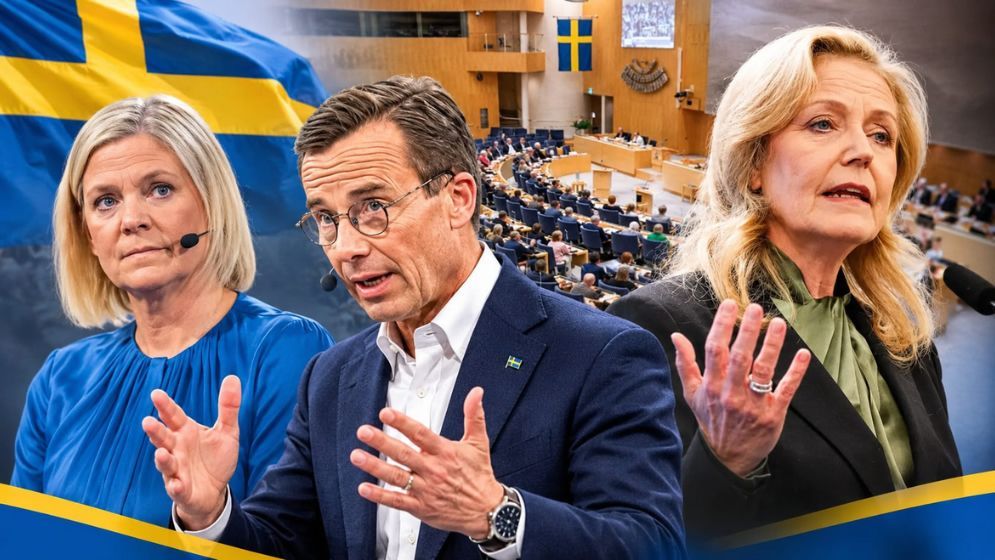
Sweden’s outgoing Prime Minister Ulf Kristersson has secured crucial support from the Centre Party to form a new four-party minority government, paving the way for him to seek a second term in a parliamentary vote on Monday.
The Centre Party’s top decision-making body approved the move on Sunday,
ending months of uncertainty over which political bloc it would support following
the 13 September general election.
The proposed coalition will comprise Kristersson’s Moderate Party, the
Centre Party, the Christian Democrats and the Liberals. It will exclude the
Sweden Democrats, the far-right party that supported Kristersson’s previous
government from 2022 to 2026 and wielded considerable influence over its
policies.
Centre Party leader Elisabeth Thand Ringqvist said the party had opted
for the government arrangement in which it believed it could exert the greatest
influence on policy and contribute most to Sweden.
The decision marks a major setback for Social Democratic leader Magdalena
Andersson, whom the Centre Party had previously backed as its candidate for
prime minister. The centre-left parties had spent more than two months trying
to reach an agreement but failed to overcome their differences over the
composition of a government.
The Centre Party had ruled out joining any government dependent on either
the Sweden Democrats or the Left Party. However, it could not accept the Left
Party’s demand for ministerial positions in a proposed centre-left government.
Ringqvist said the Left Party had put its own demands ahead of the
country’s interests. She added that the Centre Party had been willing to make
significant concessions to help Andersson become prime minister.
Kristersson’s proposed coalition would command only 136 seats in the 349-member
Riksdag, falling well short of the 175 needed for a parliamentary majority.
Although the Sweden Democrats will not be part of the government, their support
will be crucial to passing legislation, including the national budget.
The Sweden Democrats have said they will not vote against Kristersson in
Monday’s prime ministerial vote. Under Sweden’s parliamentary system, a
candidate can become prime minister unless at least 175 members of parliament
vote against the nomination.
Some Centre Party MPs have indicated that they may oppose Kristersson,
but their numbers are unlikely to be sufficient to block his appointment.
The Centre Party’s decision has drawn criticism from opposition leaders.
Left Party leader Nooshi Dadgostar accused the party of breaking its promise
not to rely on the Sweden Democrats.
Andersson also criticised the move, saying it did not reflect the wishes
of a majority of Swedish voters.
The September election resulted in 176 seats for the centre-left bloc and
173 for the right-wing bloc, which included the Sweden Democrats. However,
disagreements among the centre-left parties prevented them from forming a
government, leaving Kristersson in a position to return to office with a new
coalition.