


 For all latest news, follow the Daily Sun's Google News channel.


Japan expected to push for debate on nuclear subs in security document revisions
The Japan Times
Published: 29 Nov 2026, 11:13 PM
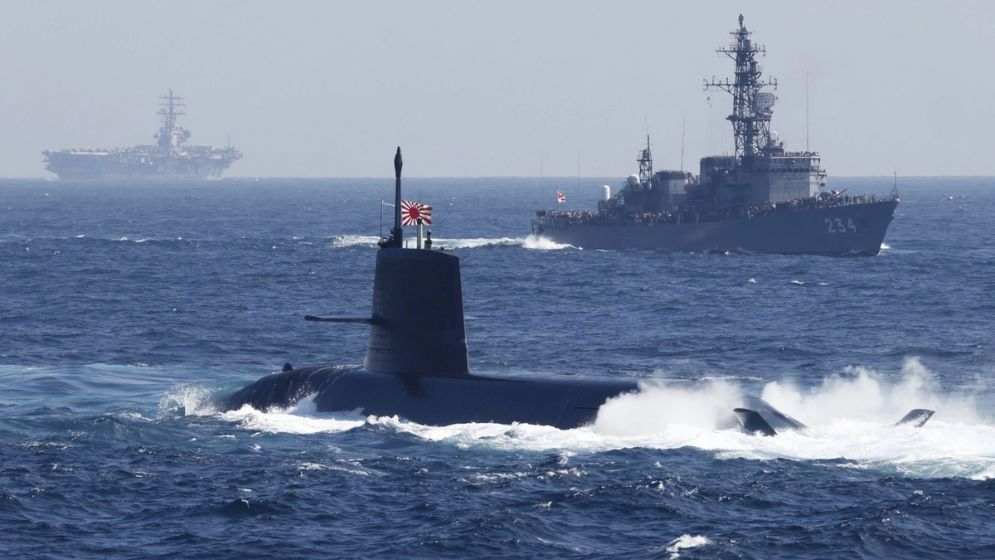
The Maritime Self-Defense Force's diesel-electric Kokuryu submarine sails past a vessel during a fleet review in Sagami Bay, off Yokosuka, Kanagawa Prefecture, in October 2015. Photo: Bloomberg
Japan is expected to say in revisions to its security-related documents by the year-end that it will “begin considering and reach a conclusion” on the controversial issue of whether to acquire nuclear-powered submarines, sources have said.
The government will finalize the language in
the documents after examining proposals by an expert panel and the outcome of
discussions with the ruling Liberal Democratic Party, the sources said Friday.
Nuclear-powered submarines can stay
underwater longer and travel faster than diesel-powered ones. They can be
equipped with vertical launch systems for long-range missiles and are thus
expected to be used to provide a counterstrike capability, or the ability to
strike enemy bases.
Nuclear submarines “would allow crew members
to engage in operations at a higher level of safety,” Defense Minister Shinjiro
Koizumi has said.
However, the costs of building nuclear
submarines are said to reach trillions of yen. Another challenge would be
recruiting and training engineers and crew with specialized knowledge of the
vessels.
Furthermore, some question whether the
introduction of nuclear-powered submarines is compatible with the Atomic Energy
Basic Act, which limits nuclear power research and use to peaceful goals.
Within the government and the LDP, support
for the introduction is rising amid an increasingly severe security environment
surrounding Japan.
The LDP’s ruling coalition partner, the Japan
Innovation Party, has called for acquiring the vessels, with officials pointing
to China’s growing capabilities in far-off waters.
China is expanding its military activities,
including by deploying aircraft carriers in the western Pacific and building an
all-nuclear submarine fleet, while Russia and North Korea continue to strengthen
their military capabilities.
To counter these moves, Australia and South
Korea have decided to acquire nuclear-powered submarines.
The expert panel will finalize its proposals
at its final meeting as early as Dec. 7. An early draft says that the
government “should make a decision on whether to introduce or develop (nuclear
submarines) from a comprehensive viewpoint,” including the feasibility of such
an endeavor.
Japan currently operates a fleet of 23
diesel-electric attack submarines, but has long avoided the more expensive and
politically fraught option of nuclear-powered vessels.