


 For all latest news, follow the Daily Sun's Google News channel.


France falls into recession
Europe’s third-largest economy contracted by 0.2pc between July and September
The Telegraph
Published: 29 Nov 2026, 01:34 AM
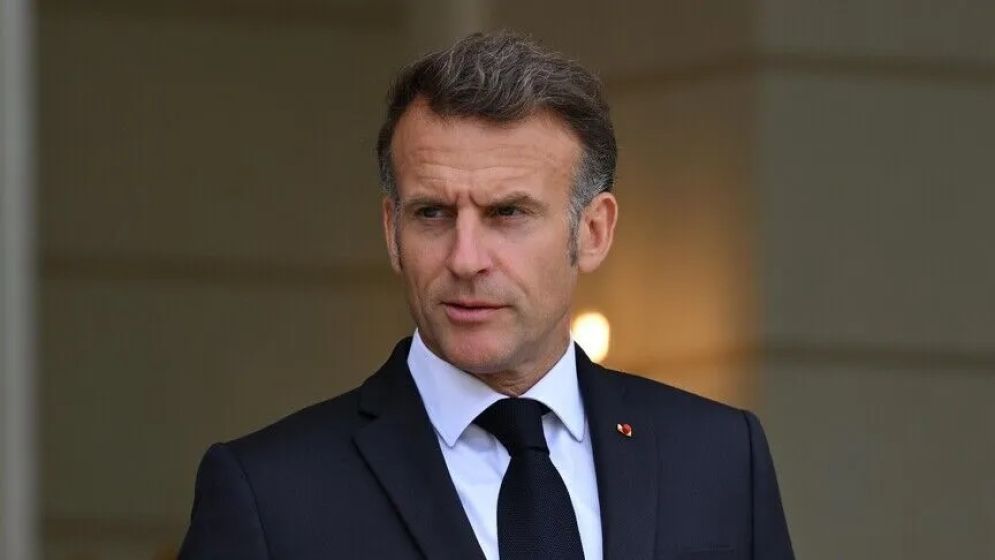
French President Emmanuel Macron. Collected
France has been plunged into recession amid spiralling borrowing costs and political paralysis.
Europe’s third-largest economy shrank in the second and third quarters of this year, revised figures show, meeting the definition of a technical recession.
France’s economy contracted by 0.2pc in the third quarter between July and September, more than 0.1pc initially estimated.
New revised estimates also show it fell in the second quarter, down 0.02pc. It was originally estimated to have flatlined at 0.0pc.
Marie Leclair, from France’s statistics agency INSEE, said: “We now have a very slight decline in GDP in the second quarter.”
The French economy also shrank by 0.2pc in the first three months of the year.
Charlotte de Montpellier, a senior economist at Dutch bank ING, said: “It has technically been in recession since the beginning of the year.”
France’s faltering fortunes come amid political turmoil and nationwide protests, which gripped the country for nearly two months.
Its 10-year borrowing costs last month surpassed 5pc in a fresh 24-year high.
Ms Montpellier warned that the growth was likely to average only 0.1pc across all of 2026, a period where investment banks such as Morgan Stanley, in contrast, expect the UK to grow by 1.6pc.
It marks a fillip for Europe’s biggest economies, with growth in Germany and the UK improving as France starts to falter.
Ms Montpellier said: “The outlook for 2027 remains very gloomy. Salaried employment fell by 94,400 jobs over the past year. The situation is even worse in the private sector, where 109,000 jobs were lost over the same period.
She added: “The weakening labour market will increasingly weigh on household confidence, income and consumption. Financing conditions also remain difficult, while uncertainty over future taxes and public spending is exceptionally high.”
France’s deficit is poised to hit 5.5pc of GDP this year, the highest in the euro area.
Emmanuel Macron is pushing to implement strict rules on spending in France’s constitution before his departure next May after presidential elections starting in late April.
Hard-Right leader Marine Le Pen is topping the polls, with her vote share roughly twice that of the hard-Left Jean-Luc Mélenchon, the second highest.
However, France’s two rounds of voting, where the top two contenders face only each other in a second run-off if no one wins an outright majority, make the results highly unpredictable.
Voters will probably be heading to the polls against a backdrop of a weakening economy, Ms Montpellier said.
She said: “It is difficult to identify a driver capable of generating a meaningful recovery in domestic demand over the next few quarters. France will enter next year without economic momentum.
“Even if quarterly growth turns slightly positive again, this will not be enough to produce solid annual growth. We expect GDP to grow by just 0.4pc on average in 2027, with risks still tilted to the downside.”