


 For all latest news, follow the Daily Sun's Google News channel.


UK contacts 100,000 military veterans amid 'heightened threat'
AFP, London
Published: 26 Nov 2026, 08:17 PM
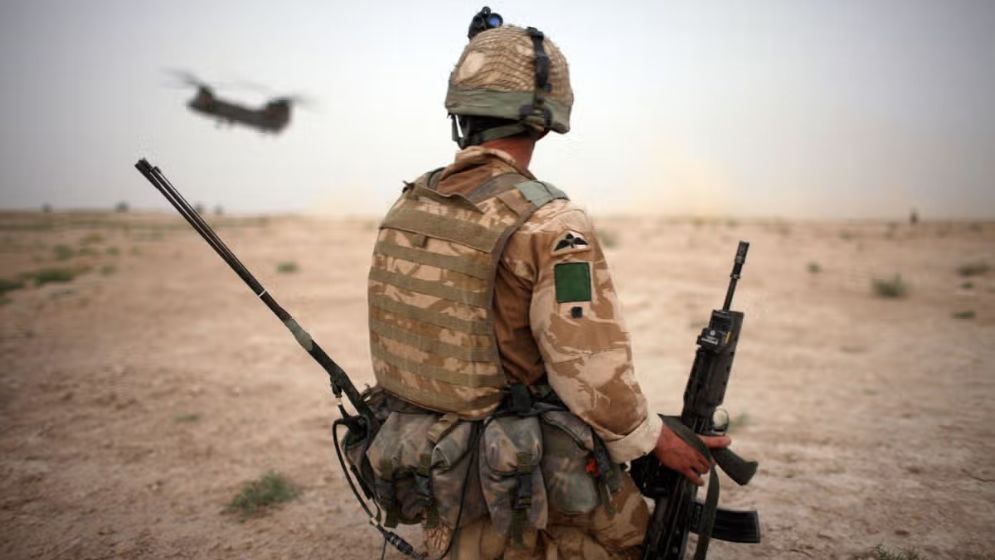
File Photo
Britain's armed forces have contacted around 100,000 veterans to strengthen "preparedness and deterrence" as defence minister Wes Streeting on Thursday evoked a heightened threat environment.
The precautionary measure is the first such operation since the Cold War and concerns around 100,000 former military personnel who make up the strategic reserve, media reports said.
The move comes amid fears of Russian aggression in Europe following Moscow's 2022 invasion of Ukraine.
Under the terms of their service, some former armed forces members are "liable to return to military service in exceptional circumstances, including a national emergency or a transition to war", a Ministry of Defence (MoD) statement said.
The veterans of the British Army, Royal Navy and Royal Air Force were being contacted to ensure their details were up to date and included any skills they acquired since leaving.
The reservists could volunteer for training and exercises such as NATO's flagship Steadfast Defender next spring.
Streeting said gathering such information should be standard and people should be reassured rather than alarmed by it.
"There's no doubt, and I've talked about this as have all of my counterparts across NATO in recent days, weeks, and months, we are operating in a heightened threat environment, and so this degree of readiness, I think, is a sensible, necessary precaution," he told Sky News.
Thousands of British and French troops in October took part in a military training exercise designed for defending NATO countries against a modern-day attack.
"These letters do not mean reserves are about to be mobilised," said Veterans Minister Calvin Bailey.
He described the initiative as "simply good housekeeping to make sure we know how to contact those who are eligible and keep up to date on their skills and experience".
He urged journalists to keep the discussion focused on relations between the two central governments, saying serious bilateral matters are addressed at that level.
Humaiun Kobir claimed that India also recognises Sheikh Hasina as a problem in the context of Bangladesh-India relations, saying New Delhi is aware of her erratic behaviour and has itself been placed in an uncomfortable position because of her actions.
On Bangladesh's trade negotiations with the United States, Kobir said the tariff agreements had become a flagship political and economic agenda of the Trump administration.
He said Bangladesh had reservations about certain provisions and would raise issues it considered unjustified through negotiations with Washington.
“There is scope for discussion. We have the opportunity to build our case and negotiate on issues where we believe the provisions are unjustified,” he said.
Citing cotton as an example, Kobir said Bangladesh imports cotton from the United States, manufactures products locally and exports those products to the American market.
He said this could provide a basis for discussing tariff arrangements and other trade-related matters.
“Of course, we have reservations, and we will talk and negotiate with them,” he said, adding that Bangladesh would clearly explain which provisions it considered justified and which it did not.
He also noted that the US tariff policy was not directed solely at Bangladesh, as similar measures had affected many other countries.
Kobir said a public hearing scheduled for January 26 would provide Bangladesh with an opportunity to present its arguments on the issues.
For the 14 economies including Bnagladesh, the US Trade Representative (USTR) has determined that certain acts, policies, and practices which create, sustain, or contribute to structural excess capacity and production are unreasonable and burden or restrict US commerce.
The USTR said Bangladesh’s unreasonable acts, policies, and practices include (1) industrial plans to maintain and expand its manufacturing sector, particularly in key sectors; (2) production incentives to promote production and exports; (3) inadequate labor protections; (4) financial repression policies; and (5) failure to address global excess capacity and production, including through imports and foreign direct investment from non-market economies.
These acts, policies, and practices burden or restrict US commerce by (1) reducing commercial opportunities for U.S. producers and exporters in Bangladesh and third-country markets; (2) harming the U.S. economy by contributing to lost production, exports, jobs, and investment in the U.S. manufacturing sector; and (3) increasing U.S. economic security risks, including through reliance on NME inputs.
The USTR said this is especially true in the ready-made garment and apparel sector.