


 For all latest news, follow the Daily Sun's Google News channel.


18 years after 26/11, is India finally winning the war against terror?
The Diplomat
Published: 26 Nov 2026, 04:13 PM
AFP File Photo
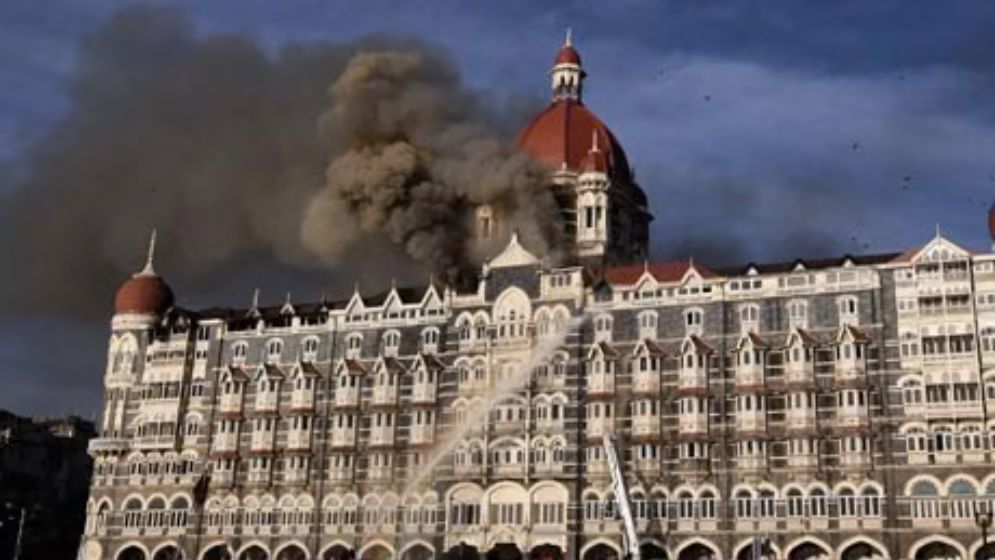
It is November 26 yet again, the anniversary of the 2008 Mumbai attacks. It’s a day when India not only relives one of the darkest chapters in its fight against terror but also has an opportunity to reflect back on how the fight against terror has evolved over time.
From a passive and often submissive strategy to a bold and highly kinetic strategy of “zero tolerance to terror,” the journey has been long but determined. A strong political resolve has aptly backed the armed forces in its sustained fight to dismantle the terror ecosystem, choke the support system, and bring terrorist forces to their knees, decisively. A brief glimpse of this was demonstrated during India’s response to the Pahalgam terror attack, which involved 88 hours of precision strikes into Pakistan in Operation Sindoor from May 7-10, 2025.
In recent weeks, another significant success was achieved in India’s fight against terror. On November 19, while addressing a counterterrorism conference in Delhi, India’s Home Minister Amit Shah hailed the security forces for eliminating the last known home-grown terrorist, Latif Bhat. Shah claimed that, with this success, the entire Kashmir has become free from India-born terrorists, marking a major milestone in India’s fight against terrorism. He added that India needs to further strengthen the concept of a proactive offensive approach in its counterterrorism policy, with a greater emphasis on enhancing structural and operational capabilities, to continue on this path.
As per data maintained by the South Asia Terrorism Portal, the number of terrorists killed in the current year is down to 25 from a high of 3,005 in 2001 and 1,232 in 2008. Similarly, casualties among the Indian security forces have dropped to four this year from highs of 883 in 2001 or 366 in 2008. Civilian casualties too have seen a drastic reduction with only two fatalities recorded this year against 1,508 in 2001 and 915 in 2008.
Does this mean that India has all but won its fight against terror? Does it mean that India can now focus more of its resources and thoughts on ever increasing threats on the conventional front? Has India’s multilayered counterterror strategy finally delivered the knock-out blow to cross border terror? Most of these questions do not have simple and binary answers and premature celebrations could undo years of hard work and sacrifices made by the armed forces.
A look back at how India’s counterterror strategy has evolved may offer answers to some of these questions.
Early Years of Terror Attacks: India’s Weak Response
Although the 26/11 terror attack in the financial capital of India, Mumbai, is often called India’s 9/11, India’s fight against terror truly started when cross-border terror from Pakistan commenced in Kashmir in early 1990s. Despite previous evidence, including captured documents, the direct role of Pakistan was first exposed with the hijacking of IC-814, an Indian Airlines flight, on December 24, 1999. Under huge public and international pressure – and also facing a lack of viable politico-military options – India agreed to release Pakistan based terrorists like Ahmed Omar Sheikh and Masood Azhar in exchange for over 160 civilian hostages.
The attack on the Indian Parliament in Delhi by Jaish-e-Mohammed (JeM), a Pakistan based terrorist group, on December 13, 2001 outraged India and led to a large-scale military mobilization under Operation Parakaram. Once again, under tremendous international pressure, especially as both countries had recently acquired nuclear weapons, the two-year stand-off finally ended without any direct punishment to Pakistan.
There were other terror attacks too, like the 2002 Akshardham Temple Attack, the 2006 Varanasi serial bomb blasts, or the German Bakery Blast in 2010 in Pune. In October 2005, 59 people were killed in serial blasts that rocked popular Delhi markets of Sarojni Nagar and Paharganj. Again, in September 2008, months before the Mumbai 26/11 attack, multiple blasts rocked commercial spaces of Delhi including Connaught Place, Greater Kailash and Karol Bagh. On September 7, 2011, a briefcase bomb exploded outside the Delhi High Court, killing 12 people, claimed by a terror group Harkat-ul-Jihad Islami (HUJI), affiliated with al-Qaida and largely based in Pakistan.
However, the 26/11 terror attack was nothing like anything seen before or since. Ten heavily armed terrorists, trained and dispatched from Pakistan through a maritime route, struck the heart of Mumbai. Over the next 60 hours, they attacked multiple locations, including the Taj Mahal Palace Hotel, the Oberoi-Trident, Chhatrapati Shivaji Terminus, Nariman House, and Cama Hospital. By the time the siege ended, 166 people had lost their lives, including foreign nationals and security personnel. The attack was a sad reflection of India’s preparedness to fight terror, and the sea route taken by the terrorists exposed yet another major gap in India’s strategy for fighting terror.
In all these cases and many more, India failed to respond directly and decisively against Pakistan, despite conclusive proof of its direct support in these attacks. How and when did India change its strategy?
The Kinetic Strategy
The swearing-in of the Prime Minister Narendra Modi-led government in May 2014 had a significant effect on India’s counterterror strategy. As the Modi government consolidated its power, the counterterror strategy too acquired a more muscular form. A growing and assertive India was no longer ready to gather evidence, compile folders, and present it to Pakistan or the international community.
The terror attack on September 18, 2016 by JeM against an army camp in Uri, Kashmir, broke the shackles for the first time. A clear and decisive message had to be delivered. That led to the Modi government ordering the first cross-border surgical strikes, destroying multiple terrorist camps and infrastructure in Pakistan-administered Kashmir. It signaled a major shift in India’s strategy and rules of engagement regarding cross-border terrorism.
While the response did hold back Pakistan for some time, it did not end Pakistan’s support for cross-border terror. In another outrageous attempt to terrorize India, JeM terrorists unleashed another terror attack on February 14, 2019, this time on a police convoy in Pulwama, Kashmir, killing 40 soldiers. The response had to be decisive and punitive. The Indian Air Force was ordered to launch deep strikes on a JeM terror camp in Balakot, Pakistan on February 26, marking it the first time that India had crossed into Pakistani airspace to launch a strike against terrorist bases.
The terror attack in Pahalgam on April 22, 2025 took the fight to yet another level. Outraged both by the terror attack that killed 26 civilians as well as the method adopted by the terrorists – segregating Hindu men to be murdered – Modi led India’s resolve to fight back and vowed to track the terrorists “to the ends of the Earth.”
As a result, the Indian armed forces launched Operation Sindoor May 7, hitting the heart of the Pakistan-based terror network. Within four days, not only were nine major terrorist camps destroyed but even key military assets like airfields and radar stations were destroyed, forcing Pakistan to seek a ceasefire.
Has Terror Been Defeated?
There is no doubt that terror has been dealt a severe blow in recent years. From a passive and reactive policy, India is now a leading voice in the global fight against terror. Operation Sindoor has made it extremely difficult for Pakistan to undertake any future misadventures, especially as the costs imposed on it could be devastating.
India has made its intentions clear through a three-pronged strategy. First, the era of restraint and patience is over and Pakistan will have to pay a direct and heavy price for any terror attack in the future. Second, any future act of cross-border terror from Pakistan will be treated as an “act of war.” Third, Pakistani nuclear blackmail will no longer be a restraining factor in India’s response.
On February 23, 2026, India unveiled PRAHAAR, which provides a national counterterrorism framework for preventing, and responding to, terrorist activities and radicalization through coordinated “whole of government” and “whole of society” approaches. PRAHAAR addresses all counterterrorism objectives through a comprehensive, intelligence-led proactive framework built upon a seven-pillar strategy. It shifts India from a reactive security stance to a proactive doctrine by formalizing real-time intelligence sharing through the Multi-Agency Center (MAC), securing critical infrastructure, and deploying a swift, coordinated chain of command between state agencies/police and specialized central forces like the National Security Guard (NSG).
India has made fighting terror a core of its national security strategy. The results are there for all to see. However, the history of global fight against terror tells us that terror can never be fully defeated, especially if it is supported by an adversary across the border and has an active support system within the country. Fortunately, in India’s case, both have been dealt a severe blow.
The lure of money, which drove hundreds of youths to join terror groups or provide covert support, is on the decline, mainly due to two reasons. First, the massive developmental projects initiated in the Kashmir Valley with roads, a railway, and a huge uptake in tourism are providing the youth with positive job opportunities. Since the abrogation of Article 370 in Kashmir, many big-ticket projects have taken off and private investments, including foreign investments, are coming in. The movie industry is making a beeline back to Kashmir, more than 20 million tourists have visited Kashmir in the past two years and the Tulip Festival has been a huge draw.
Second, India’s multilayered anti-infiltration grid and intelligence-based operations have meant that the number of active terrorists present in Kashmir has drastically come down in recent years.
Does this mean that the fight against terror has been won? It would be premature to claim this and celebrate. Terror, like cancer, has a habit of relapses, and therefore a constant vigil is paramount. The current situation, where terrorism is unable to stop or impede the steady progress in Kashmir and elsewhere in the country, can easily be de-railed by one complacent move or a premature reduction or diversion of resources. Instead, it is time to further throttle the remaining roots of terror and eliminate the remaining support for it to survive in any form.