



 For all latest news, follow the Daily Sun's Google News channel.


India’s tech talent meets Singapore’s capital: match made in AI heaven?
A growing partnership with Singapore could give India the push it needs to become the next AI industry leader, analysts say
South China Morning Post
Published: 26 Nov 2026, 01:36 PM
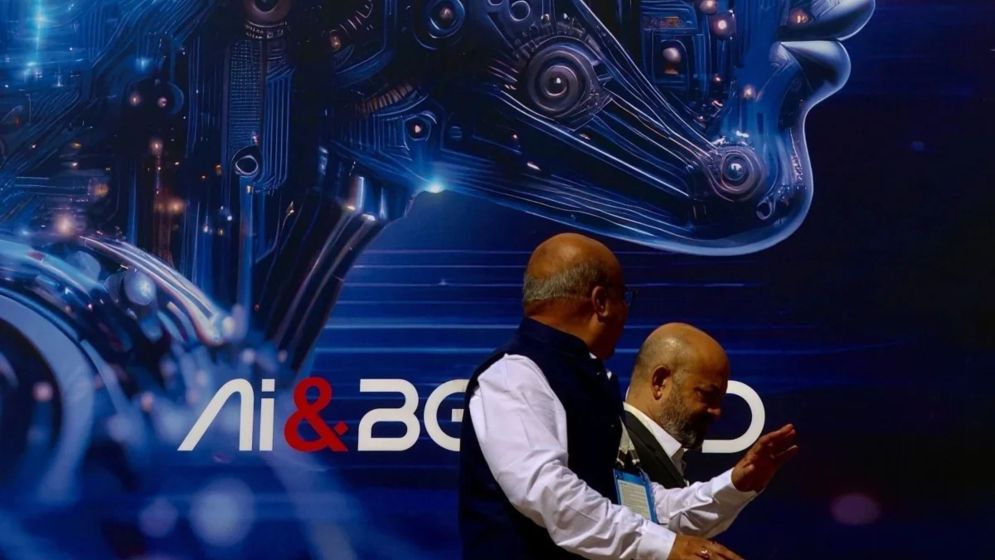
Photo: Collected
India may struggle to catch up with the United States and China in the race to develop cutting-edge artificial intelligence, but analysts say its growing partnership with Singapore could offer it another path to becoming a major AI player.
By combining India’s vast software talent pool and domestic
market with Singapore’s capital and hardware ecosystem, the two could develop a
model for building and exporting AI technology to rival industry leaders.
One sign of the deepening cooperation came in June, when
India’s Tata Communications launched a project to build a subsea cable
connecting tech hubs Mumbai and Chennai with Singapore, aimed at meeting the
growing AI needs of enterprises across Asia.
“We are strengthening the reliability, scalability and
performance of connectivity solutions for our customers across one of the
world’s busiest digital corridors,” Tata Communications said in a statement.
Despite its software prowess and engineering talent, India
currently lacks the computing infrastructure and investment needed to turn its
AI ambitions into globally competitive businesses.
“India generates
nearly one-fifth of the world’s data and possesses a phenomenal engineering
talent pool, but raw talent needs infrastructure to thrive,” said Anndy Lian, a
Singapore-based adviser to governments on blockchain and information
technology.
“Singapore offers exactly what India requires to monetise
this human capital”, he said, citing advanced capital markets, robust
regulatory frameworks and global connectivity.
Two years ago, New Delhi launched a $1.25 billion “IndiaAI
Mission” to nurture start-ups and build infrastructure, including establishing
three AI education centres focused on research.
Indian talent could plug into Singapore’s digital economy
ecosystem to build and export AI solutions on a global scale, Lian said.
Already, Singapore has drawn top AI and tech talent from the
South Asian nation, contributing to a significant cross-border talent flow.
India, which has widely been credited with successfully
rolling out digital platforms for public services, now aims to use them to
scale up AI businesses, with its efforts being recognised in Southeast Asia.
The country is expected to play a major role in an AI push
by Singaporean state-owned multinational investment firm Temasek, according to
Ravi Lambah, Temasek’s India head.
“AI is an interesting play for us globally,” he said. “In India specifically, we see the opportunity at the application layer where India is likely to see competitive advantages … India has got this huge talent pool and the whole services ecosystem.”
Education potential
The synergy between the two countries was creating “a direct
pipeline from Singaporean boardrooms to Indian tech parks”, said Jenny Zheng,
president of Redecentralise, a South Korean not-for-profit organisation.
The benefits of an India-Singapore collaboration in AI
extended well beyond business, she said. “We also see deep academic and
corporate ties, like IIT [Indian Institute of Technology] Madras partnering
with Singapore’s NUS [National University of Singapore] to build joint AI
research labs.”
Singaporean exchanges and Indian tech giants also collaborated to build cross-border payment rails, she said.
As India’s tech and IT sectors shift from a traditional
engineer-hour outsourcing model towards AI-driven and value-based enterprises,
Indian start-ups can make use of Singapore as a platform to train and upskill
their talent for global AI products, according to Zheng.
“Essentially, Singapore acts as the premium packaging and
distribution hub. Indian talent learns to build AI products that meet global regulatory
standards, transforming them from back-end coders into high-value global tech
founders and asset creators,” she said.
However, barriers such as fragmented data and AI regulations
persisted, she said, adding that India’s strict data localisation laws could
clash with Singapore’s more open model. India enforces sector-specific data
localisation rules, although it does not require general personal data to stay
in the country.
Another hurdle is talent mobility – as visa friction
prevents the free movement of engineers needed for hands-on collaboration. Both
governments needed a “bilateral AI data bridge agreement” to help data sharing
for research as well as fast track “special tech visas”, Zheng said.
Southeast Asian expansion
Zheng also sees potential for cooperation to expand beyond
Singapore into other members of the Association of Southeast Asian Nations such
as Indonesia, where India is already exporting and sharing its digital public
infrastructure, and Vietnam, which has been rapidly growing in hardware
manufacturing. Malaysia is also positioning itself as a regional data centre
hub.
An Asean-India Action Plan for 2026-2030 prioritises AI and
semiconductors. In January, an Asean-India Digital Ministers’ meeting pledged
to deepen cooperation and reaffirmed the two sides’ shared commitment to
developing the digital domain.
Melody Chan, general partner at investment fund Arkroots,
said the meeting endorsed practical AI cooperation on capacity building,
standards and case studies.
India-Malaysia round tables are also currently exploring
start-up and talent collaboration, and Indian universities are seeking partners
in Vietnam for AI and quantum computing, according to Chan.
Raj Kapoor, chairman of the India Blockchain Alliance, said
that despite India ranking second globally with a strong pool of authors and
inventors, it faced a major brain drain problem as researchers and founders
moved to the US for capital and customers.
To ensure that its talent stays at home, India needs
capital, according to Kapoor – and this is where Singapore comes in. The city
state consistently ranks as the largest source of foreign direct investment
equity capital for India.
“The next step is to direct a share of that capital into
Indian AI venture and growth funds, rather than mainly into property and
infrastructure. That will change the dynamics,” he said.
There is another role Singapore can also play, according to
Kapoor.
“Singapore can also serve as a trusted test bed for Indian products headed abroad,” he said. “A product that has been proven in Singapore is easier to sell to global banks, health systems and governments.”