


 For all latest news, follow the Daily Sun's Google News channel.


UK launches £27m drive against online abuse of women
London also confirms major global summit on ending gender-based violence for April 2027
Daily Sun Report, Dhaka
Published: 26 Nov 2026, 01:04 PM
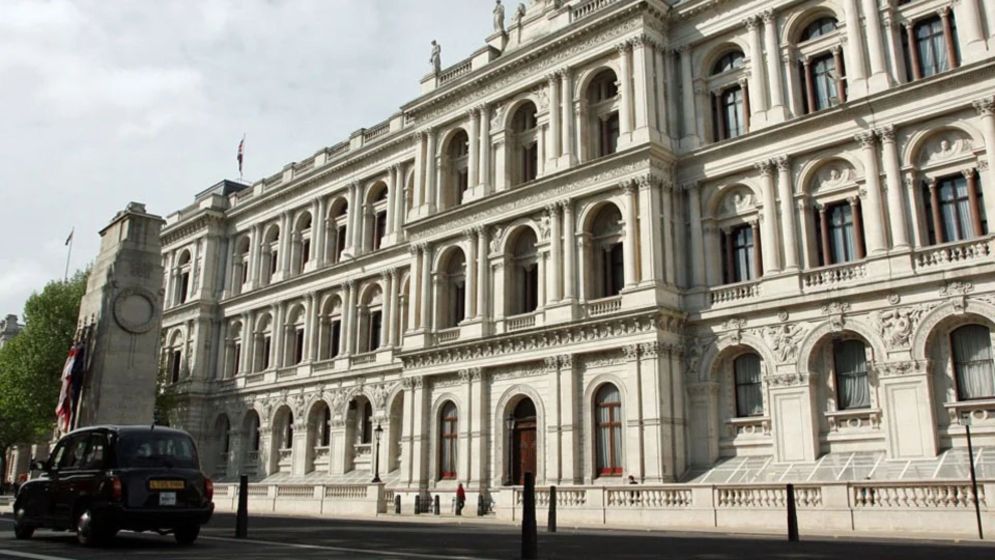
The Foreign, Commonwealth and Development Office (FCDO), UK. Photo: Collected
The United Kingdom has launched a new £27 million programme to protect women and girls at home and abroad from online abuse, including the growing threat posed by artificial intelligence (AI), ahead of a major international summit scheduled for April 2027.
Named Thrive, the UK-funded initiative aims to curb the
rising use of AI and digital platforms to stalk and harass women, as well as to
create or share non-consensual intimate images.
Under the programme, the UK will partner with technology
companies, AI developers, and digital start-ups, particularly in emerging
markets, to build safety features into products from the outset, including
automatic image blurring and age restrictions. UK-funded specialists will also
provide legal and technical assistance to other countries to strengthen online
safety laws and close cross-border loopholes exploited by perpetrators.
Thrive will scale up a global Non-Consensual Intimate Image
(NCII) abuse clearing centre so countries, platforms, and support organisations
can coordinate to identify, report, and remove harmful material before it
spreads. It will also develop a Model National Framework on Addressing NCII to
help governments align legislation, regulation, and enforcement responses.
"Online abuse does not stop at national borders. Within
seconds, a real or AI-generated image can be shared around the world,"
Foreign Secretary Ed Miliband said. "The UK is leading international
action to strengthen online safety laws, and stopping criminals from exploiting
loopholes in emerging technology, protecting women and girls from appalling
abuse."
The funding forms part of a broader UK pledge to tackle
violence against women and girls domestically and internationally ahead of the
Global Summit on Violence Against Women and Girls, which London confirmed will
take place in the UK capital on 27–28 April 2027.
The summit will bring together governments, non-governmental organisations, the private sector, philanthropy, multilateral institutions, survivors, and influencers to make concrete commitments and track progress. The initiative builds on the International Coalition to End Violence Against Women and Girls, launched by the UK in 2026 alongside South Africa, Brazil, Morocco, Spain, Jamaica, Bosnia and Herzegovina, Australia, and France, and follows Britain's December 2025 domestic pledge to halve such violence within a decade.
 According to UK government figures, around 85% of women
globally have witnessed or experienced online violence, while reports of online
image abuse to the UK’s Revenge Porn Helpline surged by 1,463% between 2019 and
2025.
Foreign Office Minister for Tackling Violence Against Women
and Girls Uma Kumaran described violence against women and girls as "one
of the greatest injustices in our world today," noting that one in three
women experience abuse in their lifetime.
"That’s why we are cracking down on online abuse around
the world and strengthening protections for survivors," she said, adding
that next April's summit in London would aim to accelerate global action.
The UK government is also establishing an International
Survivor Advisory Board in partnership with the Brave Movement, a
survivor-centred global advocacy group founded in 2022, so people with lived
experience can help shape policy decisions. Alongside this, London has
initiated international work to explore stronger cross-border protections for
victims of domestic abuse.
Documentary maker and campaigner Zara McDermott, who
experienced intimate image abuse at age 14, welcomed the global push.
"Online abuse is everywhere; it travels borders and the globe," she
said. "I am pleased to see the UK government taking action on a global
scale to strengthen protections for women and girls, hold perpetrators
accountable and create a safer digital world for future generations."
Domestically, the UK has classified intimate image abuse, cyberflashing, and choking as priority offences under its Online Safety Act, requiring tech firms to remove non-consensual intimate images within 48 hours of being flagged. An amendment to the Crime and Policing Bill has also criminalised "nudification apps", AI tools used to generate synthetic sexualised images of women and girls.