



 For all latest news, follow the Daily Sun's Google News channel.


Kidnapping emerges as a growing tool of militant pressure in Pakistan
While it doesn’t get the same attention as suicide bombings or gunfights, kidnapping is also a rising concern in Balochistan
The Diplomat
Published: 25 Nov 2026, 06:59 PM
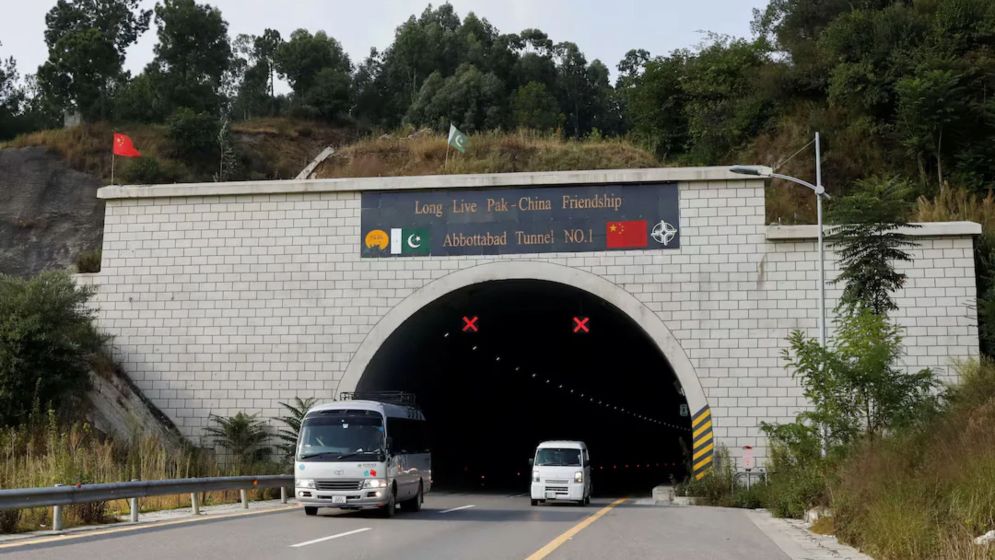
Pakistan's N25 highway. File Photo: Reuters
Kidnappings are increasingly being used as a tactic of
intimidation and leverage across Pakistan amid ongoing unrest, targeting
officials, workers, and travellers even as overall armed attacks decline. The
surge has been driven largely by Balochistan, which accounted for nearly 80% of
abductions recorded nationwide last month.
Pakistan’s largest province by area, Balochistan borders
Afghanistan and Iran and holds major economic significance due to its strategic
location, mineral and natural resources, mining sector, and key transport
corridors. However, it has long faced a separatist insurgency by armed groups
demanding greater political autonomy and control over the province's natural
resources.
According to the Islamabad-based security think tank
Pakistan Institute for Conflict and Security Studies (PICSS), 88 people were
abducted in armed violence-related incidents across Pakistan in October, up
from 72 in September, a 22% monthly rise and the highest single-month tally in
the past year. Of those, 70 abductions took place in Balochistan, accounting
for nearly 80% of the nationwide total.
The rise came even as armed attacks declined. Pakistan
recorded 143 armed attacks in October, down 37% from 226 in September.
According to the same PICSS assessment, fatalities from such attacks fell 57%
from 260 to 111, while injuries dropped 71%. The figures suggest abductions
merit greater attention as a distinct dimension of insecurity, as security
assessments often focus primarily on attacks and casualties while overlooking
abductions by armed actors.
On 16 October, armed men stopped the vehicle of Rakshan
Division Commissioner Asadullah Kakar while he was travelling from Quetta to
Kharan via the Noshki-Kharan highway, abducting the senior official and his
driver. The driver was later released, and no group publicly claimed
responsibility according to initial reports.
In a similar incident on 20 September, Kharan Deputy Commissioner Munir Ahmed Sumro was abducted along with a companion and released nearly two weeks later on 3 October following mediation by local tribal elders, highlighting the role of tribal mediation in securing recoveries. On 16 October, armed men abducted 20 Levies Force personnel returning home after training in Kalat district; all 20 were rescued safely four days later on 20 October, with no group claiming responsibility.
Two days later, armed men abducted 18 miners and the son of
a marble factory owner from a mine in the Nal area of Khuzdar, shooting and
injuring one miner who tried to escape, while looting vehicles and equipment
from the site. No group claimed responsibility for that attack either.
Who is behind many of these abductions remains unclear,
including how many are carried out by militant groups versus criminal gangs. In
September, Pakistani security forces rescued 23 abductees during an operation
near Kalat. The military said armed men had set up illegal checkpoints on the
N-25 highway to kidnap travellers, extort ransom, and hijack vehicles, adding
that five militants were killed in the operation.
The military blamed a group it terms
"Fitna-al-Hindustan," a label Pakistani authorities use for the
Baloch Liberation Army (BLA) and its affiliates. The BLA has claimed responsibility
for attacks on Pakistani security forces and infrastructure, though separatists
are not behind every abduction or disappearance in Balochistan. Criminal gangs
also abduct people for ransom, alongside allegations of enforced
disappearances—claims that families say involve security agencies holding
relatives without disclosing their whereabouts, which authorities deny.
Abductions by armed groups and enforced disappearances are distinct issues.
Beyond human cost, the wave of abductions carries heavy economic
repercussions. Operations in mining, construction, and transport rely on
workers travelling across districts, and the abduction of 18 miners and looting
of equipment in Khuzdar illustrates direct disruption to business activity.
Such incidents can also deter future investment, complicating Islamabad's
efforts to attract foreign investment to Balochistan's natural resources.
Risks to businesses in Balochistan extend beyond attacks on
facilities, as staff, contractors, suppliers, and local partners can be
targeted while in transit, forcing companies to restrict movement and tighten
security. Meanwhile, the N-25 highway links Karachi to the Afghan border via
Quetta as a vital trade artery, and the military said militants used temporary
checkpoints on the route to target vehicles and travelers disrupting cargo
movement and driving up transport costs.
A decline in conventional armed attacks in Balochistan does not necessarily mean the security situation has improved. Armed groups and criminal networks are increasingly using abductions to intimidate people, pressure businesses, and disrupt economic activity, making kidnappings one of the most pressing security concerns in Pakistan.