


 For all latest news, follow the Daily Sun's Google News channel.


India gains influence
Diplomatic Influence was India’s strongest measure
Hunter Marston, Jack Sato, Lowy Institute
Published: 23 Nov 2026, 04:37 PM
Despite a dip in relative economic capability and a year focused on internal challenges, India played a much more influential role in Asia.
India consolidated its position as a major power in
2026, rising to an overall score of 40.5 points. The gap in power between India
and China reached its narrowest point since the inception of the Asia Power
Index in 2018 – though China’s power remains 80% higher than India’s.
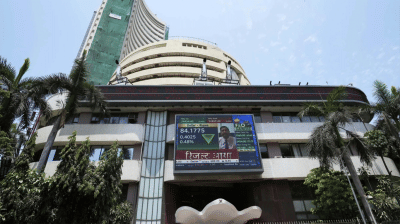
India had a mixed economic year: its Economic
Capability score dipped slightly to 26.4 points, though it held on to third
place. A weakening rupee and a structural change in how the International
Monetary Fund measures economies both dragged down its relative GDP standing,
compounding a nearly $20 billion drop in outbound investment.
However, this impact did not carry over to its
Future Resources, where its score rose to 56.2 points on the back of an
improved economic forecast, highlighting the scale of the opportunities ahead
for the country.
Diplomatic Influence was India’s strongest measure
and held steady in a year when most countries faltered, slipping only slightly
to 70.3 points. Expert appraisals of Prime Minister Narendra Modi’s regional
leadership improved markedly, lifting India three places. He is now judged to
be the second-most effective regional leader, behind Chinese President Xi
Jinping.
However, perceptions of his global leadership and
strategic ambition have both diminished, reflecting India’s lower diplomatic
profile during the conflict in the Gulf – exemplified by its muted response
when a US submarine sank an Iranian naval vessel returning from an exercise
hosted by India.
While its economy and diplomacy showed mixed results
in 2026, India grew more influential in Asia. Relative stability in its
regional trade relations and investment ties made it one of only five countries
whose Economic Relationships score did not fall, lifting it two places to
seventh.
Its Defence Networks score rose to 18.6 points, as
greater regional defence engagement and BrahMos missile sales to Southeast Asia
lifted it two places to ninth. India’s Cultural Influence rose to 43.8 points,
driven by improvements across all three dimensions: cultural projection,
information flows, and people exchanges.
These improvements helped India narrow its Power
Yield – the divergence between a country’s expected power based on its
resources, and its actual comprehensive score – for the first time since 2023.
Combined with its rising Future Resources score,
this suggests India can sustain its growing influence.