


 For all latest news, follow the Daily Sun's Google News channel.


China’s prison for the elite is massively expanding
The Economist
Published: 22 Nov 2026, 09:43 PM
File Photo: Collected
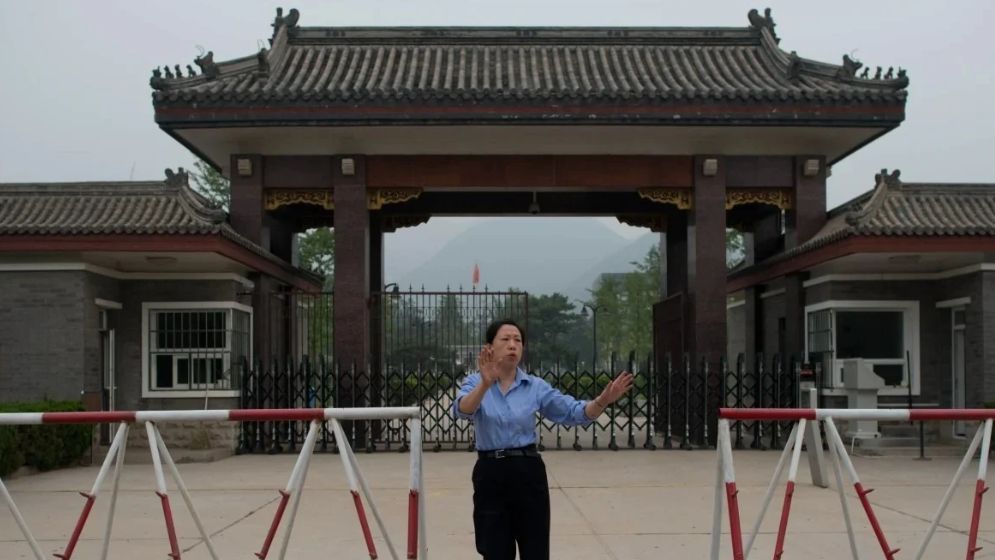
Qincheng Prison has a fearsome reputation. It lies at the foot of a mountain range on the outskirts of northern Beijing. Since it was built in the 1950s under Chairman Mao it has held China’s most sensitive political prisoners, including many fallen officials. Student leaders of the Tiananmen Square protests were sent to Qincheng in 1989, where they had to endure solitary confinement and sleep on wooden planks. A former inmate described it as “a place where you come to realise you are not a human being”.
Satellite images analysed by The Economist show that China’s most famous prison is expanding faster than at any time since the 1960s during the Cultural Revolution. Construction that began early this year will probably add at least 300 cells: an increase of 50%. Details about the facility are treated as state secrets. But the growth coincides with a widening purge of senior officials that is being carried out by China’s ruler, Xi Jinping (105 minister-level officials had been imprisoned or punished in other ways as of September, more than one and a half times the number in the whole of 2025, see chart). It may suggest the prison has returned to the crowded conditions seen in bygone eras of political and social tumult.
Qincheng is the only prison operated by the Ministry of Public Security, which oversees China’s police forces (their duty includes hunting down critics of the Communist Party). Zhou Yongkang, who was once in charge of the ministry, is now imprisoned there. Jiang Qing, Mao’s wife, helped purge so many high officials during the Cultural Revolution that Qincheng had to be expanded in 1968. Jiang was herself imprisoned there after Mao’s death—she occupied the cell where her interrogator had been confined a few years earlier.
Life in Qincheng is bleak. Renovations have added new roofless, high-walled pens in which lucky prisoners get occasional fresh air. Solitary confinement is common—one inmate was kept this way for 20 years. Others are typically kept in cells with up to half a dozen other people, and a squat toilet. Some go insane. The food is bland, says a former detainee, and at times is simply poured into inmates’ hands. He recalls showers only once every two weeks.
Not all prisoners have it so rough. Well-connected ones fare better. Bao Tong, an official locked up after the Tiananmen Square unrest, got a mattress and an egg at breakfast—but only after his wife complained to Jiang Zemin, who was then China’s leader. Zhou, the former security chief, is said to tend to a vegetable patch. Bo Xilai, once Xi’s rival for the job of party leader and now serving a life sentence, reportedly wears a Western suit instead of a drab prison uniform (his father, Bo Yibo, also did a stint in Qincheng).
Disgraced cadres and sensitive political prisoners are put in Qincheng to keep them apart from ordinary criminals. People are sent there “not because of rank, but because of what they know”, said a former Ministry of Justice official in 2018. The facility’s high security prevents escape or unauthorised contact with the outside world that could threaten regime stability, says Ling Li of the University of Vienna. But it is not the kind of banishment errant officials suffered in imperial days: Qincheng is only an hour by car from the city centre.
In 2021 work began on a vast barracks on the western side of the compound, likely for police (this was first reported by Youshu, a Substack blog whose author is anonymous). It is the size of ten football pitches and has four dormitories, an athletics track, a parade ground and probably an armoury. In 2022 a north-east cell block was refurbished and exercise pens added.
Locking in growth
Qincheng last received a new cell block in 2016. This year’s building work has involved demolishing two blocks to make way for a bigger complex, possibly six storeys tall. One of the former blocks, number 203, is where the Panchen Lama, a Tibetan religious leader, was sent in 1968 and Liu Xiaobo in 1989 (he later became China’s only Nobel peace-prize winner and died in custody). The prison administration has also expanded. Cranes are working on the eastern side of the compound, where staff live. Two other structures are hard to identify, but one is inside the prison’s internal walls, meaning it may also house inmates.
There has been no mention of the construction in China’s media. “Nobody’s talking. But that’s partly because nobody’s leaving,” says John Gerson, a former British diplomat. Indeed, the number of inmates is almost certainly rising, for now. The prison tends to get emptier when there is political change in the party, but Xi shows every sign of being a lifer at the top.