


 For all latest news, follow the Daily Sun's Google News channel.


Who would gain from carving up Pakistan’s provinces?
Daily Sun Report
Published: 19 Nov 2026, 07:58 PM
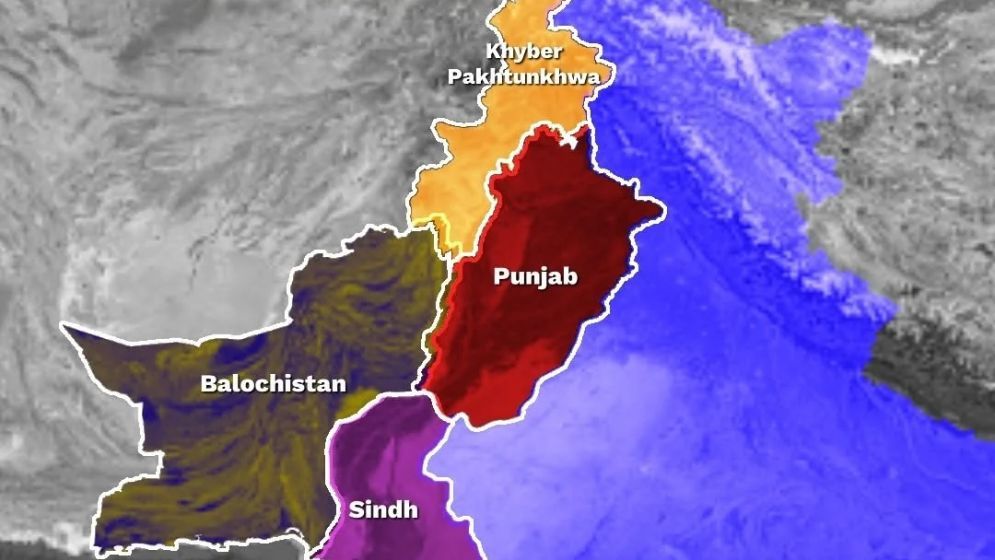
Pakistan's proposal to break up its existing four provinces and create as many as 12 new ones has sparked a fresh political debate, potentially paving the way for a major restructuring of the country's administrative and political landscape.
An Al Jazeera report suggest that powerful
army chief Field Marshal Asim Munir also supports the idea of creating smaller
provinces.
Supporters of the proposal argue that smaller
administrative units would make governance more effective, bring
decision-making closer to the people and improve access to public services.
Defence Minister Khawaja Asif has already
publicly backed the creation of smaller provinces, while Interior Minister
Mohsin Naqvi has proposed holding a referendum on the issue.
However, changing the existing provincial
boundaries will not be easy.
Under Pakistan's Constitution, any alteration
to a province's boundaries requires a two-thirds majority in both houses of
parliament, as well as the approval of two-thirds of the relevant provincial
assembly.
Meanwhile, some analysts believe the
initiative may have political objectives beyond administrative reform. They
argue that the existing provincial structure has allowed certain political
parties to establish strong regional bases. Creating new provinces could alter
their political influence and the balance of power.
Punjab and Sindh are particularly important
in this regard because of their large populations. According to available
statistics, Punjab has around 128 million people, while Sindh has approximately
56 million. Together, the two provinces account for nearly three-quarters of
Pakistan's total population.
The Pakistan Muslim League-Nawaz (PML-N), led
by Prime Minister Shehbaz Sharif and his elder brother Nawaz Sharif, has long
dominated politics in Punjab. In Sindh, the Pakistan People's Party (PPP), led
by the Bhutto family, has maintained its political dominance for decades.
Analysts fear that dividing Punjab and Sindh
into several smaller provinces could weaken the long-standing political
strongholds of these parties. The move could particularly threaten the PPP's
influence in Sindh, making provincial restructuring a major political challenge
for the party.
However, the debate is not limited to
political power. Control over natural resources could also become a significant
factor.
Pakistan's northern regions, Balochistan and
Khyber Pakhtunkhwa possess substantial natural and mineral resources. Various
analyses have highlighted the military's interest in the exploration and utilisation
of these resources.
Some analysts believe that restructuring the
provinces could change the administrative and political control of mineral-rich
areas, potentially redefining the authority of local political leaders and
their role in managing natural resources.
This raises another question: Why has the
debate over provincial restructuring gained momentum in Pakistan now?
One possible explanation involves the United
States. According to an analysis, Asim Munir is keen to attract US investment
in Pakistan's mineral resources sector. His relationship with US President
Donald Trump could also play an important role in this regard.
The analysis suggests that the push for
provincial restructuring may be linked to efforts to demonstrate tangible
progress in attracting American investment.
Questions have also emerged over the growing
role of the military in Pakistan's politics. Successive civilian governments
have increasingly involved the armed forces in economic decision-making,
drawing criticism.
Analysts argue that such coordination between
military and civilian authorities could further strengthen the influence of
unelected institutions outside the parliamentary framework.
Overall, the debate over provincial
restructuring in Pakistan has gone far beyond administrative reform. It now
involves political parties' hold on power, the military's influence, economic
interests and control over natural resources.
The key question is whether redrawing the
country's political map would bring power closer to ordinary people or further
concentrate political and economic control. How the proposed restructuring
ultimately reshapes Pakistan's balance of power remains to be seen.
Source: Al Jazeera