


 For all latest news, follow the Daily Sun's Google News channel.


UN expert warns of rising insecurity for Rohingyas ahead of ICJ ruling
Daily Sun Report, Dhaka
Published: 18 Nov 2026, 09:58 PM
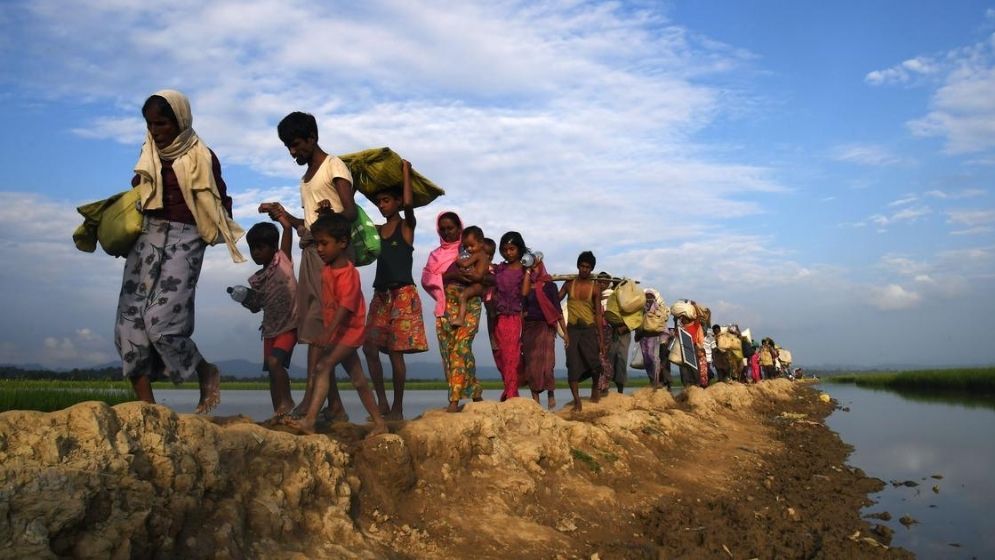
AFP File Photo
The special rapporteur on the situation of human rights in Myanmar, Kelley E Currie, warned on Wednesday that escalating armed conflict in Myanmar, insecurity within the refugee camps and reduced funding are worsening a humanitarian and human rights crisis that cuts across western Myanmar and into southeastern Bangladesh, where more than a million Rohingya and other refugees from Myanmar are sheltering.
Currie ended her first country visit to
Bangladesh on the eve of a highly anticipated International Court of Justice
(ICJ) ruling that will determine whether the State of Myanmar committed the
crime of genocide against the Rohingyas in 2017, in a landmark case brought
before the Court by The Gambia, according to a UN Human Rights Council press
statement issued in Geneva.
“Despite the intensified conflict in Myanmar
generally and Rakhine State specifically, donor support for humanitarian
response continues to decline,” Currie warned. “The budget for refugee
assistance in Bangladesh is at an all-time low, despite the population in need
being at an all-time high.” She noted that it had become more difficult to
assist individuals inside Rakhine State in line with humanitarian principles.
The special rapporteur welcomed the decision
of the Bangladesh government to form a special committee to develop a
comprehensive strategy for the early, safe, voluntary and dignified return of
Rohingyas and others to Myanmar. While the final strategy has not yet been
released, Currie said she was encouraged that the government was working to
develop a more holistic and practical approach.
“The continued humanitarian, economic and
security challenges impacting refugee camps and host communities in Bangladesh
are intrinsically linked to the ongoing armed conflict in Rakhine State, which
is embedded within the broader political context and armed conflict in
Myanmar,” she said. “Improving overall security in the camps is of paramount
and urgent importance to the overall well-being of the refugee and host
communities.”
Currie highlighted how insecurity and
lawlessness in and around the camps severely impact the most vulnerable
populations. When combined with a lack of economic or educational opportunities
for both refugees and host communities, this insecurity drives the use and
trafficking of illegal drugs, involvement in smuggling or human trafficking,
recruitment into criminal or armed groups and addictive online gambling – all
of which exacerbate gender-based violence and the risk of harm to children, and
further drive human trafficking.
“This vicious cycle of insecurity and
negative coping strategies keeps both refugees and host communities from living
in peace and dignity. It is also feeding the armed conflict in Myanmar that
prevents refugees from being able to safely return home,” the expert said.
Currie urged policymakers and international
partners to contemplate more holistic strategies for both refugee and host
communities.
“All parties should move from strategies
based on a ‘charity’ lens that treat refugees as beneficiaries with no agency,
towards a rights-based lens that recognises them as rights-holders. This is the
starting point for any durable solution.”
Authorities in Naypyidaw bear the primary
responsibility for the current crisis, which is rooted in the ongoing denial of
identity, security and human rights for Rohingya and other communities, in
Rakhine and throughout Myanmar. “There can be no durable solution until this
denial of rights is addressed,” Currie reiterated.
The expert will present her report on the visit at the UN Human Rights Council in March 2027.