


 For all latest news, follow the Daily Sun's Google News channel.


A former Pakistani army captain now commands BLA
The Diplomat
Published: 18 Nov 2026, 08:23 PM
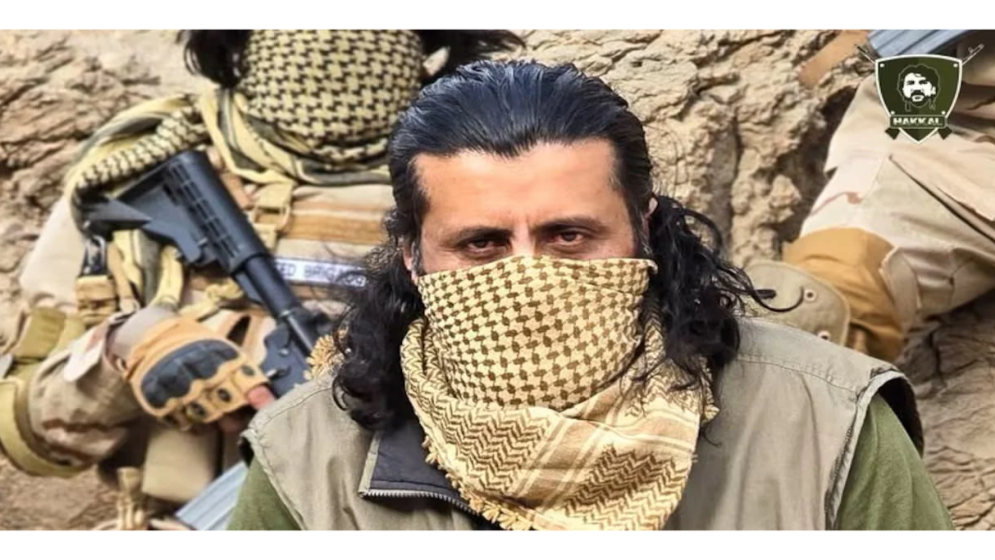
On November 14, Rahman Gul, also known as Ustad Mureed, was appointed
the head of the Baloch Liberation Army (BLA). Gul has a unique background:
after spending eight years in the Pakistan Army, he left and joined the Baloch
insurgency. The Jamestown Foundation reported that he fought in Waziristan as
well as on the Line of Control. Gul was the commander of the Majeed Brigade,
the BLA’s suicide attack unit, prior to assuming control of the BLA itself.
Pakistan and China have both expressed growing concern
regarding the Baloch insurgency, which both regard as terrorism. Now, the
insurgency has a commander that was trained and developed by the Pakistan army.
He will most likely implement a style of leadership and military strategy that
will be dangerous for both Pakistan and China.
Gul has new ideas regarding military strategy. In
January-February 2026, the BLA implemented a large-scale offensive, known as
Operation Herof 2. The offensive lasted six days, and resulted in a heavy death
toll for the BLA. His appointment is interpreted as a judgment on Herof 2. The
Pakistan Institute for Conflict Studies and Security (PICSS) evaluated that the
“the tactical doctrine and exceptionally heavy costs of Operation Herof 2” were
what led to the ouster of previous BLA leader Bashir Zeb.
PICSS, citing insiders in the BLA, reported that Gul favors
small and mobile teams over large and inflexible units. Gul believes that large
units draw the concentration of a country’s military and increase the risk of
loss for the BLA.
Gul’s cadres are likely to maintain command discipline and
strategic patience. It is expected that Gul will focus on maintaining a core of
trained cadres. Gul, who is also a Brahui poet, attracts more Baloch youth than
former commander Bashir Zeb. With the right planning and discipline, the BLA is
capable of carrying out more targeted attacks.
The BLA under Gul is unlikely to carry out mass attacks.
However, due to Gul’s experience in the Pakistani military, other senior
commanders’ knowledge of military tactics, and the BLA’s focus on suicide
attacks, the threat posed by small, highly mobile BLA cells cannot be countered
easily. Additionally, small attack cells are more difficult to defeat, and the
BLA can quickly replace lost commanders in small operations.
The concern with Gul’s leadership is further compounded by
the increase in violence in 2026. Between the second and third quarters of
2026, the number of violence-related deaths in Balochistan almost tripled, with
829 deaths in the third quarter. Unlike Herof 2, which quickly lost momentum,
the current BLA strategy is organized and patient enough to attack for long
periods of time.
China will be alarmed as well, because Gul is believed to be
the mastermind behind the increased targeting of Chinese nationals by the BLA
in recent years. Between 2021 and 2024, at least 20 Chinese nationals,
including employees of Beijing-funded projects, were killed in different terror
attacks in Pakistan.
In 2022, three Chinese nationals, lecturers working at
Karachi University, were killed in a bomb blast. The next year, in another
attack, BLA terrorists killed several Chinese engineers working in a highway project
near Karachi. According to PICSS, Gul is believed to have planned both
attacks.
“Rahman Gul’s public messaging has long placed China at the
centre of the BLA’s strategic target set,” PICSS noted. Under Gul’s leadership,
then, the BLA will likely focus on carrying out more such attacks on Chinese
personnel and projects in the years to come.
The Chinese government has been quite tough on Pakistan,
pressuring Islamabad to take sufficient measures to counter BLA attacks. After
the terror attack on the Karachi airport in 2022, in which several Chinese
nationals were killed, China demanded that Pakistan secure its nationals. In
early 2026, Pakistan established a new protection unit for Chinese nationals to
further secure Chinese personnel working on government-funded projects in
Pakistan.
Pakistan convinced Washington to name the BLA in its joint
statement with the United States during the Pakistan-U.S. Counter Terrorism
Dialogue in 2025. Just before that, the U.S. designated both the BLA and the
Majeed Brigade as Foreign Terrorist Organizations (FTO), a longstanding request
of Pakistan’s.
Funds are key to Gul’s leadership and continued BLA
operations. The U.S. State Department’s FTO designation permits interagency
cooperation to trace and seize terrorist financing. A joint effort to manage
cyberspace and media can lessen the impact of BLA attacks and thwart further
recruitment. Closed intelligence channels with Islamabad can tighten the net on
Gul and other BLA leaders. The support of the U.S. may help Pakistan gain
actionable intelligence to protect national interests, especially if Gul is
listed as a Specially Designated Global Terrorist (SDGT).
Pakistan looks toward both China and the United States to
counter the threat of the BLA in Balochistan. U.S. and Chinese investment in
Balochistan (the Reko Diq and Saindak gold mines, respectively) may be a reason
for both to extend help. Before entering Balochistan with its own investment,
the U.S. was more concerned about Chinese investment in Pakistan via CPEC, and
had reason to support Baloch nationalists who contested CPEC. Now Pakistan can
seek counterterror assistance from both China and the United States to
neutralize common threats.
However, only an amicable political process to alleviate the
rights and representation concerns of the Baloch people will help pacify
grievances and finally resolve the insurgency. The war against terrorism in
Balochistan is likely to continue for a long period.