


 For all latest news, follow the Daily Sun's Google News channel.


Pakistan’s elites enjoy global travel while ordinary citizens face restrictions
The Diplomat
Published: 13 Nov 2026, 07:52 PM
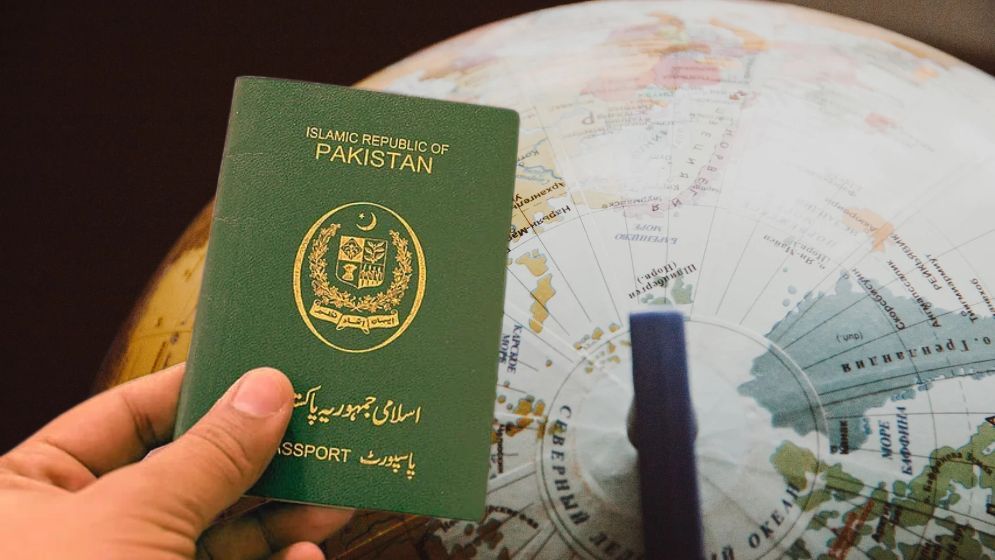
Pakistan’s history is full of examples of the elite – which includes the military, intelligence agencies, politicians, judges, bureaucrats, and their supporters – exploiting official privileges. The most recent episode involves the expansion of official passport access.
Pakistan’s Senate, the parliament’s upper house, recently passed a bill allowing former lawmakers to retain their official (blue) passports even if they did not complete their terms in the Senate or National Assembly (Pakistan’s lower house). This means that if someone was a parliamentarian for even a short time, they – and their spouse – can enjoy the privilege of an official passport for life.
Former parliamentarians and their spouses already enjoyed passport privileges under earlier provisions; the new bill sought to extend eligibility to lawmakers who had not completed a full term.
A separate bill also aimed to make dependent children of former lawmakers eligible for this facility – including “children” of up to 28 years old. However, this proposal was withdrawn after strong criticism.
Pakistani media reported that the authorities have issued some 70,000 blue passports, whereas the actual number of those who needed these passports for official travel was closer to 25,000.
The preferential treatment of the ruling elite sharply contrasts with the difficulties faced by ordinary Pakistani passport holders. In the July 2026 edition of the Henley Passport Index, an authoritative global passport ranking, Pakistan’s passport was ranked as the fourth-worst passport in the world. Only the passports of Afghanistan, Syria, and Iraq ranked below Pakistan’s. These countries have endured decades of conflict and instability.
Interestingly, Yemen and Iran, which are both currently facing wartime conditions, actually have better passport rankings than Pakistan.
Pakistan’s low passport ranking means that ordinary citizens must acquire a visa for nearly all international travel. Pakistani travelers often report difficulties at embassies when applying for visas, including intense scrutiny, lengthy visa processing times, and higher visa rejection rates.
The business community is particularly affected by the low rank of Pakistani passports. Visa delays and rejections often prevent Pakistani businesspeople from exploring new markets, negotiating contracts, and attending international trade expos.
For example, in 2023, visa rejections by Germany prevented Pakistani businesspeople from attending Heimtextil, an international home textiles trade fair. Farooq Khan, a representative of the All Pakistan Bedsheet and Upholstery Manufacturers’ Association (APBUMA), said that “the majority” of Pakistani business owners who applied for visas to attend the 2023 event in Frankfurt, Germany, had their applications rejected.
Khan further warned that this could deprive Pakistani exporters of approximately $5 billion in potential orders. Textiles are Pakistan’s largest export sector, accounting for roughly 60 percent of merchandise export earnings. The visa restrictions on ordinary passport holders thus directly affect Pakistan’s struggling economy.
The consequences of Pakistan’s weak passport extend beyond the business community. Pakistani students seeking educational opportunities abroad also face challenges associated with their ordinary passports.
According to a report published by Gallup Pakistan in 2024, Pakistani applicants faced a 52 percent visa rejection rate for the Schengen Area, a visa-free travel zone covering 29 European countries. High rejection rates lead to disappointment and impose substantial financial costs. According to one report, Pakistanis spent 5.3 million pounds on rejected U.K. visa applications in 2023.
Instead of addressing the factors behind the ordinary passport’s low ranking, Pakistan’s elites focused on expanding the benefits they receive using official blue passports. The government has secured agreements with several countries that allow blue passport holders to travel without obtaining visas in advance. These arrangements provide travel privileges unavailable to ordinary passport holders.
In the wake of the Joint Defense Agreement signed between Pakistan and Saudi Arabia, the two states also signed an agreement in September 2026 abolishing visa requirements for holders of diplomatic, official, and special passports. The exception did not extend to ordinary passport holders. Similarly, on October 14, Pakistan signed an agreement with Oman under which diplomatic, special, service, and official passport holders would be exempt from visa requirements.
As of July 2026, Pakistan’s blue passport holders enjoyed visa-free access to 55 countries. These included 22 European countries, 14 of which were part of the Schengen Area.
Official blue passports are intended to facilitate state business. The military, political, and bureaucratic elite, however, have turned this privilege into a benefit and a lifelong entitlement for themselves and their family members. The issuance of tens of thousands of extraneous blue passports illustrates the scale of the problem.
A March 2025 report by Fact Focus alleged that official passports had been issued to the married daughters of Pakistan’s most powerful figure, Army Chief Field Marshal Asim Munir, in violation of the rules. The report said that the Directorate General of Immigration and Passports confirmed their issuance and that senior Federal Investigation Agency officials described it as contrary to established rules.
Fact Focus also recorded an official’s defense that the recipients qualified as spouses of officials, an explanation the publication disputed. Munir’s daughters hold no government positions and have no official duties that would require them to travel on official passports. Their reported use of blue passports highlights how the ruling elite in Pakistan continue to use state resources and privileges for personal benefit.
The misuse of official privileges is actively making things harder for ordinary Pakistanis wanting to travel abroad. According to Dawn, in an interview, Minister of State for Interior Tallal Chaudhry “described the large number of blue passport holders in the country as a major impediment to signing visa abolition agreements with different countries.”
This is the essence of kleptocratic governance: the state is treated not as a public institution serving its citizens, but as a resource to be exploited by those who control it. While the ruling elite secures greater international mobility for itself, ordinary Pakistanis continue to bear the costs of a weak passport.