


 For all latest news, follow the Daily Sun's Google News channel.


China’s spies have long been rampant in Silicon Valley
The Washington Post
Published: 12 Nov 2026, 06:00 PM
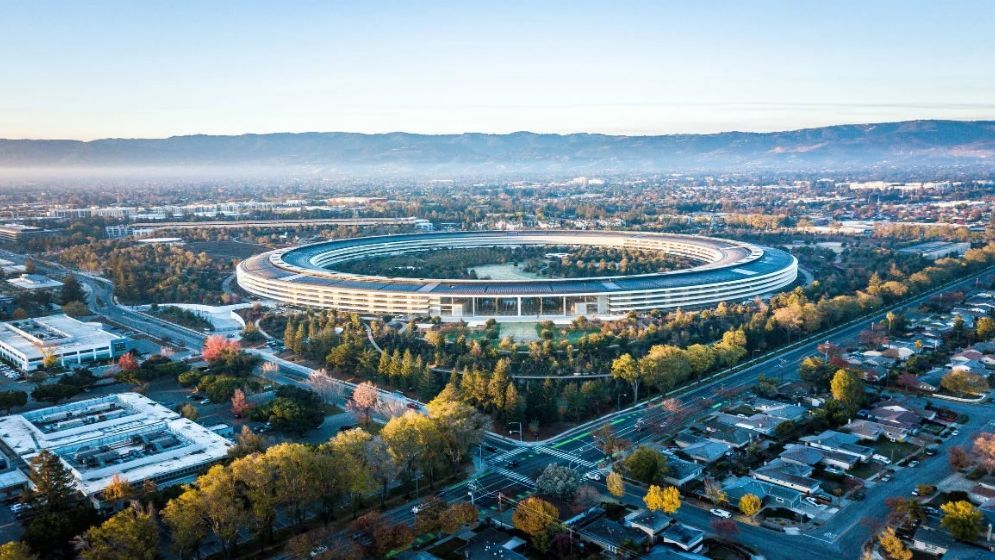
Allegations that Nvidia CEO Jensen Huang had an affair with a suspected Chinese spy have rocked the tech world and Washington, but US counterintelligence officials have long warned that Silicon Valley is a prime target for Chinese and other foreign intelligence services.
Chinese and Russian spying in Silicon Valley, along with similar activities by U.S. allies such as France and Israel, has long been something of an open secret. But tech companies and U.S. government officials have sometimes sought to downplay or suppress suspected espionage-related probes over fears that public exposure might wound firms’ business interests, say former FBI officials.
President Donald Trump himself sat on information regarding Huang’s involvement with a Chinese intelligence operative for a year for fear of knocking Nvidia, the global leader in AI supercomputing chips and one of the world’s most valuable companies, off its perch, according to reporting in the New York Times.
A previously unreported case from the late 1980s involving a Chinese spy in California illustrates the trade-offs that often present themselves in Silicon Valley-related spy cases.
In that Cold War case, San Francisco-based FBI agents identified a suspected Chinese operative working at a Silicon Valley firm engaged in high-tech, classified research with military applications.
As they increased surveillance on the suspected spy, FBI agents went to the firm’s CEO, seeking cooperation in the investigation. The bureau had agents trail the man surreptitiously and tapped his phone.
“We just tightened the noose around him,” recalled LaRae Quy, a former San Francisco-based FBI counterintelligence agent who worked on the case.
Eventually, the FBI apprehended the executive when he was attempting to fly from San Francisco to Beijing with a smuggled computer disk.
Then the investigation fell apart. The company “didn’t want the bad press,” Quy said, and decided not to cooperate with law enforcement on the prosecution.
At the time, “the U.S. government didn’t have the gumption to call a spade a spade — China was robbing us blind,” Quy said. “And the companies would prefer to lose that technology rather than run the risk of bad publicity or having it affect their stock prices.”
Federal officials were also content to let the matter drop.
“It’s no secret that the American tech industry is a hugely attractive target for Chinese intelligence services and particularly the hardware sector where Nvidia has been a leader,” said Ryan Fedasiuk, a senior fellow at the Foundation for American Innovation.
“You can take all of the security precautions in the world and throw it away with one misjudgment in a personal relationship,” Fedasiuk said.
While the allegations involving Nvidia’s Huang are unusually high-profile, the use of sexual relationships to cultivate intelligence sources, known as “honey traps” in espionage parlance, is common among Chinese intelligence services, said Dennis Wilder, a former CIA China analyst and senior fellow at Georgetown University. “We are constantly having to remove people from our embassies and consulates in China because they get into these honey traps,” he said.
Sex is a venerable tool in the espionage profession. In Silicon Valley, sex workers at the ultra-luxury Rosewood Sand Hill in Menlo Park, and the Redwood Room at the Clift Hotel in San Francisco, have been known by FBI agents to report back to local Russian intelligence officials about their clientele.
Chinese operatives have likewise used sex as a means to sidle up to U.S. politicians and intelligence officials. From 2011 to 2015, Chinese student Christine Fang built connections with Democratic Party politicians across the Bay Area, including former congressman Eric Swalwell. Fang, who had a sexual relationship with Swalwell, helped “bundle” donations for him and placed an intern in his office.
FBI officials believe Fang was working for China’s Ministry of State Security, Beijing’s main foreign intelligence agency. Fang, who fled the country in 2015, also had intimate relations with a number of U.S. mayors, according to former officials.
Chinese operatives have orbited both major political parties. In 2003, U.S. officials arrested suspected double agent Katrina Leung on charges related to her alleged spying. Leung, a well-known Republican fundraiser and Los Angeles-based consultant, had affairs with two separate FBI agents overseeing her case while she passed classified information back to China. Leung had pretended to spy for the bureau while ultimately working for Beijing.
Though according to reports Alice Huang was not herself a trained intelligence officer, she “doesn’t need to do a whole lot of, if you will, spying, to be extremely valuable,” Wilder said.
“Let’s say she bugs his phones, and then he carries them into the Oval Office. Well, guess what? You can listen to everything,” Wilder added. “If it’s a good operation, she’s just getting you access.”
Alice Huang, who was allegedly recruited by China’s Ministry of State Security, was a senior executive at Megaspeed, a buyer of high-end Nvidia chips. The company is under investigation by Singaporean authorities amid reports that it potentially helped divert advanced Nvidia chips to China through Southeast Asia.
“Singapore does not condone businesses deliberately using their association with Singapore to circumvent or violate other countries’ export controls,” said Singapore’s Ministry of Home Affairs last month.
The allegations regarding the Nvidia founder’s romantic relationship with an alleged Chinese spy come as Beijing’s intelligence apparatus has taken an increasingly public interest in the AI race, which China views as a matter of national security.
In September, state security chief Chen Yixin offered a rare detailed assessment of the technology’s strategic importance, describing AI as “the main battleground in global technological competition” and criticizing U.S. restrictions on access to advanced technology.
Chinese-linked individuals and organizations have pursued increasingly brazen efforts to obtain sensitive AI technology and trade secrets. In September, Britain’s domestic intelligence agency, MI5, issued a public warning that a Beijing-based research institute with ties to the MSS was covertly funding AI and cybersecurity research to advance the spy agency’s espionage capabilities.
In January, former Google engineer Linwei Ding was convicted on seven counts of economic espionage and seven counts of theft of trade secrets after stealing more than 2,000 pages of confidential information about the architecture of Google’s AI supercomputers.
US authorities have also targeted several sprawling networks accused of attempting to smuggle advanced Nvidia technology to China, including a $160 million operation that used falsified shipping documents to evade export controls and a separate alleged scheme involving $2.5 billion in AI server purchases that prosecutors say diverted restricted technology to China.
Much remains unexplained about Huang’s relationship to a woman U.S. intelligence officials assessed worked for Beijing, according to reports.
At a news conference Monday, Trump said he had spoken to Jensen Huang, who told him he “had absolutely no idea that the person in question was a spy.”
On Sunday, Nvidia’s board announced it was conducting an internal investigation of Huang.
Whether the Nvidia CEO knew about the government’s suspicions regarding Alice Huang, and when he knew it, remains unclear.
“He’s not from Topeka, Kansas, let’s put it that way,” said Wilder, the former CIA analyst. “He’s lived in Chinese culture, he can’t be that naive.”