


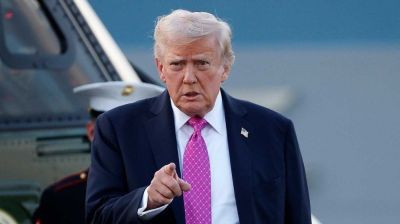
 For all latest news, follow the Daily Sun's Google News channel.


Iran urges US to meet Hormuz demands as Trump sees 'momentum' to end war
AFP, Tehran
Published: 10 Nov 2026, 06:33 PM
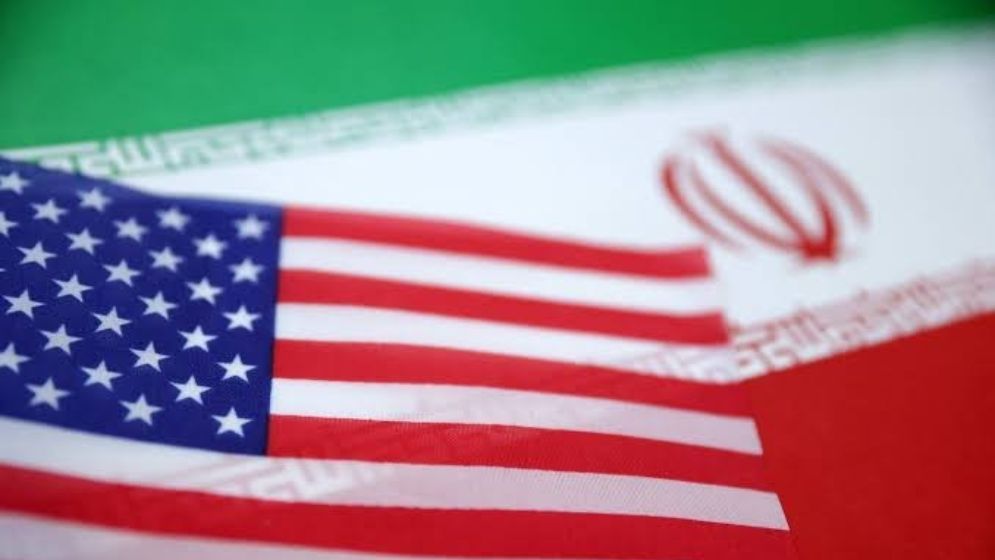
US and Iran flags are seen in this illustration taken on 18 June 2025. Photo: Reuters
Iran on Tuesday urged the United States to meet its demands for reopening the Strait of Hormuz after President Donald Trump spoke of "positive momentum" towards ending their eight-month war.
Qatar and Pakistan are leading diplomatic efforts to resolve
the Middle East war, which broke out with US-Israeli strikes that killed Iran's
supreme leader Ayatollah Ali Khamenei in late February.
Tehran has said it could reopen Hormuz, the vital global
energy conduit that it has blockaded since the start of the conflict, within
two days if Washington meets a raft of conditions.
"The conflict with Iran will not be resolved through
military means, nor by intensifying sanctions," Foreign Minister Abbas
Araghchi told Iran's IRNA news agency.
"The only solution is to adopt a language of respect,
engage in diplomacy, and address Iran's demands and conditions -- which were
outlined in the two-day proposal and remain on the table."
Iran's conditions have included ending the war on all
fronts, unfreezing Iranian assets, lifting oil sanctions and ending the US counter-blockade
of Iranian ports.
On Monday Trump said there was momentum towards ending the
conflict after meeting Qatar's prime minister at the White House.
Washington has in recent days appeared to taper down threats
of renewed strikes on the Islamic republic after Trump's Republican Party last
week lost midterm elections, in part due to the war.
In a post on social media, Trump reiterated that the US was
"locked and loaded" but said further strikes were "quite
unlikely" given that key US allies in the Gulf "would prefer the
status quo".
"We are seeing positive momentum toward an end to this Conflict, and will ensure that America's interests are at all times protected," Trump wrote.
US 'more flexible'
after midterms
Qatari foreign ministry official Ibrahim Al-Hashmi confirmed
"progress" in the negotiations.
"The mediator is making a persistent and earnest effort
to bridge the gaps between the parties' positions," he told a regular
briefing, adding: "We remain hopeful."
Iranian political analyst Ali Bigdeli said the outcome of
the US elections appeared to have "somewhat reduced Iran's flexibility,
whereas the Americans have become more flexible".
He noted that the Iranian demands were "demanding and
heavy for the United States to accept" but added that "engaging in direct
talks" could bear results.
"The two nations have reached such a deep state of
mutual distrust and uncertainty that the situation has become extremely
difficult," said Bigdeli, a professor of political sciences from Shahid
Beheshti University.
Iran's security chief Mohsen Rezaei urged Washington to
"surrender" to the Iranian demands.
"The war on Iran has already wrecked the US government.
But Washington flails like a desperate gambler. FOLD YOUR HAND. STOP
manufacturing FAKE NEWS about imaginary talks," said Rezaei, the head of
Iran's Supreme National Security Council, in a post on X.
The possibility of renewed fighting has caused concern among
Iran's Gulf neighbours, which bore the brunt of Tehran's retaliatory missile
and drone attacks.
On Monday Anwar Gargash, diplomatic adviser to the United
Arab Emirates' president, said the UAE hoped diplomatic solutions "can
ensure lasting peace and stability in the Gulf".
But Gargash also warned of "a long period of
uncertainty in which neither a decisive resolution nor a stable regional order
can be taken for granted".
In Saudi Arabia, multiple explosions were heard in the
capital, Riyadh, as the coalition fighting Yemen's Iran-backed Houthis said it
had intercepted a ballistic missile launched by the group.
The kingdom has faced near-daily strikes from the Houthis
for weeks after a truce in their long-running conflict unravelled in July,
opening a new front in the broader Middle East war.
On Sunday, Israel's hawkish Defence Minister Israel Katz
said the mission in Iran was still "not complete" and warned Tehran's
Lebanese ally Hezbollah to hold fire in any resumption of war.
Israeli Prime Minister Benjamin Netanyahu, who is fighting
to stay in office after a tight election race, has threatened new strikes
against Iran but it remains unclear whether Trump would support him after his
midterms defeat.