



 For all latest news, follow the Daily Sun's Google News channel.


LNG Canada doubles capacity as Asia looks beyond the Gulf
Canadian LNG can be cleaner, aligning with the net-zero targets of buyers in Japan and South Korea
Alex Kimani, Oilprice.com
Published: 09 Nov 2026, 09:02 PM
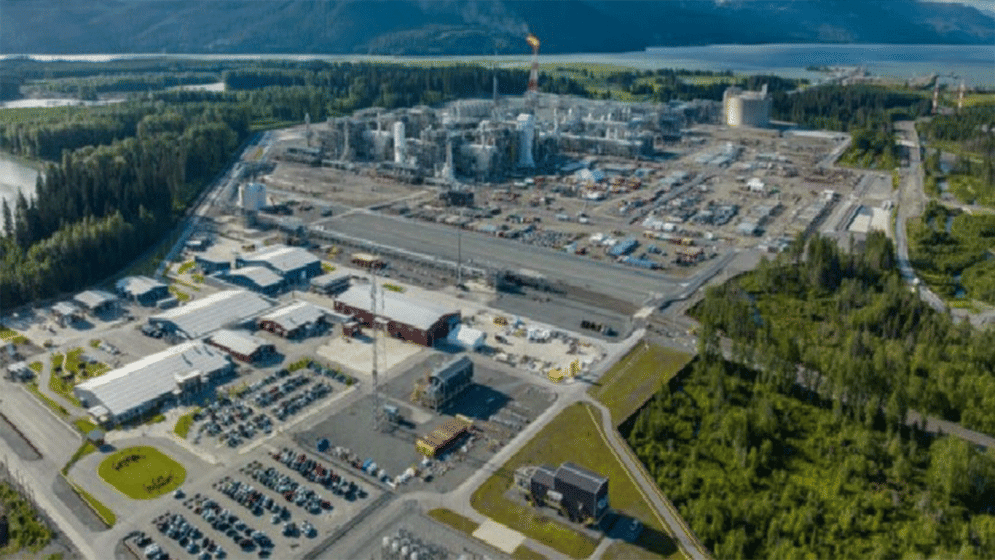
Photo: Collected
Last month, Shell, alongside Malaysia's Petronas, China's PetroChina, Mitsubishi Corporation and Kogas, officially approved the Final Investment Decision (FID) for the LNG Canada Phase 2 expansion project, doubling the facility's capacity to 28 million tonnes per annum (mtpa) and reinforcing the country's potential as a significant long-term supplier to Asian markets.
Together with Cedar LNG and Woodfibre, both
currently under construction, Canada is expected to export 33 mtpa of LNG by the
end of the current decade.
According to Wood Mackenzie, Canada is well
positioned to address Asia's growing demand for long-term, lower-carbon
liquefied natural gas (LNG) thanks to its vast resource scale, geographic
proximity and short Pacific shipping routes.
However, Wood Mac has also warned that Canada faces
a narrowing window of opportunity as global competition for capital and market
share intensifies.
"For Asian buyers, Canada offers something that
is increasingly rare in global LNG markets: a combination of resource scale,
Pacific Basin access and short shipping routes," said Joshua Ngu, vice chairman,
Asia Pacific at Wood Mackenzie. "Canada's resource advantage is real, but
realizing its full potential will depend on competitiveness, execution and
timely project delivery."
WoodMac has projected that Asian LNG demand will
double from approximately 260 mtpa today to around 500 mtpa by 2060, providing
a ready market for Canadian LNG. Canada has several clear advantages in
capturing it. First, location. LNG Canada's terminal in Kitimat sits on the
Pacific coast, so tankers avoid the Panama Canal and stay clear of the Middle
East chokepoints that have choked off Qatari supply. Cargoes from British
Columbia reach Tokyo in about 8 to 9 days, compared with 16 to 18 days from the
US Gulf Coast, according to S&P Global. Asia's appetite for North American
LNG is also growing: in the first half of 2026, US LNG shipments to Asia more
than doubled (+108%) from the same period in 2025 as Asian buyers scrambled for
non-Middle Eastern cargoes following closures around the Strait of Hormuz.
Australia and Qatar built the Coastal GasLink pipeline to unlock this
discounted, captive supply by delivering 2.1 billion cubic feet per day (Bcf/d)
of natural gas to the LNG Canada export terminal in Kitimat, BC by feeding
cheap Canadian upstream gas directly into a liquefaction facility on the
Pacific coast, exporters bypass the more expensive Henry Hub-indexed Gulf Coast
infrastructure and secure a structural cost advantage for shipping liquefied
natural gas to lucrative Asian markets.
Finally, Canadian LNG can be cleaner, aligning with
the net-zero targets of buyers in Japan and South Korea. Cedar LNG is designed
to run entirely on renewable hydroelectricity from BC Hydro in place of
gas-fired turbines, drastically cutting greenhouse gas emissions. LNG Canada
uses gas to drive its liquefaction trains and draws on BC Hydro for about a
fifth of its energy needs.
That said, WoodMac notes that even with the addition
of projects such as the 12 mtpa Ksi Lisims LNG, Canada will fall well short of
Prime Minister Mark Carney's long-term "energy superpower" agenda of
achieving 100 mtpa of LNG export capacity. Meanwhile, Canada's window to
capture the uncontracted share of Asia's expanding LNG demand is narrowing,
with American projects like CP2 LNG, Commonwealth LNG and Delfin FLNG 1, all of
which reached FID this year, set to extend U.S. dominance in global LNG
exports.
Further, new infrastructure and LNG export projects
across Africa, Latin America and Australia are progressing rapidly, providing
price-sensitive Asian buyers with diverse portfolios. To wit, emerging players
like Mozambique, Nigeria, and Mauritania/Senegal are developing massive
offshore fields and Floating LNG (FLNG) facilities, positioning the continent
as a major supplier to both Europe and Asia. Meanwhile, projects in countries
like Mexico (utilising cheap US pipeline gas for export from its Pacific coast)
and Argentina (tapping the Vaca Muerta shale basin) would open faster shipping
routes to Asian markets.