


 For all latest news, follow the Daily Sun's Google News channel.


Africa emerging as new frontier for global gas growth
Daily Sun Report, Dhaka
Published: 07 Nov 2026, 10:31 AM
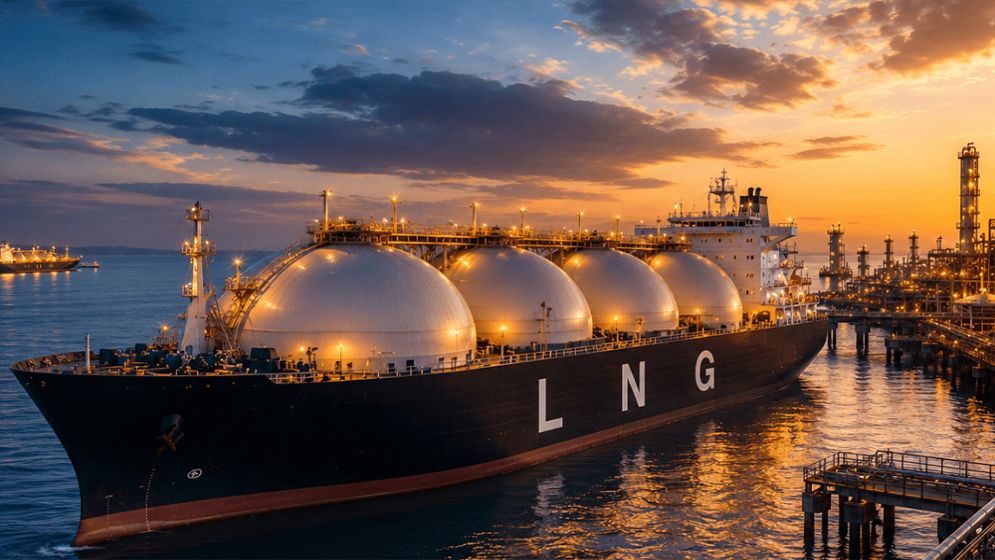
Representational Image
Africa is emerging as a major new frontier for global natural gas growth, with several countries preparing to expand liquefied natural gas (LNG) production, develop domestic gas markets and attract investment in energy infrastructure.
Natural gas accounts for around 25 per cent of the world's primary energy supply but represents only 17 per cent of primary energy consumption in sub-Saharan Africa (SSA), excluding North Africa, according to the Energy Institute's Statistical Review of World Energy.
After years of uneven progress, the region's gas industry is approaching a significant expansion, driven by new production projects, growing electricity demand and efforts to diversify global energy supplies.
Around 250 million tonnes per annum (MTPA) of LNG capacity is currently under construction worldwide, led by the United States, with Mozambique also emerging as an important contributor. The additional capacity is expected to create a global LNG supply surplus for two to three years from 2029.
Against this backdrop, the global market will need new sources of demand to maintain balance. South Africa, Kenya, Côte d'Ivoire and Namibia are among the sub-Saharan African countries that could emerge as new LNG importers.
Disruptions to oil and LNG supplies through the Strait of Hormuz have also highlighted the importance of geographical and geopolitical diversification in global energy markets. This could create opportunities for African producers, particularly Nigeria and Mozambique, to supply LNG through routes outside major global energy chokepoints.
Three countries leading Africa's gas expansion
Côte d'Ivoire, Nigeria and Mozambique are emerging as three major drivers of Africa's gas industry expansion.
Côte d'Ivoire has a relatively well-developed gas-to-power sector, providing a strong foundation for further growth. Italian energy company ENI has completed two phases of its Baleine oil and associated gas development and taken a final investment decision on a third phase.
With electricity demand rising rapidly, the country has also signed a 10-year floating storage and regasification unit (FSRU) agreement with Exmar. Its approach could provide a model for developing gas-to-power infrastructure in sub-Saharan Africa.
Nigeria is accelerating its federally mandated 'Decade of Gas' initiative, which aims to expand natural gas production and utilisation.
The programme has gained momentum since 2023, supported by around nine federal executive orders designed to improve fiscal terms and encourage investment in gas production.
Several gas projects have already reached final investment decisions, with more expected before the programme's December 2029 deadline.
The expansion is expected to support Nigeria LNG, whose capacity is projected to increase to 30 MTPA from 2027, while boosting domestic gas supply towards a target of 12 billion cubic feet per day (Bcfd) by 2030.
Nigeria is therefore positioning itself to expand LNG exports while increasing domestic gas availability, including through small-scale LNG (SSLNG).
Mozambique, meanwhile, is making significant progress in its LNG sector following delays caused by force majeure.
The country's operational Coral South project has a capacity of 3.4 MTPA, while another 16.7 MTPA of capacity is under construction through the Coral North and Mozambique LNG projects.
The world-scale Rovuma LNG project, with a planned capacity of 18.6 MTPA, is expected to reach a final investment decision in late 2026.
Further developments, including a potential third floating LNG project, could take Mozambique's total LNG capacity to around 80 MTPA by 2034.
Beyond exports, Mozambique could supply piped gas, small-scale LNG and gas-generated electricity to as many as 11 neighbouring countries. By 2040, it could emerge as the 'Norway of East Africa', with the potential to become a regional energy supplier and a driver of cross-border energy integration.
Other emerging gas markets
Several other African countries are also preparing to expand their natural gas industries, with decisions over the next few years likely to shape their energy sectors in the 2030s.
Ghana is gradually expanding its gas infrastructure through plans for a new west-east pipeline under its gas development strategy. Industrial demand is also increasing, while the Tema LNG project could finally begin operations after 2027.
Namibia has significant potential for domestic and associated gas production in its Orange Basin. However, oil development is expected to take priority initially, with some associated gas being reinjected into reservoirs. The Venus project, for instance, plans to reinject 550 million standard cubic feet of gas per day.
The country will eventually need a comprehensive gas master plan to develop its resources, potentially from the mid-2030s.
South Africa faces two major decisions regarding its gas future. The first concerns expanding its gas-to-power capacity. Plans for an additional 5 gigawatts of gas-fired electricity generation have recently been announced, on top of an existing 3GW capacity.
Bids for 2.8GW of capacity were received in May 2026 against an allocation of an additional 2GW.
However, the country must coordinate these power-generation plans with the development of LNG import terminals, as it does not yet have such facilities.
South Africa also needs to consider developing its own resources in the Orange Basin, where neighbouring Namibia has drilled more than 20 wells since 2022 and is expected to take its first final investment decision on oil production from the Venus project soon.
Tanzania is another potential growth market. The country began producing natural gas in 2004 and discovered major offshore reserves in 2010. However, it has yet to fully capitalise on its early advantages.
The proposed 15 MTPA Tanzania LNG project is still awaiting the signing of a Host Government Agreement but could reach a final investment decision in 2029 or 2030.
Across sub-Saharan Africa, countries are also exploring ways to convert onshore gas resources into usable energy through compressed natural gas (CNG), small-scale LNG, gas-to-power projects and, in some cases, helium production.
Botswana, Namibia, Nigeria, South Africa and Zimbabwe are among the countries pursuing such opportunities.
Prospects for Africa's next phase of gas growth
The year 2027 could mark an important phase in Africa's energy development, as domestic gas production, small-scale LNG and gas-to-power projects complement the continent's expanding LNG export capacity.
Markets such as Lesotho, Eswatini, Mauritius and Zambia could gain access to small-scale LNG or gas-generated electricity, while Uganda may use associated gas from its oil production to meet its own energy requirements.
Natural gas is increasingly emerging as an important resource for strengthening Africa's energy security, supporting regional integration and driving economic growth.
However, unlocking this potential will require coordinated infrastructure development, innovative financing mechanisms and a favourable investment environment to attract capital and support the growing demand for natural gas.
...................................
The original writer is Paul Eardley-Taylor, Gas Sector Lead, Standard Bank Group
Source : The National