


 For all latest news, follow the Daily Sun's Google News channel.


India’s first bullet train takes shape in Bengaluru, targets 249kmph
Gulf News, Dubai
Published: 04 Nov 2026, 10:24 PM
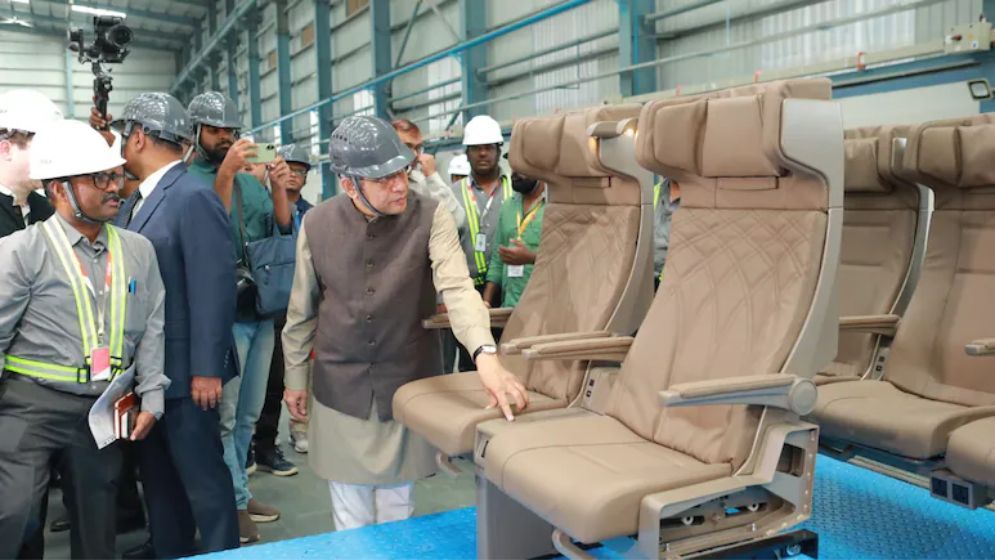
Photo: Collected
India is moving closer to its high-speed rail ambitions, with its first indigenous bullet train taking shape at Bharat Earth Movers Limited (BEML) in Bengaluru for the Mumbai-Ahmedabad High-Speed Rail corridor.
According to the Ministry of Railways, the
train has been designed specifically for Indian conditions, combining domestic
engineering with advanced technology, passenger comfort and accessibility.
The eight-coach train, measuring about 202
metres, will have a maximum test speed of 280 kmph and a planned operational
speed of 249 kmph. It is designed to carry 557 passengers, including two
designated spaces for Divyangjan and Persons with Reduced Mobility (PRM)
passengers.
The configuration comprises four motor cars
and four trailer cars, with seven standard-class coaches featuring 3x2 seating
and one executive-class coach with 2x2 seating. Driver's cabs at both ends will
have intelligent onboard control systems to support decision-making and
communication with the operation control centre. Two eight-coach sets can also
be coupled to form a 16-coach train.
Passenger comfort features include
ergonomically designed seats suited to Indian body measurements, LED lighting,
overhead baggage racks, additional luggage stands and power outlets for laptops
and mobile devices. Wide windows will offer outside views, while sealed
gangways will allow passengers to move between coaches.
The train will also have bio-digester toilets,
a Wi-Fi-based infotainment system and LCD passenger information displays in
English, Hindi and regional languages. Public address systems, automatic
announcements and emergency talk-back units will help passengers receive
information and contact train crew when needed.
Accessibility is another key feature. Level
boarding will be facilitated by aligning coach floors with platform height,
while retractable door steps will reduce the gap between the train and
platform. Wheelchair-friendly doors, dedicated seating and toilet facilities,
and Braille-enabled signage will support passengers with reduced mobility.
Each coach will have two heating, ventilation
and air-conditioning (HVAC) units to regulate temperature and humidity. Sound
insulation, noise-damping coatings, bogie covers, skirts and aerodynamic
fairings are designed to reduce noise and vibration.
The train will use a 25 kV, 50 Hz
single-phase AC traction system. Its regenerative braking technology will
recover energy during braking and feed it back into the electrical system,
improving energy efficiency.
Aerodynamic development has involved
Computational Fluid Dynamics simulations to optimise the nose and carbody
profiles, reduce air resistance and turbulence, and minimise tunnel pressure
waves and sonic boom effects. Specially designed roof panels, airflow
deflectors and exterior profiles will further improve airflow and help maintain
passenger comfort during high-speed and tunnel operations.