


 For all latest news, follow the Daily Sun's Google News channel.


India-Australia defence ties: Advancing a vital Indo-Pacific partnership
Common interests and shared threat perceptions make co-production and deeper joint operations the next step
Dhruva Jaishankar, Lowy Institute
Published: 02 Nov 2026, 06:13 PM
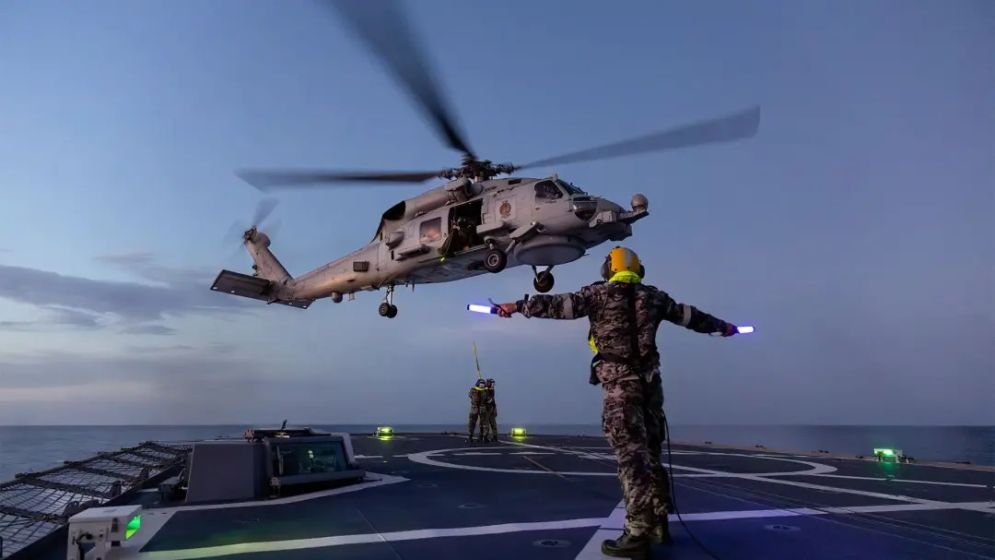
Photo: Collected
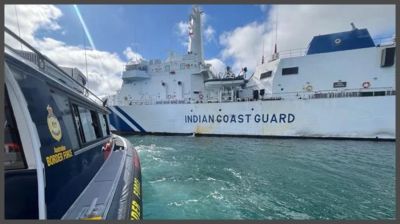
During Indian Prime Minister Narendra Modi’s visit to Australia in July 2026 — his third in 12 years as India’s leader — he signed a Joint Declaration on Defence and Security Cooperation with his Australian counterpart Anthony Albanese. The two prime ministers also agreed to a classified Joint Maritime Security Collaboration Roadmap; an Australia–India Partnership on Cyber, Critical Technologies and Supply Chains (PACTS) that included a defence pillar; and a Memorandum of Understanding (MoU) between Australia’s Maritime Border Command and the Indian Coast Guard. A month earlier, the two countries’ defence ministers also agreed to work towards an MoU on the Provision of Defence Articles and Defence Services. These agreements received relatively little attention in Australia, where the prime ministers’ joint event for 25,000 members of the Indian diaspora in Melbourne dominated news coverage. But the growing convergence on security and defence between India and Australia represents an important strategic development, one driven by similar concerns about China’s assertiveness in the Indo-Pacific and the prospect of more mercurial US policy towards the region.
The strengthening partnership between India and
Australia builds upon two decades of rapidly developing ties. In recent years,
their relations have been primarily shaped by migration and commerce. There are
now one million people of Indian origin in Australia, and bilateral trade has
grown to over $50 billion following the Economic Cooperation and Trade Agreement
(ECTA) concluded in 2022. Increasingly, however, the relationship has acquired
a security dimension. Their defence engagement now encompasses structured
political-military dialogues; regular ground, air, and naval military
exercises; intelligence and technological cooperation; and regular
military-to-military exchanges and training programs. Within the Quad — along
with the United States and Japan — the two countries are involved in expanding
maritime domain awareness (MDA) in the Indo-Pacific, improving shared logistics
capabilities, coordinating on economic and technological security, and
collaborating on humanitarian assistance and disaster relief efforts.
While challenges persist — including inadequate
communications systems and restrictive export controls — there is today scope
for more ambitious security cooperation between Canberra and New Delhi. This
could take the form of more frequent and meaningful joint operations, particularly
of P-8 maritime surveillance aircraft to each other’s island territories, as
well as greater defence industrial co-production. Achieving this intended level
of security cooperation requires understanding the two countries’ strategic
environments, assessing recent developments in security cooperation, and
identifying practical pathways to joint operations and defence industrial
co-production. Near-term steps could include: concluding an agreement on the
Provision of Defence Articles and Defence Services; resolving obstacles to
secure communications and maintenance; identifying and pursuing specific
defence co-production projects; and enabling reciprocal access for P-8 aircraft
to each other’s island territories.
The strategic context
India–Australia strategic relations were
traditionally constrained by four major factors. One was the political logic of
the Cold War (1945–1991), during which Australia allied closely with Britain
and the United States, and India remained non-aligned before tilting to the
Soviet Union after 1971. This resulted in, among other things, Australia
enjoying closer security relations with India’s strategic rival Pakistan during
the late Cold War and the immediate post-Cold War periods. The legacy of this
era endures. Australia remains embedded in US alliance networks, while India
continues to stand apart from many formal structures — an asymmetry that
complicates bilateral security cooperation to this day.
A second factor was India’s nuclear weapons program,
which contributed to US-led export controls against the country, particularly
after its Peaceful Nuclear Explosion (PNE) of 1974. The resulting export
control regime long constrained strategic cooperation between New Delhi and US
allies, including Australia. Certain export control-related constraints that
continue to bedevil India–Australia defence industrial cooperation are
sometimes a consequence of earlier restrictions.
Third, the economic and commercial relationship
between India and Australia was thin, with Canberra prioritising Asia-Pacific
economic partners in Northeast and Southeast Asia in the 1990s and early 2000s.
And fourth, people-to-people relations were traditionally weak, a problem
exacerbated by the White Australia policy until the 1970s. Defence contacts during
these early years were infrequent but included Australian participation in
India’s professional military education institutions, such as the Defence
Services Staff College, and a one-off multilateral air force exercise in India
in 1963, a year after the 1962 Sino-Indian border war.
Following India’s 1998 nuclear tests, which
initially led to restrictive international sanctions against the country, the
United States led efforts to re-engage India and lower barriers to strategic
technology commerce. Australian Prime Minister John Howard’s visit to India in
2000 helped to re-establish normal ties between Canberra and New Delhi.
Bilateral defence talks were initiated earlier that year, and 2001 saw the
first strategic dialogue between the Indian and Australian governments.
Security cooperation grew in fits and starts over the following two decades. In
2004, the two countries’ militaries coordinated humanitarian assistance, along
with the United States and Japan, following the Indian Ocean tsunami. In 2006,
India and Australia signed an MoU on defence cooperation. The next year
witnessed the first Quad dialogue and multilateral Malabar naval exercises in
the Indian Ocean. In 2008, Australia withdrew from the Quad. The immediate
aftermath represented a low point in bilateral ties, when attacks against
Indian students in Australia defined perceptions of the relationship.
Nonetheless, both governments sought to rebuild
cooperation in the years that followed, motivated in part by changing threat
perceptions. China’s more forceful claims in the South China Sea, its
rare-earth restrictions on Japan, incidents of Chinese hacking and
interference, and the Doklam standoff between the Indian and Chinese armies in
2017 contributed to these trends. As early as November 2009, India and
Australia signed their first Joint Declaration on Security Cooperation. In
2011, negotiations began on a trade agreement, and the Julia Gillard government
agreed to export uranium to India. The first visit to Australia by an Indian
defence minister occurred in 2013, and a framework for security cooperation was
signed during Modi’s first visit to Australia as prime minister in 2014. The
next years saw the first major bilateral naval exercise between the two
countries in the Bay of Bengal, followed by army exercises in 2016. In 2017,
the Quad was revived along with a secretary-level 2+2 foreign and defence
ministry dialogue and defence policy talks. A year later, the Indian Air Force
took part in Exercise Pitch Black in Darwin for the first time, and the
Australian government released its India Economic Strategy.
The two countries’ closer cooperation accelerated
along with their changing threat perceptions, especially after 2019. For
Australia, concerns about China’s coercive activities and military
assertiveness grew. These were fuelled by various developments including a
cyberattack on Australia’s Parliament House network in 2019, widely attributed
to China; Chinese tariffs and restrictions on Australian barley, coal, beef,
wine, and other exports; a list of 14 grievances against Australia issued by
the Chinese Embassy in 2020; Beijing’s security pact with Solomon Islands in
2022; and a naval circumnavigation of Australia by a People’s Liberation Army
(PLA) Navy task force and live-fire drills in the Tasman Sea in 2025. For
India, the 2020 border clashes, which followed a large-scale PLA mobilisation
and killed 20 Indian soldiers and an unknown number of Chinese troops,
contributed to deteriorating relations with Beijing. China’s security activities
in the Indian Ocean region, its military and economic support for Pakistan, and
the large trade surplus in China’s favour contributed further to India–China
rivalry. New Delhi retaliated in 2020 with economic measures including banning
Chinese apps, screening investment, blocking Chinese companies from its
telecommunications network, and excluding Chinese bids from public procurement.
In addition to these concerns, Australia and India
have had to contend with a more mercurial United States. In part, the
resurrection of the Quad in 2017 was motivated by a desire to keep the United
States engaged in the Indo-Pacific. Both countries pursued deepening security
cooperation with the United States during Joe Biden’s presidency (2021–2025).
For Australia, this included the announcement of AUKUS, an arrangement to
acquire nuclear-powered submarines and emerging military technologies. For
India, it included the Initiative on Critical and Emerging Technology (iCET),
covering semiconductors, space, defence, telecommunications, and other emerging
technologies; collaboration on jet engine production, human spaceflight, and
critical minerals; and a security-of-supply arrangement for defence articles.
Although the second Trump administration has continued many of these
initiatives from 2025, in some cases after rebranding, uncertainty over US
trade and tariff policy, defence priorities, and engagement with China has
pushed India and Australia (as well as other US allies and partners) to
diversify their security and trade relationships.
Geography also plays an important role. Australia
and India sit at opposite ends of the Indian Ocean, a vast and increasingly
contested body of water with few capable resident powers. For both trading
economies, securing the Indian Ocean’s sea lines of communication (SLOCs) is
vital — from the Strait of Hormuz, the Bab-el-Mandeb, and the Cape of Good Hope
in the west to the Straits of Malacca, Lombok, and Sunda in the east. The
eastern straits, the gateway to East Asian markets, are especially important to
them. Closer maritime cooperation can help the two countries secure their vast
coastlines and give each operational access to a critical region: the Middle
East for Australia and the South and West Pacific for India.
Strategic cooperation after 2020
In 2019, with prime ministers Narendra Modi and
Scott Morrison re-elected, security cooperation between New Delhi and Canberra
accelerated significantly. The next year saw the two countries unveil a
Comprehensive Strategic Partnership, framework agreements on maritime and
cybersecurity, a Mutual Logistics Support Arrangement, and a ministerial 2+2
dialogue involving foreign and defence ministers. Indian Defence Minister
Rajnath Singh’s engagement with his Australian counterpart began in earnest
during the Covid pandemic in May 2020, followed by phone discussions and a
bilateral meeting in September 2021. At the concurrent 2+2 dialogue, the two
sides agreed that India would join Exercise Talisman Sabre and initiated
agreements or dialogues on cybersecurity, emerging technology, critical
minerals, and space. In 2024, the first discussions around a Joint Maritime
Security Collaboration Roadmap began. That year, on the sidelines of the ASEAN
Defence Ministers’ Meeting Plus in Laos, the two sides exchanged an
implementation arrangement on air-to-air refuelling. During a visit by Rajnath
Singh to Australia in October 2025, an annual Defence Ministers’ Dialogue was
established to be held more frequently than the 2+2.
Military-to-military contacts grew in parallel.
Between January 2020 and July 2026, the two armed forces took part in 14
bilateral and 64 trilateral or multilateral exercises (see Figure 1). In August
2021, the two navies signed a Joint Guidance for the Australia–India Navy to
Navy Relationship, and a month later the terms of reference for navy-to-navy
talks were agreed. Among bilateral exercises, the AUSINDEX naval series has
focused on anti-submarine warfare (ASW) and included fighter aircraft. The
AUSTRAHIND army exercises have increasingly involved other services and, in
recent years, concentrated on drones and counter-drone measures; the 2026
edition is expected to emphasise amphibious combat and littoral manoeuvre.
Multilateral military exercises involving India and
Australia also indicated broadening military-to-military ties, with each series
advancing cooperation in specific activities and domains. For example, Malabar
— officially a US–India bilateral naval initiative in which Japan and Australia
are regular participants — is a large annual exercise covering ASW along with
air defence and counter-drone capabilities. The longer-term intent is to work towards
combined task forces at sea across multiple domains. La Pérouse, which brings
in France and other Indo-Pacific partners, has practised replenishment at sea.
Kakadu has helped to refine standard operating procedures for P-8 maritime
reconnaissance aircraft operations between the two countries. Pitch Black has
included air-to-air refuelling for combat-enabling roles as well as
preparations for air force operations over extended distances. The Tarang
Shakti air force exercise starting in 2024 witnessed the first deployment of
Australian combat aircraft to India, including electronic attack jets. Talisman
Sabre, co-led by Australia and the United States, has been used to test
multi-domain capabilities. India was also invited to join Black Carillon, an
annual submarine search and rescue exercise, and Indian observers took part in
Exercise Pukpuk in Papua New Guinea in 2025. That same year, the Quad held its
first Coast Guard Quad-at-Sea Ship Observer Mission. Together, these exercises
demonstrate a clear transition from basic engagement to interoperability
through greater frequency, complexity, and operational utility.
These activities have been supplemented by more
frequent and more structured engagement between military leaders. For example,
Australia’s navy chief, Vice Admiral Michael Noonan, visited India’s Eastern
Naval Command in February 2022 for Exercise Milan, followed the next month by
Australia’s army chief. In April 2022, navy staff talks were held, with
Australian hydrographers in attendance. India’s navy chief, Admiral R. Hari
Kumar, reciprocated with a visit to Australia in September 2022. The following
year saw the first all-service participation in a defence officers’ exchange
program. Australia’s navy chief visited India in 2023 and 2024, while India’s
army chiefs travelled to Australia in 2023 and 2026, as did India’s Chief of
Defence Staff and the head of its Defence Intelligence Agency in 2025. In 2026,
Joint Staff Talks were established, creating a formal channel for
military-to-military engagement.
Operational ties have also gradually strengthened.
For example, in early 2020 the Royal Australian Navy’s HMAS Toowoomba made a
port visit to Mumbai as part of its Combined Task Force 150 deployment in the
Middle East. In April 2022, an Indian Navy P-8I aircraft used Darwin for an
operational turnaround, and a Royal Australian Air Force P-8A visited Goa that
June. In 2023, an Indian submarine conducted its first deployment to Western
Australia. Bilateral cooperation has also drawn in partners beyond the United
States and Japan. For instance, Australia, India, and Indonesia held a
trilateral maritime security workshop in May 2024 that covered information
sharing, including through India’s Information Fusion Centre – Indian Ocean
Region (IFC–IOR).
Defence industrial cooperation has been slower and
more tentative, with discussions beginning in 2020. At the 2+2 dialogue in
September 2021, the two sides flagged unmanned vehicles and niche technologies
as areas to explore. In June 2022, defence ministers Rajnath Singh and Richard
Marles agreed to reinvigorate the existing Joint Working Group on Defence
Research and Materiel Cooperation. The November 2023 edition of the 2+2
dialogue identified potential cooperation between India’s Innovations for
Defence Excellence (iDEX) and Australia’s Advanced Strategic Capabilities
Accelerator (ASCA). In 2024, Indian defence firms exhibited at the Indian Ocean
Defence and Security conference in Perth and the Land Forces exposition in
Melbourne. India has also offered maintenance, repair, and overhaul services
for Australian vessels in its shipyards.
In sum, the India–Australia defence partnership now
involves a wide variety of political and military engagements. The two
militaries increasingly cooperate on intelligence, professional education and
training, hydrography, and logistics in ways that facilitate Australian
vessels’ operations in the Middle East and the Indian military’s operations in
the South Pacific. These ties extend to areas both countries once considered
sensitive or difficult, including ASW, air-to-air refuelling, submarine rescue,
and replenishment at sea. Strategic cooperation has even extended to third
countries and regions. In 2026, for example, Australia gifted the Maldives a
Guardian-class patrol boat and coordinated its maintenance and sustainment with
India. In turn, India’s military presence, investment, and technology could
help advance Australian strategic objectives in the Pacific Islands region.
Towards co-production and joint operations
Despite the broadening and deepening security
partnership between India and Australia, challenges remain. One involves secure
communications. Australia’s integration in US alliance networks has
implications for logistics, geospatial intelligence, and communications. This
matters little in multilateral settings involving the United States, but
bilateral India–Australia activities have sometimes been complicated by the
lack of compatible systems. Finding workable solutions for both sides will be
necessary if cooperation is to be sustained. Similarly, cooperation on
equipment sustainment and maintenance is often constrained by US export
controls, specifically the International Traffic in Arms Regulations (ITAR).
This makes it unnecessarily complicated for either country to maintain or
supply spares for the other’s aircraft and naval vessels during military
exercises and deployments. A further, if lesser, irritant is the absence of
expedited visas for military personnel, which creates additional frustrations
during port visits, exercises, and operations. Negotiating a Reciprocal Access
Agreement akin to the one Australia and Japan signed in 2022 might prove
legally difficult in the near term, requiring facilities for enabling
short-term tenures for military personnel in each other’s countries.
Two areas could take India–Australia defence cooperation to a qualitatively higher level. The first is realising the leaders’ stated ambition of “expanding aircraft deployments from each other’s territories”.20 Allowing India’s P-8I aircraft to operate from the Cocos (Keeling) Islands, and Australia’s P-8A from India’s Andaman and Nicobar Islands, would significantly improve both countries’ maritime surveillance and ASW capabilities around critical Indo-Pacific chokepoints. The P-8, based on a Boeing 737 but with a longer wingspan, is among the world’s most sophisticated maritime patrol and reconnaissance aircraft. Equipped with sonobuoys, torpedoes, and anti-ship missiles, it can hunt submarines and surface ships and conduct intelligence, surveillance, and reconnaissance. The Indian variant (P-8I) has different radar, communications, magnetic anomaly detection, and combat identification systems. Indian and Australian P-8s have already flown to each other’s mainland bases; temporary reciprocal access to island territories would extend their loitering time over critical sea lines of communication. In addition to communication and export control constraints, the Cocos (Keeling) Islands Airfield Upgrade Project — which will strengthen and extend the runway and is forecast for completion by 2029 — must be finished before large aircraft such as the P-8 can operate from the islands.21 This, in turn, would help facilitate reciprocal access to island territories on the Indian side.
In the meantime, other forms of operational
cooperation should proceed. These might include more regular Royal Australian
Navy port visits, refuelling and replenishment, and maintenance, repair, and
overhaul at Indian facilities during wider Indian Ocean deployments. India,
too, can do more to leverage Australia’s geographical advantages for patrols
and other missions — including humanitarian assistance, search and rescue, and
evacuations — in the southeast Indian Ocean and the South and West Pacific. Australia
has also commissioned a temporary space tracking terminal in the Cocos
(Keeling) Islands to support India’s Gaganyaan Human Spaceflight Program,
although this is not strictly defence-oriented.22
The second area is defence industrial cooperation,
specifically co-production. Bilateral discussions on the issue have taken place
since 2020, but with little tangible progress to date. Obstacles have included
the two countries’ asymmetric scales and requirements, Australia’s limited
defence industrial base, US export controls, and Australian concerns about
India’s defence industrial relations with Russia. Nonetheless, recent
developments have created new openings. Pillar 5 of PACTS covers defence
research collaboration and is meant to be led by the two countries’ defence
ministries. While the emphasis of PACTS is on foundational scientific
collaboration, near-term opportunities can be sought in co-production,
particularly given growing Indian and Australian requirements and concerns
about supply chain disruptions.
Cooperation on specific platforms has been explored
in recent years. After Operation Sindoor in 2025, India evinced interest in
Australian counter-unmanned aerial systems. Shared concerns about the
underwater domain have led to discussions on sonobuoy production for P-8s,
undersea surveillance, and subsea cable security. Armoured vehicles are another
possibility: both countries already export them, in the form of Australia’s
Bushmaster and India’s Wheeled Armoured Platform (WhAP). In 2025, Anduril —
whose Australian arm builds the Ghost Shark for the Royal Australian Navy — and
India’s Mahindra Group announced a partnership to co-develop and co-produce
autonomous maritime systems, including underwater vehicles. Co-production could
also extend to components and raw materials, including defence-critical
minerals such as gallium, which is essential for electronics supply chains,
advanced weapons, and satellites, and for which Australia has significant
extraction potential.
Recommendations
India and Australia continue to enjoy significant
complementarities in addition to similar threat perceptions in the
Indo-Pacific. Australia offers geographical access, advanced capabilities in
certain niche technologies, and close integration with the United States and its
allies. India brings scale, geographical centrality in the Indian Ocean,
industrial capabilities, and a wide variety of maritime partners. To accelerate
India–Australia defence cooperation, the two countries should prioritise five
near-term objectives, while continuing to widen and deepen their security
cooperation across multiple fronts:
Early conclusion of the planned MoU on the Provision
of Defence Articles and Defence Services, as the next step in advancing defence
industrial cooperation.
A workable solution for secure bilateral
communications between the two countries’ armed services. Options include a
bilateral communications arrangement, encryption gateways, US third-party
authorisation, or a combination depending on operational circumstances.
Reciprocal access for P-8 aircraft to each other’s
island territories, including by expediting runway upgrades on the Cocos
(Keeling) Islands, alongside reciprocal maintenance, repair, and supply for
each other’s surface and submarine vessels. Questions of Indonesian transit
will also need to be addressed, including through sustained working-level
India–Australia–Indonesia dialogue.
Identification, in coordination with the United
States, of the key ITAR restrictions on P-8 spares, maintenance, and
sustainment. Differences between the P-8I and P-8A should inform negotiations
on exceptions or licensing routes.
Identification of priority defence co-production
projects under Pillar 5 of PACTS, potentially including counter-unmanned aerial
systems, sonobuoys, armoured vehicles, unmanned underwater vehicles, and
defence-related critical minerals. Projects should be assessed for feasibility
based on strategic importance, technological capabilities, industrial
complementarity, export control constraints, and contributions to bilateral
interoperability.