


 For all latest news, follow the Daily Sun's Google News channel.


Nearly 100 Muslim scholars' works reportedly restricted at Saudi university
A leaked library document naming prominent writers sparks debate over academic freedom and access to diverse Islamic viewpoints
Daily Sun Report, Dhaka
Published: 30 Oct 2026, 03:27 PM
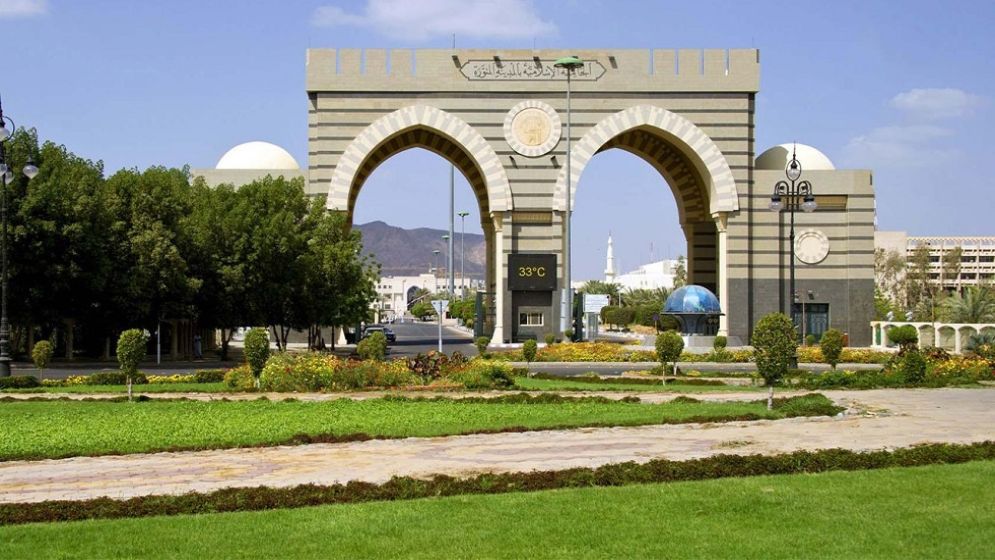
Saudi Islamic University reportedly restricts works of nearly 100 Muslim scholars. Photo: Collected
A document reportedly originating from the Islamic University of Madinah in Saudi Arabia has sparked debate over academic freedom and access to Islamic literature after listing nearly 100 Muslim scholars and writers whose works are said to be restricted from library access.
The list, which surfaced on social media, was published by Saudi researcher and human rights activist Abdullah al-Oudah.
The document is attributed to the Information Technology Unit of the university's Library Affairs Department. Among those named are prominent Islamic thinkers Abul Hasan Ali Nadwi, Abul A'la Maududi, Malek Bennabi, Yusuf al-Qaradawi and Muhammad al-Ghazali.
Other writers reportedly included in the list are Mustafa al-Siba'i, Abdul-Wahhab Khallaf, Abdulaziz al-Tarifi, Safar al-Hawali, Salman al-Oudah and Awad al-Qarni.
The inclusion of scholars and writers from different intellectual and religious backgrounds has raised questions about the criteria used to restrict access to their works.
Questions over the criteria
A major concern is the academic, intellectual or administrative basis for the reported restrictions. It remains unclear whether the university reviewed each book individually, whether specific reasons were given for the decisions, or whether the restrictions apply to all works by the named authors.
No clear official explanation from the university or relevant Saudi authorities has been cited in the reports circulating about the document.
A formal clarification outlining the reasons behind the list, the review process and the extent of the restrictions would help resolve questions surrounding the matter.
Works with international academic recognition
Several of the named scholars have produced influential works on Islamic thought, history and religious studies that have attracted attention from researchers and educational institutions in different countries.
The writings of Abul Hasan Ali Nadwi and Abul A'la Maududi, for example, are widely recognised in scholarly and religious circles across the Indian subcontinent and Pakistan.
Some of the authors have also received awards and recognition for their academic and cultural contributions. However, scholarly recognition or receiving awards does not necessarily amount to an endorsement of every work by an author.
Similarly, questions about restricting access to their writings require a clear explanation of the reasons and criteria involved. It is also unclear which specific books have been included in the list and whether the reported restrictions extend beyond the university's libraries to other educational institutions.
Debate over academic freedom and access to knowledge
The reported list has reignited debate over the distinction between academic oversight and restrictions on access to different intellectual perspectives.
Critics of such measures argue that denying students access to the works of scholars without providing clear explanations could limit their ability to explore different viewpoints, engage in academic debate and develop critical thinking.
Universities, however, have their own policies for selecting academic materials, designing curricula and managing library collections. The key issues are therefore the transparency of the decision-making process, the scope of the restrictions and whether the measures are supported by clear academic justifications.
Given the Islamic University of Madinah's standing and its influence among Islamic educational and religious institutions in different countries, clarification of the reported restrictions is particularly important.
Several questions remain unanswered: Is the document simply an internal library regulation, or does it reflect a wider policy restricting access to certain intellectual and religious perspectives? What criteria were used to assess the listed authors and their works? And have those criteria been made publicly available to students and researchers?
Until the university or relevant Saudi authorities provide an official explanation, the scope and rationale of the reported restrictions remain unclear.
Source: Hawzah News Agency