



 For all latest news, follow the Daily Sun's Google News channel.


Japan sends personnel to India to explore anti-ship missile training
Daily Sun Report, Dhaka
Published: 28 Oct 2026, 11:42 PM
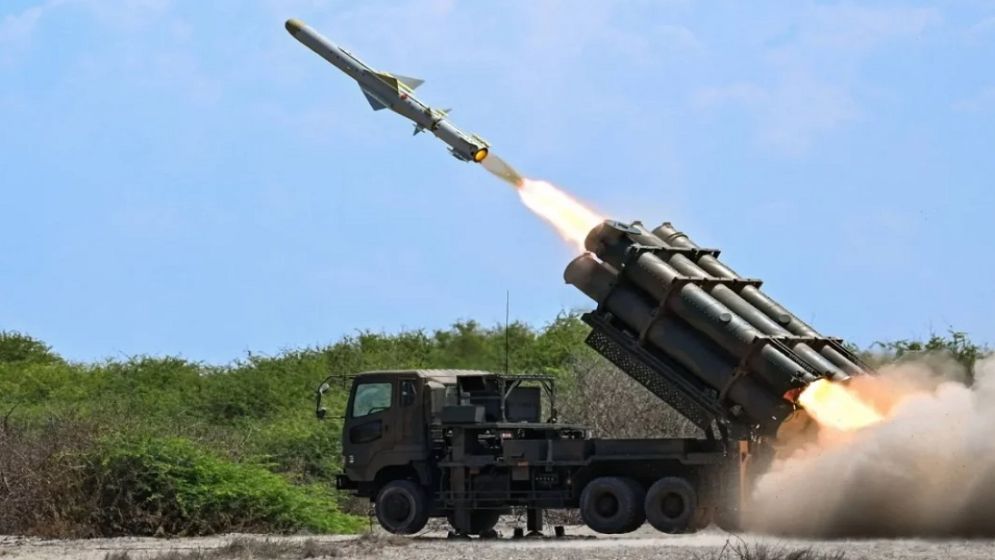
Japan sends personnel to India to explore anti-ship missile training. Photo: Collected
Japan has sent Ground Self-Defense Force (GSDF) personnel to India to explore the possibility of conducting live-fire exercises involving anti-ship missiles and small attack drones, GSDF Chief of Staff General Arai Masayoshi confirmed on 27 October.
The discussions are aimed at finding suitable training grounds for Japan’s increasingly long-range weapons, although no decision has been made to hold the exercises or which missile system might be used.
“It is true that we dispatched personnel to coordinate various matters with India,” Arai told a press conference.
His remarks followed an 21 October report by public broadcaster NHK that officials from Japan’s Defence Ministry had visited India in mid-October. During their week-long visit, they inspected test facilities and firing ranges.
The discussions reflect a growing challenge for Japan as it expands its stand-off defence capabilities. While the country is acquiring missiles capable of striking targets hundreds of kilometres away, finding suitable locations to train personnel to operate them effectively has become increasingly difficult.
“When operating relatively long-range missiles, such as surface-to-ship missiles, how to conduct training that makes use of their range is a major challenge,” Arai said.
The GSDF is examining options for training in Japan while also considering facilities overseas, he added.
Japan’s newly deployed Type 25 surface-to-ship guided missile highlights the need for more extensive training opportunities. The GSDF deployed the missile at Camp Kengun in Kumamoto Prefecture in March 2026. Its range is believed to be around 1,000 kilometres, compared with approximately 200 kilometres for the older Type 12 surface-to-ship missile.
During Keen Sword 27, a major Japan-US joint exercise held from October 19 to 29, the GSDF demonstrated the Type 25 to reporters on 25 October at a training area spanning Nagasaki and Saga prefectures.
Personnel demonstrated how to deploy the mobile launcher and prepare it for firing, but no missile was launched.
Such demonstrations help troops practise operating the system, but live-fire exercises involving its full range present additional challenges. These include ensuring safety, securing suitable airspace and maritime areas, and coordinating with the relevant authorities.
It remains unclear whether the Type 25 would be used in any training conducted in India.
Japan has previously held surface-to-ship missile firing exercises in the United States and Australia. It also conducted such training in the Philippines for the first time during the Philippine-US Balikatan exercise in April and May 2026, when GSDF personnel fired the Type 88 surface-to-ship missile.
Philippine Defence Secretary Gilberto Teodoro later told the Asahi Shimbun that the Type 88 was among the leading candidates for acquisition by Manila.
Access to Indian training facilities could give Japan more options for overseas exercises while strengthening defence ties with New Delhi.
“India is an important partner in the Indo-Pacific region, and we recognise the importance of promoting various forms of defence cooperation and exchanges amid an increasingly severe and complex security environment,” Arai said.
Japan and India already conduct bilateral military exercises and cooperate with the United States and Australia through the Quadrilateral Security Dialogue, or Quad. The partnership comes amid growing concerns over China's maritime activities.
However, the current discussions concern possible bilateral training arrangements and do not amount to an announcement of a Quad military exercise. If the plans proceed, missile training in India could add a practical dimension to defence cooperation between Tokyo and New Delhi.
Arai also confirmed that the GSDF was exploring the possibility of training with small attack drones in India.
He identified several issues that would need to be addressed, including radio frequencies, training content, suitable locations, operational conditions and safety management.
The training arrangements would also need to reflect how, when and where the GSDF intends to deploy the drones, he said. The force is considering both domestic training sites and possible alternatives overseas.
Arai said no decision had been made on whether overseas training would take place before domestic exercises or alongside them. Live-fire exercises in Japan would require coordination with local governments and other relevant authorities, taking into account the nature of the training and the associated safety requirements.
For now, the discussions with India remain at an exploratory stage, with neither the location nor the timing of any potential exercise announced.
As Japan expands the range of its weapons, finding suitable places to train personnel to use them effectively is becoming not only a military challenge but also a matter of international cooperation and diplomacy.
Source: The Diplomat