


 For all latest news, follow the Daily Sun's Google News channel.


Poland wants India to push Russia towards peace in Ukraine
Murali Krishnan for DW
Published: 27 Oct 2026, 09:50 PM
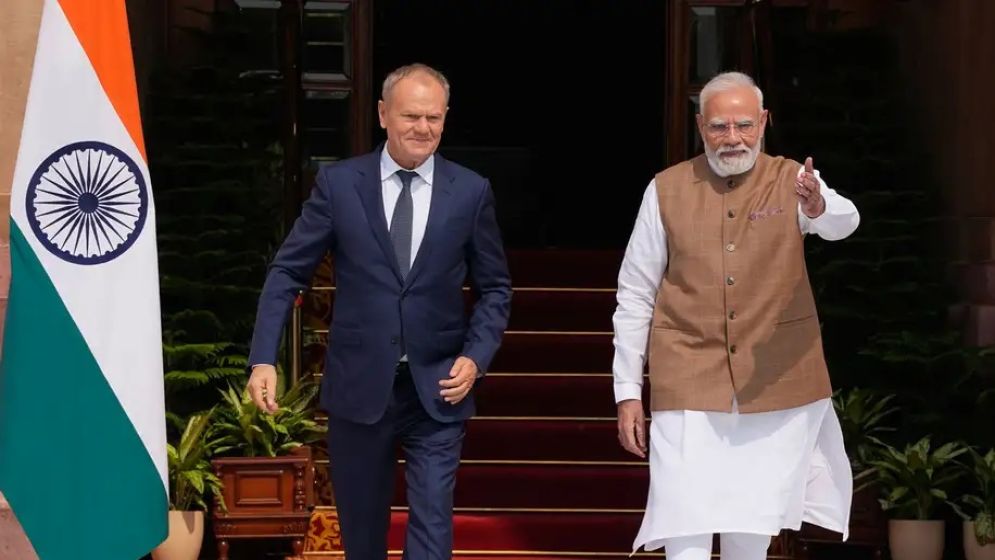
India and Poland have good ties despite conflicting stances on Ukraine | File Photo: AP
During his recent visit to India, Polish Prime Minister
Donald Tusk seemingly went out of his way to ingratiate himself to Narendra
Modi, describing the Indian leader as a "beacon of hope" in the times
of global uncertainty and instability.
One of the issues the two prime ministers discussed was the
war in Ukraine, a country bordering Poland which Warsaw supports diplomatically
and militarily against Russia.
"We will support all efforts aimed at achieving
peace," Modi said during the joint press briefing.
Previous reports indicated India had formulated a plan to
halt strikes on energy infrastructure between Russia and Ukraine and protect
ships transporting grain and fuel. Before traveling to New Delhi, Tusk had also
indicated that India "could play a constructive role" regarding the
war, saying that this aspect was "very important" to him.
While no concrete steps were announced during his trip, many
in Europe still hope India can use its friendship with Russia to boost peace
talks.
Analysts warn, however, that New Delhi's access to the
Kremlin does not automatically grant it sway over Russian President Vladimir
Putin and his decisions.
India 'cannot guarantee peace'
India is unlikely to sacrifice its own interests at Europe's
insistence, says India's former ambassador to Poland Anil Wadhwa. So far, New
Delhi has maintained its political and defense relationship with Moscow while
calling for dialogue and diplomacy and resisting pressure to align fully with
Western sanctions.
Moreover, while New Delhi may be able to communicate with
both Moscow and Kyiv, there is no guarantee either side will respond to its
efforts or make concessions.
"Poland wants India to use its access to Vladimir Putin
to encourage a ceasefire and meaningful negotiations, while recognizing the
limits of New Delhi's influence over Russian military decisions," he told
DW.
The challenge, Wadhwa said, was to translate India's
diplomatic access into practical outcomes without expecting too much.
"India can contribute to de-escalation and help create
conditions for negotiations, but it cannot guarantee peace," he said.
Europe moves closer to India despite Russia row
The Polish initiative also reflects a wider European effort
to deepen relations with India.
Ummu Salma Bava, chairperson and Jean Monnet Chair at the
Centre for European Studies at Jawaharlal Nehru University, told DW that Tusk's
visit had two objectives: strengthening ties between India and his own country
and persuading New Delhi to factor in the EU's perspective on the Ukraine war.
"The Ukraine war has become central to European
security. India's strong association with Moscow despite the war has raised concerns
on developing cooperation on security between India and the EU," Bava
said.
Poland, a frontline state, does not want Russia to gain
additional economic benefits from its relationship with India.
So far, according to Bava, "both sides have managed to
compartmentalize the Ukraine issue" while advancing cooperation on trade,
security and defense.
But their differences could complicate future efforts to
expand defense and security cooperation, she warned.
US shift on Ukraine lets EU allies change stance
Ajay Bisaria, another former envoy to Poland, says India's
position has "matured into that of a potential peacemaker" and its
ability to communicate with both Kyiv and Moscow is now perceived as useful.
According to Bisaria, not even Warsaw regards "the Russia
question" as a "significant irritant in the India-Europe or
India-Poland relationship."
"Europe, and Poland in particular, understands the
depth of India's partnership with Russia, just as India appreciates the very
different lens through which much of Europe views Moscow and the war in
Ukraine," Bisaria told DW.
This shift in perspective, according to Bisaria, is partly due to the US changing its own stance on the conflict and seeking mediation. This, in his view, strengthens the case for European governments to pursue close ties with India despite their differences over Moscow.
The writer is a journalist for DW based in New Delhi. He
focuses on Indian politics, society and business.