


 For all latest news, follow the Daily Sun's Google News channel.


Iran tells Pakistan army chief no talks with Washington until demands are met
Reuters, Cairo
Published: 21 Oct 2026, 05:01 PM
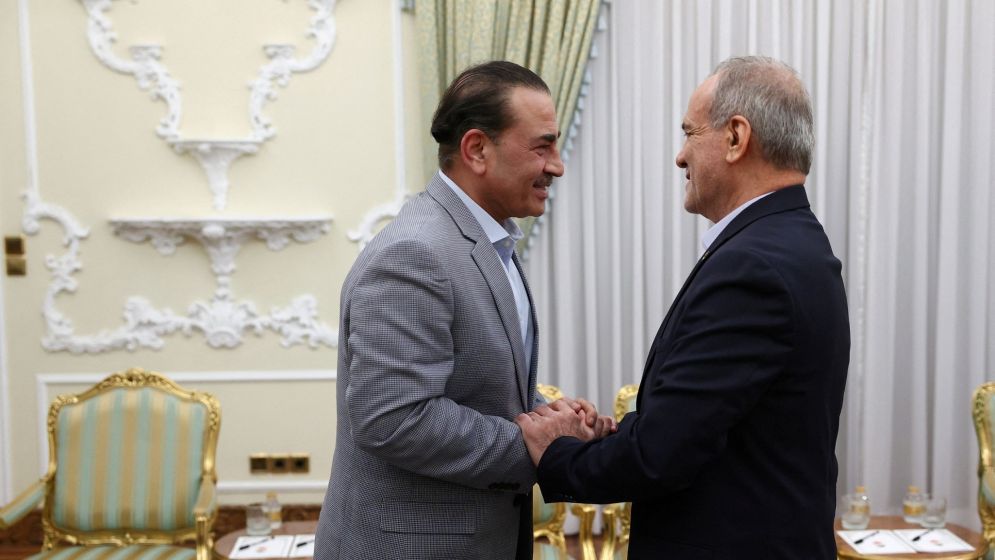
Iranian President Masoud Pezeshkian meets with chief of Defence Forces of Pakistan, Field Marshal Asim Munir, in Tehran, Iran, 20 October 2026. Photo: Iran's Presidential website
Iran told Pakistan's army chief on Tuesday that there would
be no talks with Washington until Tehran's demands were met, Iranian media
reported, underscoring its hardening stance despite mediation efforts by key
interlocutor Pakistan.
President Masoud Pezeshkian discussed mediation efforts and
regional developments with Field Marshal Asim Munir in Tehran, according to
Nournews.
Pakistan is a key intermediary between the United States and
Iran. Earlier mediation efforts helped produce an interim peace agreement in June, but the Islamabad
Memorandum quickly unravelled as fighting between Iran and the US resumed weeks
after.
Munir also met Iranian parliament speaker Mohammad Baqer Qalibaf, who said Washington could not regain Tehran's trust until it fulfilled seven conditions Iran set last month for reopening the Strait of Hormuz, according to an Iranian readout of the meeting.
The demands include ending a US blockade on its ports, the
lifting of sanctions on its oil exports as well as ending hostilities on all
regional fronts.
Iran's security chief, Mohsen Rezaei, delivered a similar
message during a separate meeting with Munir, saying there would be no talks
with Washington until Tehran's demands were met, according to Iranian media.
Rezaei also said all enriched nuclear materials would remain
in Iran, reiterating Supreme Leader Ayatollah Mojtaba Khamenei's position that
near-weapons-grade uranium should not be shipped abroad.
US Vice President JD Vance said earlier this month that Iran
must make a "meaningful" reduction in its
uranium enrichment capacity to satisfy US demands and end the countries'
eight-month-old war.
Israel, the United States and other Western states have long
accused Iran of seeking nuclear weapons, including pointing to its move to
enrich uranium to 60%, far higher than needed for civilian uses and closer to
the 90% needed for a weapon.
Iran denies seeking nuclear weapons.