


 For all latest news, follow the Daily Sun's Google News channel.


Pakistan’s anti-terrorism law draws political rivals into terrorism cases
Daily Sun Report, Dhaka
Published: 20 Oct 2026, 03:42 PM
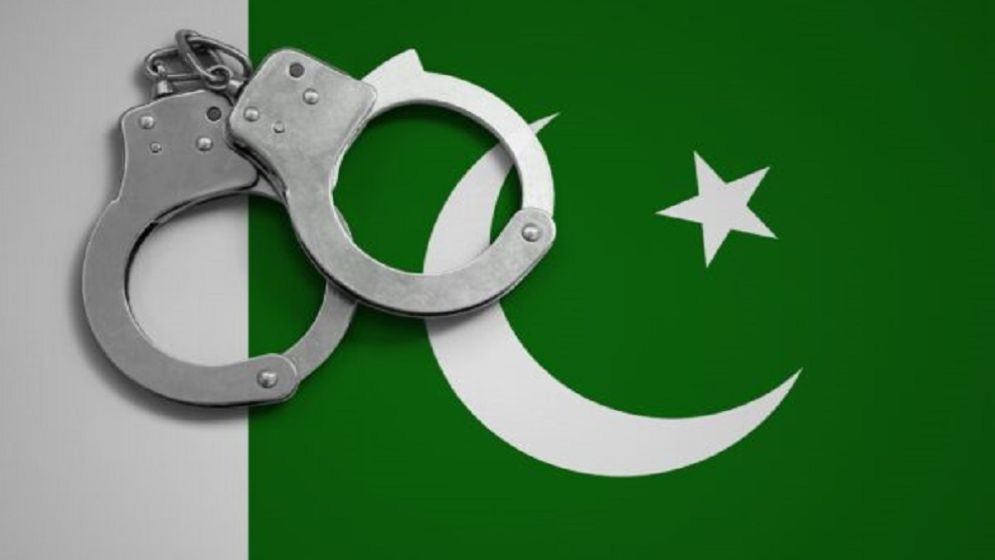
Pakistan’s anti-terrorism law draws political rivals into terrorism cases. Photo: Collected
Pakistan’s anti-terrorism legislation is increasingly being used in cases involving political figures, activists and lawyers, with former Khyber Pakhtunkhwa chief minister Sohail Afridi recently named in a major terrorism case linked to an attack on a state-run radio station in 2023.
The development highlights concerns over the broad scope of the law, which was introduced in 1997 to speed up the trials of terrorism suspects.
Afridi, who led the north-western province bordering Afghanistan, has been implicated in the case involving an attack by supporters of former prime minister Imran Khan on a state-run radio station. The supporters stormed the building and set it on fire following Khan’s arrest in 2023. The province is now under emergency rule.
Khan himself is facing terrorism charges, as are leaders of a banned hard-line Islamist party. In recent years, Kashmiri, Pashtun and Baloch activists have also been accused of terrorism under the legislation.
Pakistan introduced the Anti-Terrorism Act in 1997, when sectarian and ethnic violence was raging in two of the country’s most populous provinces. The law established a parallel legal system designed to ensure faster trials for those accused of terrorism.
Its use expanded after the September 11, 2001, attacks in the United States and the subsequent US-led war on terror. Pakistan’s border regions became bases for militants regrouping after the US invasion of Afghanistan, while insurgent groups, including Tehrik-e Taliban Pakistan, emerged and carried out repeated attacks across the country.
However, the legislation has also been used in cases involving political figures. Nawaz Sharif, the brother of Pakistan’s current prime minister, faced charges under the law in 2000. General Pervez Musharraf, who overthrew Sharif in a military coup the previous year, was also charged under it.
Zoha Waseem, a researcher specialising in policing in Pakistan, said the law’s broad definition of terrorism had contributed to its expanding use over the decades.
The legislation has been amended several times since its introduction, widening the definition of terrorism and expanding law enforcement powers. Its scope can now extend to offences ranging from kidnapping for ransom and street crime to money laundering and supporting organisations designated as banned.
Concerns over the law’s application have also been raised by former politician Shireen Mazari, whose daughter, lawyer Imaan Mazari, and son-in-law, lawyer Hadi Ali Chattha, are being tried under the legislation.
The two lawyers have been in prison since January. They were initially detained in a case related to their social media posts and are now facing charges that include spreading terror.
Mazari, who has herself spent time in jail, criticised the use of anti-terrorism legislation in cases involving political and other disputes, warning that it risked trivialising the law.
“The problem is that you’re trivialising the anti-terrorism law,” she said, describing her inability to change the situation facing her daughter.
The growing list of political figures, activists and lawyers facing terrorism charges has intensified concerns about the breadth of Pakistan’s anti-terrorism legislation and its use beyond cases involving militant violence.
Source: npr.org