



 For all latest news, follow the Daily Sun's Google News channel.


Modi-Xi meeting fails to signal reset in China-India relations
Daily Sun Report, Dhaka
Published: 20 Oct 2026, 02:57 PM
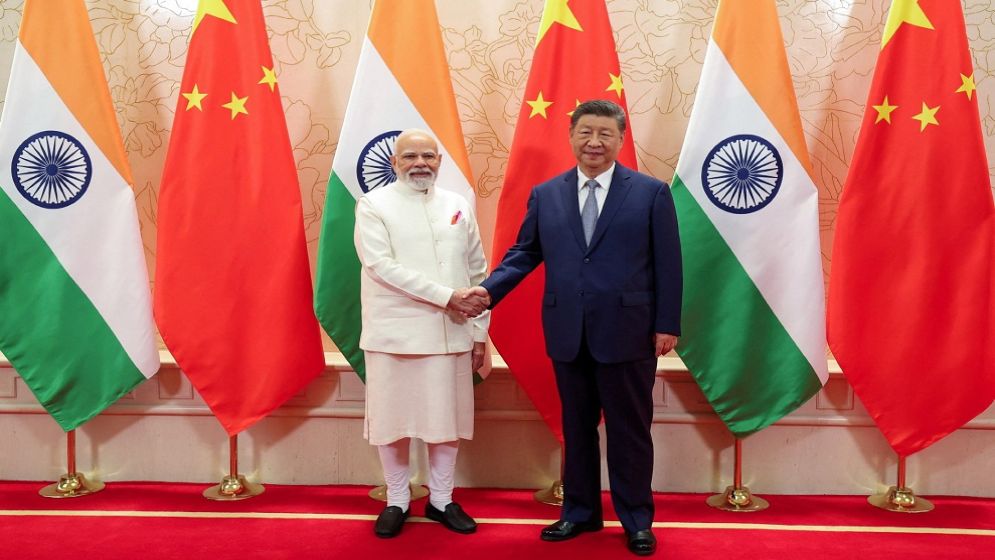
India's Prime Minister Narendra Modi shakes hands with Chinese President Xi Jinping during a meeting on the sidelines of Shanghai Cooperation Organisation (SCO) Summit in Tianjin, China, August 31, 2025. India's Press Information Bureau/Handout via REUTERS
Chinese President Xi Jinping’s meeting with Indian Prime Minister Narendra Modi in New Delhi during the BRICS summit in September has fuelled speculation about a possible reset in China-India relations. However, despite renewed diplomatic engagement amid strained India-US ties, the meeting did not mark a turning point, as major disagreements over the border, China’s relationship with Pakistan and trade imbalances remain unresolved.
Xi’s visit was significant, but it would be premature to interpret it as a breakthrough. While some observers see an opportunity for rapprochement, others argue that deteriorating relations between India and the United States have pushed New Delhi towards Beijing. Both explanations overlook the broader strategic calculations shaping India’s China policy.
India’s participation alongside China in multilateral forums such as BRICS and the Shanghai Cooperation Organisation (SCO) does not mean the two countries share the same interests. Engagement through such organisations has long been part of India’s foreign policy, independent of its relationship with Beijing.
Since the deadly Galwan Valley clashes in 2020, India has sought to stabilise relations with China while managing persistent differences. These efforts have gained momentum as US President Donald Trump has adopted increasingly hostile policies towards India and other Asian countries. However, New Delhi’s reasons for engaging Beijing extend beyond its current difficulties with Washington.
The resumption of high-level dialogue, meetings between the two leaders and direct connectivity are important developments. Another confrontation on the scale of Galwan would carry serious domestic and political costs for both sides, making the prevention of further violence a priority for India. But avoiding another crisis does not require New Delhi to change its position on the fundamental disputes between the two countries.
India has never completely abandoned dialogue with China since the Galwan clashes. Even when tensions along the border remained high, New Delhi continued to keep communication channels open. The latest meetings are a continuation of that approach rather than evidence of a fundamental shift in bilateral relations or India’s China policy.
The unresolved border dispute remains the biggest obstacle to better relations. China’s recent statement that it does not recognise Ladakh as a Union Territory of India has highlighted the depth of the disagreement. With both sides holding sharply different positions on territorial issues, there is little reason to expect a meaningful reset in the near future.
Other sources of friction remain unresolved, including China’s close relationship with Pakistan and the persistent trade imbalance between India and China. There is little evidence that either side has made substantial progress in addressing these underlying problems.
The separate statements issued by New Delhi and Beijing after the Modi-Xi meeting further highlighted their differences. The two sides did not issue a joint statement. The Chinese account referred to Tibet and Taiwan, while the Indian version omitted those references. Beijing described India as a partner, but New Delhi’s statement did not use the same language. Such differences in diplomatic wording offer little indication of a shared political understanding.
Strained India-US relations and uncertainty over Washington’s commitment to Indo-Pacific security have influenced the environment in which New Delhi engages Beijing. However, explaining India’s China policy primarily through its relationship with the United States would be misleading. India has independent reasons to prevent another border crisis, and its commitment to maintaining dialogue with China predates the current tensions with Washington.
The argument that deteriorating relations with the US have isolated India or reduced the strategic importance of the Indo-Pacific also overlooks the role of other regional countries. Their security concerns remain regardless of changes in Washington’s priorities.
The United States continues to play an important role in regional security, but uncertainty over its commitments does not eliminate the need for cooperation among Indo-Pacific countries. Washington’s more immediate challenge is the potential damage to its credibility among regional allies and partners. A decline in confidence in US commitments could have consequences across the region.
India’s security interests are not defined solely by its relationship with Washington. Even as ties with the US come under strain, New Delhi must address its own regional challenges. Managing relations with Beijing does not necessarily mean moving closer to China, just as reassessing ties with Washington does not automatically determine India’s approach to its eastern neighbour.
India can maintain dialogue with China while preserving its strategic options and protecting its security interests. Such engagement is consistent with its longstanding foreign policy approach and does not, by itself, signal a willingness to compromise on fundamental disputes.
China-India relations remain far from the status quo that existed before 2020. Security cooperation is limited, and military exercises such as Hand-in-Hand remain suspended. The trust required for closer cooperation has yet to be restored, making a significant improvement in bilateral relations unlikely in the near term.
For India, the border dispute remains a central security concern. The Galwan clashes fundamentally changed New Delhi’s perception of the threat posed by China and raised serious questions about whether existing arrangements could ensure peace along the Line of Actual Control (LAC).
Meetings between senior leaders can help contain tensions in the short term, but they cannot replace tangible progress on the ground. India is also unlikely to return to its previous position on the One China policy without some corresponding recognition of, or assurance regarding, a One India policy from Beijing. Such an assurance appears unlikely in the foreseeable future.
Only a few years ago, a meeting between Xi and Modi on Indian soil would have seemed difficult to imagine. That alone helps explain the attention their latest encounter attracted. Yet the meeting has not changed the nature or scope of the disputes separating the two countries.
For now, New Delhi and Beijing appear focused on preventing another crisis while their fundamental disagreements remain unresolved. Dialogue may help stop relations from deteriorating further, but without progress on the border and other contentious issues, it is too early to call the renewed engagement a reset in China-India relations.