


 For all latest news, follow the Daily Sun's Google News channel.


World faces nature reality check at UN biodiversity conference
Reuters, London
Published: 19 Oct 2026, 10:26 PM
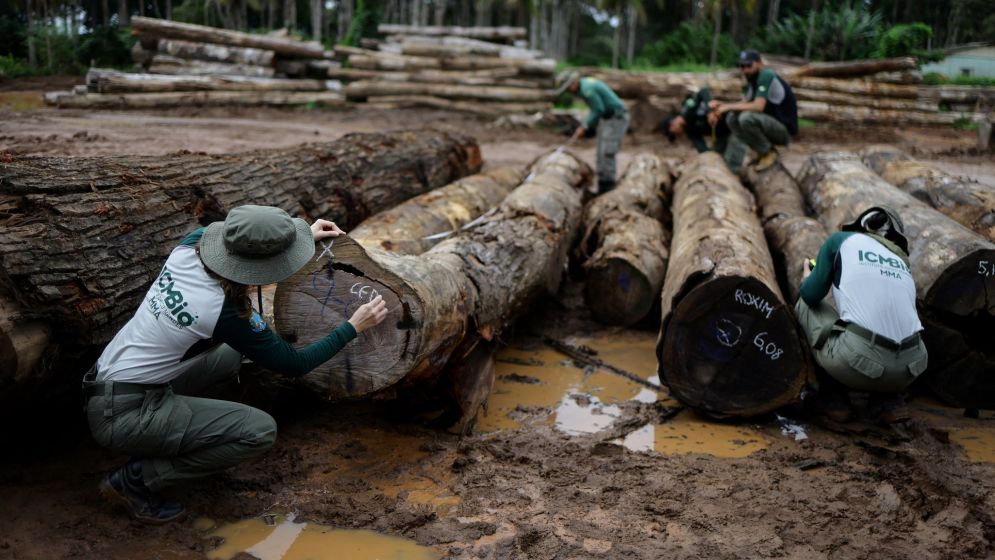
Agents of the ICMBio (Chico Mendes Institute for Biodiversity Conservation) and Brazilian Institute for the Environment and Renewable Natural Resources (IBAMA) inspect logs seized from the Amazon rainforest during an operation to combat deforestation, at a sawmill in Nova California, Rondonia State, Brazil. File Photo: REUTERS
World leaders, diplomats and nature experts gather in
Armenia this week to assess lagging efforts to halt biodiversity loss, with
countries off track on most global targets and divisions over funding still
unresolved.
The 17th UN "Conference of the Parties", dubbed
COP17, is the first major review of progress under the Kunming-Montreal Global
Biodiversity Framework, the landmark 2022 agreement that aims to protect 30% of
land and sea by 2030. The climate-focused COP31 begins on November 9 in
Antalya, Turkey.
While the world is likely to reach an estimated 27.5% of
land protection by 2030, scientists say many of the broader goals needed to
halt biodiversity loss remain well off track. From pesticide use to
unsustainable fishing and subsidies for a host of damaging activities, the
deterioration of ecosystems threatens food production, water security and
economic stability across the planet.
Countries are currently not on track to meet 22 of the 23
goals set out in the Kunming-Montreal framework, a draft UN report showed.
While the UN says 144 countries including Brazil and China
have so far created action plans, who pays and how much towards a $30 billion
public finance goal is less clear and will be central to two weeks of talks in
Armenia's capital Yerevan.
The broader goal is to mobilise at least $200 billion per
year by 2030.
Subsidy reform
Another major focus is reforming $500 billion a year of
subsidies for activities that damage nature, with governments urged to set a
two-year timeline to identify and redirect the most damaging ones. That could,
for example, include those that encourage farmers to cut down rainforest or the
offer of state discounts on synthetic fertilisers and chemical pesticides which
damage soil and water.
Doing so would help governments address nature loss and
related issues like food and energy security without committing more public
money at a time of war, energy crises and other inflationary pressures.
"This isn't primarily a story about conservation,"
said Eva Zabey, CEO of the non-profit Business for Nature at a media briefing.
"It's an economic, fiscal, political and competitiveness story, which is
grounded in resilience and resource security."
More than 130 businesses including retailer H&M HMb.ST
and consumer goods company Nestle NESN.S issued an open letter ahead of the
talks urginggovernments to set clearer policies and a plan to reform incentives
over the next 12 months, arguing that it would help make it more attractive to
invest.
Subsidies ultimately cost governments between $11 trillion
and $24.7 trillion a year, non-profit Conservation International estimates, as
they often pay twice - once for the subsidies and again to patch up the damage
that follows including cleaning up pollution, treating illness and repairing
infrastructure.
Bigger role for private sector
With public money tight, many are looking to the private
sector to play a bigger role, including through the Cali Fund. That fund was
set up in 2025 to get companies which rely on digital databases of biological
samples for their products, such as in the pharmaceutical, cosmetic and
commercial agriculture industries, to help pay to preserve nature.
Details still to be ironed out include how funds should be
shared between countries and Indigenous communities, and whether companies
should contribute based on total revenue when only part of their business
relies on these genetic resources.
For Cristián Samper, managing director and leader of Nature
Solutions at the Bezos Earth Fund, the talks are also an opportunity for
governments to do more to halt the extinction of species.
"We know recovery is possible. The decisions we make in Armenia should give more conservation teams the backing to make it happen," he said.