


 For all latest news, follow the Daily Sun's Google News channel.


Tajikistan, Turkmenistan to import Indian surface-to-air missile systems
The Diplomat
Published: 14 Oct 2026, 06:09 PM
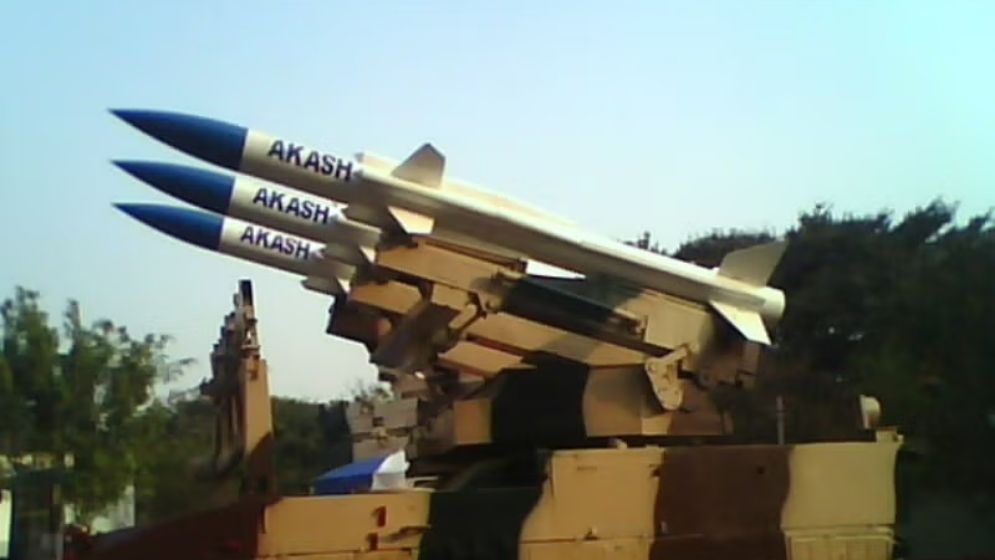
Photo: Courtesy
Tajikistan and Turkmenistan are set to import India’s indigenously developed Akash medium-range surface-to-air missile systems, as New Delhi seeks to expand its defence exports to Central Asia, reports The Diplomat.
In early October, Indian Defense Secretary
Rajesh Kumar Singh, speaking to Asian News International (ANI) held up the
indigenously designed and produced Akash medium-range mobile surface-to-air
missile (SAM) system as a “success story.” He highlighted exports of the system
to Armenia, Tajikistan, and Turkmenistan.
“The first customer was Armenia, which has
taken multiple batteries,” Singh said. “Thereafter, we’ve also exported it to
Tajikistan and Turkmenistan. Production has stabilised. We have additional
orders for our own services, and I’m sure there will be many more from various
parts of the world…”
Singh’s comments confirmed a report from
July, published in Indian business magazine BW Businessworld, which cited
official data as listing Tajikistan and Turkmenistan as export destinations for
the Akash system.
Although ANI reported that both India’s
Defense Research and Development Organization (DRDO) and the Ministry of
Defense had confirmed that “Tajikistan and Turkmenistan have joined the buyer
list,” neither of the Central Asian countries has commented publicly on the
reports.
Central Asia’s militaries have been
diversifying suppliers, but the bulk of region forces remain Soviet and/or
Russian in design and procurement, with newer additions of Chinese, Turkish,
Indian, and Western equipment.
Recent military parades show just how much
Central Asian armies are diversifying their equipment. At its Independence Day
parade in Ashgabat on September 27, Turkmenistan displayed a newly acquired
Chinese FK-2000 air-defense system, adding to its existing arsenal of
Chinese-made missile systems. Also on parade were a Brazilian-made A-29 Super
Tucano attack aircraft and Italian-made Leonardo M-346 training jets.
Tajikistan, meanwhile, has displayed China’s
HQ-17AE air-defense system, along with Chinese-made armored vehicles used to
transport and protect troops. During its 2026 Independence Day celebrations,
Uzbekistan also showcased Chinese J-10CE fighter jets. And, in recent years,
Kyrgyzstan has acquired several types of Turkish military drones.
Essentially nothing is known publicly about
the Indian defense exports to Tajikistan and Turkmenistan: the number of
systems, the delivery timelines, or the prices.
More is known about the Armenia exports,
which may provide some insight for Central Asia watchers. Armenia signed a $720
million deal with Bharat Dynamics Limited in 2022 for an unknown number of
Akash SAMs and 15 Ashwin ballistic missile interceptors. Although deliveries
were pushed back, in November 2024 Yerevan took delivery of its first Akash
battery, which included four launchers a Rajendra radar. A second delivery reportedly
took place in July 2025.
As the Oxus Society noted in an October 2024
report on Tajikistan’s military, “India’s military involvement in Tajikistan
dates back to the early 1990s and early 2000s, beginning with the refurbishment
of Tajikistan’s Ayni Airbase.” But after the base was refurbished, Tajikistan
pivoted back to Russia, walking back plans for India to station its own
military assets at the site. Instead, Dushnabe signed and agreement with Moscow
to allow Russian forces to use the base. India has had access to, though not a
permanent presence, at the Farkhor Airbase near the Afghan border.
Prior to the apparent Akash deals, India
hadn’t sold any defense equipment to Tajikistan or Turkmenistan.
The export of one type of system, if and when
they arrive into Central Asian hands, won’t fundamentally alter the military
supplier balance in the region. But it underscores that regional governments
are looking for additional partners and pathways out of strict dependence on
Russia for defense materials. Such a move introduces new problems, specially
regarding interoperability – the ability of different systems to work together
effectively.