



 For all latest news, follow the Daily Sun's Google News channel.


Modi's free trade push could lead to $140b GDP gain for India
The Economic Times
Published: 13 Oct 2026, 06:07 PM
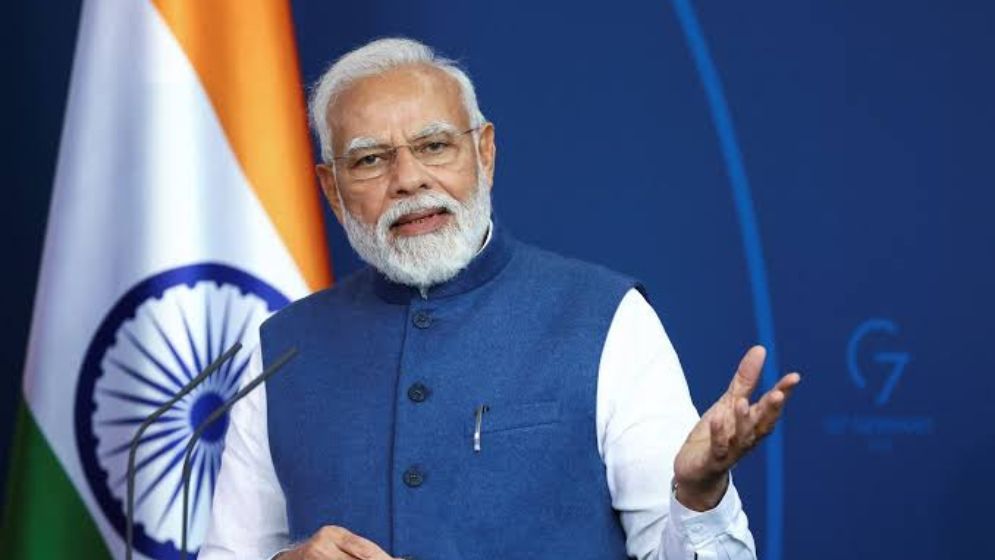
Photo: Reuters
The Great Redrawing
of Global Trade Maps
The surge in US tariffs since President Donald Trump
returned to the White House in January 2025 is redrawing global trade links.
After 19 months of wild swings, we estimate the average US tariff rate stood at
10.7% in August, up from 2.3% in 2024.
That reflects sectoral tariffs—mainly on cars and metals,
and country-specific levies set at around 10%-12.5% under the Section 301
forced labor action. Tariffs at this rate could lower US goods imports by
roughly 15% compared with the previous regime. Threats and investigations point
to more hikes to come.
Other countries are responding by diversifying trade links
and accelerating negotiations with new partners. Since the start of 2025, the
European Union has signed new or updated agreements with Mercosur and Mexico
and concluded negotiations with Indonesia, India and Australia.
The Association of Southeast Asian Nations and China signed
an upgraded free-trade agreement in October 2025. Canada signed several
agreements in 2025-26 and moved to launch, accelerate or revive others.
India is no exception. During 2025-26, agreements with the
European Free Trade Association, the UK and Oman entered into force, adding to
deals with Australia and the United Arab Emirates that took effect in 2022.
India also signed an FTA with New Zealand and concluded
negotiations with the EU. In addition, New Delhi is pursuing other
partners—including the Eurasian Economic Union—and has sought an agreement with
the Gulf Cooperation Council.
At the same time, India has pursued deeper trade links with
the US since Trump and Narendra Modi announced plans for a bilateral agreement
in February 2025. The relationship has been rocky. In the second half of 2025,
India faced some of the highest additional tariffs among major US trading
partners after Washington imposed a 25% reciprocal tariff and an additional 25%
duty linked to Russian oil purchases.
Tensions have eased since then. While sectoral tariffs remain in place, the US removed the Russia-related 25% tariff and lowered reciprocal rates on India to 18% in February. In addition, under the Section 301 forced labor action, which has replaced reciprocal tariffs, India has been set a rate of 10%, lower than the 12.5% slapped on many other partners. This is paving the way for an interim deal, though reaching a more comprehensive agreement may prove difficult.
What Trade
Reshuffling Means for the Indian Economy
Using a computable general equilibrium model, we estimate
how India’s trade deals could reshape its economy over the next decade.
We start by assessing the impact of US tariffs at their
August level, relative to 2024 duties. We calculate that the average tariff on
Indian goods sold to the US has risen to 11.6%, from 2.4% in 2024. By 2035, we
estimate the tariffs will cut Indian goods exports to the US by about
one-fifth. But the hit to India’s economy should be limited. Less than 2% of
its output relies on US markets, and stronger exports elsewhere should cushion
the blow. We estimate the effect on gross domestic product will be negligible.
We then model the FTAs already concluded or under
negotiation through three channels:
First, we adjust bilateral tariffs using a stylized schedule
that captures the key elements of the deals. India’s partners eliminate all
tariffs on Indian goods in the first year. India eliminates tariffs on
industrial products and halves those on agricultural products, implementing
half of the reduction in the first year and the rest by year 10.
Second, building on Metivier et al. (2023), we assume the
cost of nontariff measures on goods and services falls gradually by 25% over 15
years, with an additional reduction in NTMs on services to capture lower uncertainty
from bilateral agreements.
Third, using Prasad et al. (2008), we add a productivity
boost from higher FDI in line with commitments under the deals: $100 billion
over 15 years for EFTA (roughly $35 billion of which is expected to be
additional), and $20 billion for New Zealand (almost all additional).
For US-India negotiations, we model an interim agreement
under which India grants the US roughly the same tariff reductions as under its
other deals. The US cuts sectoral duties on automotive products to 15%
(including most-favored-nation tariffs) but keeps the 50% metal tariffs and 10%
Section 301 duties on most covered products—similar to the conditions it
granted other deal partners such as the EU or Japan. We still expect the
agreement to reduce tensions and uncertainty and to deliver the same decline in
NTMs as India’s other FTAs.
Our analysis suggests FTAs already in force should raise
India’s GDP by 1.2% by 2035 relative to baseline, rising to 1.7% if the EU and
New Zealand agreements are implemented from 2027, a gain of about $140 billion
at constant 2025 US dollars. A US deal would add 0.2 percentage point. If
negotiations with the EAEU, GCC and Israel conclude over the next few years,
the gain could rise by another 0.2 ppt, leaving GDP 2.1% higher (about $170
billion) by 2035.
Trade volumes would rise even faster. By 2035, Indian exports could be almost 10% above baseline if all deals are implemented. Imports also would climb as households and businesses gain access to new products and services and manufacturers become more integrated into global value chains.
How Domestic Trends
Could Compound the Boost
Signing FTAs is only the first step. Reaping the full
benefits will require India to sustain its reform momentum. Effective
implementation; reliable access to energy, critical minerals and advanced
technologies; and unlocking the potential of India’s vast labor force will all
be important.
We model an upside scenario in which two domestic trends
amplify the gains:
Lower production costs. India has cut corporate taxes,
introduced subsidies, ramped up infrastructure investment to lower logistics
costs and funded incentives to boost workers’ skills. Regardless of trade
developments, some of these benefits likely have already materialized. In this
upside scenario we assume a further boost to manufacturers’ efficiency, which
we model as a roughly 2% decline in production costs. That could add roughly 1
ppt to export gains and 0.5 ppt to GDP gains by 2035.
Tap India’s agricultural labor potential. More than 40% of
Indian workers remain in agriculture—little changed over the past decade—with
high underemployment. By comparison, in rapidly industrializing Vietnam the
share has fallen from more than 40% to around 25%, while agricultural output
per worker has risen rapidly and now exceeds India’s by almost 60%. We model a
similar productivity boost in India phased in over a decade, allowing workers
to shift toward expanding manufacturing and services. This adds slightly more
than 1 ppt to export growth and about 2 ppts to GDP gains.
India is pairing an ambitious industrial strategy with an equally ambitious trade agenda. If it gets the combination right, it could become a powerful new engine of long-term growth. US tariffs are a drag. For India, and the world, the right response could yet deliver a development win.