



 For all latest news, follow the Daily Sun's Google News channel.


Families demand answers after deadly poll violence in Pakistan-administered Kashmir
JKHRO says it has invited the authorities to respond to the allegations in its report
The Independent
Published: 11 Oct 2026, 09:39 PM
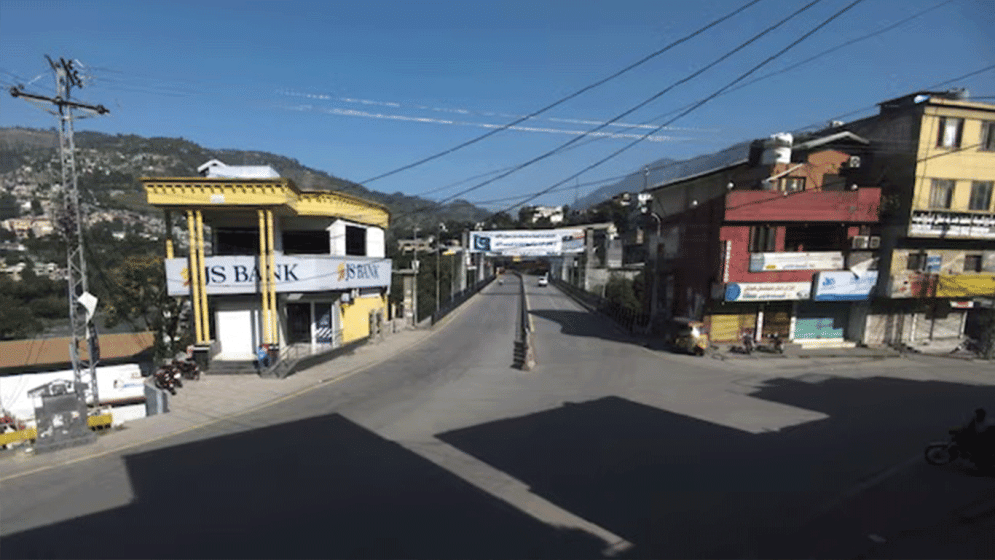
Photo: Reuters
For more than two months, Fahad Barkat's sister believed he was detained by the police in Pakistan-governed Kashmir and prayed for his release. He had gone to a military hospital in Rawalakot to donate blood and never returned.
His last message to her was at 11.31pm on 7 June. It
was not until much later that Barkat’s family knew what had actually happened
to him, The Independent reported.
“She believed he was alive in detention and
continued praying for his release, treatment and food,” wrote the UK-registered
organisation Jammu Kashmir Human Rights Observatory (JKHRO) in a 47-page report
it shared with The Independent, summarising Barkat's sister's account.
The 26-year-old man was shot in the neck as he
entered the hospital’s gate, shortly before 1am, according to Barkat’s sister,
whose name has been withheld by the rights group citing concerns about her
personal safety.
JKHRO did not establish who was responsible for
Barkat’s killing, but it demanded accountability and an independent and
transparent investigation.
Barkat’s is one of 90 names on a list compiled by
JKHRO of people who died between 5 June and 4 October when unrest in the
semi-autonomous region grew – initially over rising electricity prices and cost
of living and expanding into a broader challenge to the region’s constitutional
and political structure.
The Joint Awami Action Committee (JAAC), a coalition
of grassroots activists, called for the boycott of elections that took place in
a phased manner from 27 July to 10 August, arguing that the current system does
not adequately represent residents of Pakistan-administered Kashmir. It led to
a ban on the group followed by a violent crackdown on protesters by Pakistan’s
security forces.
JAAC supporters wanted the abolition of 12 seats in
the 45-seat regional Legislative Assembly that are reserved for refugees from
India-governed Kashmir living elsewhere in Pakistan.
The Pakistani government, which exercises control
over the region, rejected those demands, saying the reserved seats are
constitutionally protected and essential to maintaining Pakistan's longstanding
position that the whole of the former princely state of Jammu and Kashmir
remains disputed.
It also proscribed JAAC under strict anti-terrorism
laws, arrested several of its leaders, and launched a security operation to
suppress the movement, with reports alleging human rights abuse, wrongful
detention, and extra-judicial killings.
Until 19 June at least 24 death were recorded,
including civilians and police, and more than 500 people were detained,
reported Reuters.
JAAC has publicly cited more than 100 deaths since 5
June. Authorities have repeatedly alleged violence by armed protesters. JAAC
and rights groups dispute the claim, alleging excessive or lethal force by the
state.
Access to the ground was further limited after
Pakistan imposed an internet shutdown and ban on foreign media from travelling
there. Mobile internet was suspended on 5 June. While a phased restoration
began on 31 August, it excluded Rawalakot and Sudhnoti, reported the Dawn
newspaper.
The JKHRO has now demanded that the authorities
“provide written responses, casualty and detention records, operational orders”
in its detailed report flagging questions around the disappearance, detention
and death of civilians in the Pakistan-administered semi-autonomous region.
Barkat’s family told the JKHRO that their repeated
calls and messages to the missing man went unanswered. At the same time, Dawn
identified him among the civilians killed in the clashes in Rawalakot in June.
It has since emerged that the “authorities were
withholding [Barkat’s] body unless the family signed a statement characterising
him as a terrorist killed in an encounter”, claimed JKHRO in a separate report.
The human rights body also raised questions around
the sequence of events, as well as details of the burial of body. It demanded
transparency, including CCTV footage, hospital donor log, along with
post-mortem and burial records, and establishing accountability.
JKHRO says it has invited the authorities to respond
to the allegations in its report.
Barkat is not the only person whose disappearance
and death are shrouded in mystery.
On 30 June, Shoukat Nawaz Mir was arrested from
Dhirkot.
His family alleged he was being held without
“disclosure of warrant, legal basis, or place of detention”. His family is yet
to learn about his whereabouts even after three months.
In July, his sister Yameen Mir filed a petition at
the High Court of Azad Jammu Kashmir, or Pakistan-administered Kashmir, seeking
he be brought before the court. According to JKHRO, “the relatives repeatedly
contacted police and government offices but were not told where he was held or
permitted to meet him”.
The petition further alleged that to their
knowledge, “he had not been produced before a competent magistrate and that no
lawful detention order had been disclosed”. They recorded “serious fears for
his safety”, disclosed the report.
While Geo News previously quoted Muzaffarabad deputy
commissioner confirming the detention of the JAAC member, Dawn later reported
that the officials maintained silence over his arrest.
On 5 September, police in Chitra Topi village said
an attacker was killed in retaliatory fire from security personnel, adding that
they recovered a weapon and ammunition. But the family of the dead man, later
identified as Jabir Mumtaz, gave a different account.
He “had been missing for roughly two weeks”, noted
the report, attributing it to unverified social media posts claiming that he
was in detention for a fortnight.
The family alleged that the authorities told them
the “release of the body was conditioned on signing a statement identifying him
as a terrorist”. Since the family refused to comply, “the authorities allegedly
carried out the burial themselves,” claimed the report.
“A family should never be left to search for the
location of a loved one’s remains or rely on rumours about detention, burial or
death,” said Azar Ahmed, the director of JKHRO.
“The authorities can resolve many of these cases by
disclosing custody, medical, mortuary and burial records. Silence deepens harm
and undermines public trust.”
Naqash Zardad, 29, had gone to his buffalo farm in
Rawalakot when he died from a stray bullet during clashes near his farm, said
JKHRO, citing an independent BBC report. The incident took place on 6 June,
with his family asking “why a person inside or within the family’s own property
was exposed to lethal fire” when he was not participating in the protest.
His death had a ”long-term psychosocial impact” on
the family as he was the only male member left after his father died from
cancer, said the report.
The authors of the report repeatedly state that it
should not be concluded that the death of every person “involved same actor,
circumstances or legal cause”.
“The purpose of this report is not to compress every
death into a single narrative. It is to preserve a credible, case-by-case
record that families, investigators, journalists and international institutions
can test against primary evidence,” said report’s author Yasir Shafaat, adding
that all those named in the report “requires truth, lawful investigation and an
effective remedy”.