



 For all latest news, follow the Daily Sun's Google News channel.


World court says India must uphold Pak water sharing treaty; Delhi rejects ruling
Reuters, Amsterdam
Published: 31 Aug 2026, 07:36 PM
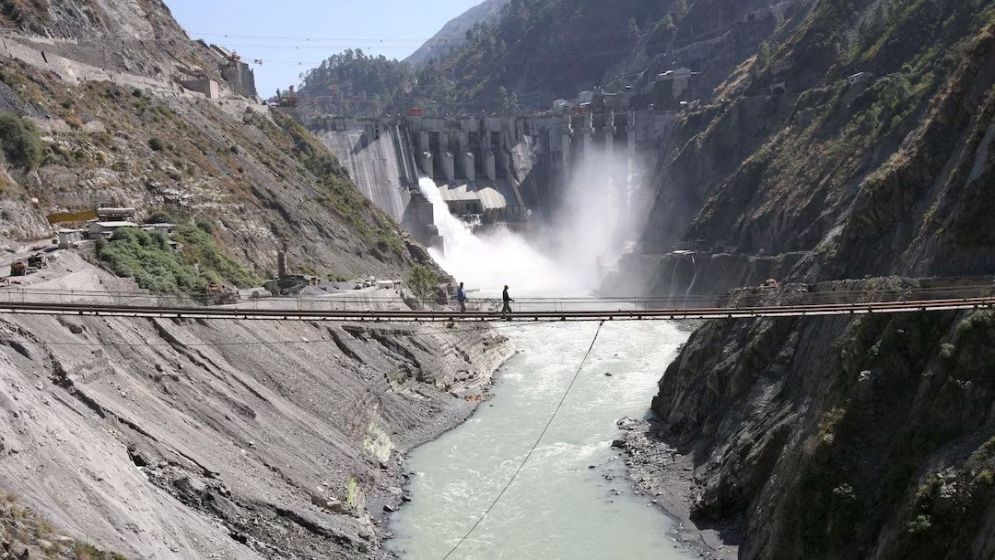
Labourers walk on a bridge near the 450-megawatt hydropower project located at Baglihar Dam on the Chenab river which flows from Indian Kashmir into Pakistan, at Chanderkote, about 145 km (90 miles) north of Jammu, 10 October 2008. Photo: REUTERS
India must uphold a water-sharing treaty with Pakistan it
suspended amid bilateral tensions and must limit work on a hydroelectric plant
it is building in the Kashmir region, the Permanent Court of Arbitration (PCA) in
The Hague said on Monday.
India rejected the ruling, saying the court has no
jurisdiction over the matter, and pledged to continue its new hydropower works
that threaten Pakistan’s interests.
India in April last year suspended the treaty that ensures water supply to 80% of Pakistani farms, after India identified as Pakistani two of three assailants in an attack that killed 26 people at a tourist destination in Kashmir that month.
Islamabad denied any role in the attack and took legal
action after India last year also began work to boost reservoir holding
capacity at two hydroelectric projects in the Kashmir region.
This was seen as a first tangible step by India to operate
outside agreements covered by the Indus Waters Treaty between the two
countries, which both have honoured since 1960 despite three wars and several
other conflicts between them.
The Permanent Court of Arbitration said the Indus Water
Treaty remained fully in force, as India had no justification for ending or
suspending the agreement.
"India must observe its obligations under the Treaty,
including those relating to the design and operation of its hydro-electric
projects on the Western Rivers," the intergovernmental court said.
India, which is officially a member of the court, said it
did not recognise the court and "categorically" rejected the verdict.
"This so-called Court of Arbitration has no
jurisdiction whatsoever to pronounce on India's sovereign decisions,"
India's Ministry of Foreign Affairs said in a statement.
"Its pronouncements, now or in the future, will have no
effect on India's actions in connection with the projects being undertaken by
India."
The court said a neutral expert, appointed by the World
Bank, would judge by July 2027 whether the construction of hydroelectric plants
in the Himalayan region was in line with the treaty.
Agreeing with a demand by Pakistan, the court said India was not allowed to build the dam wall and power intake structure at the Ratle Hydro-Electric Plant above certain levels until 90 days after the neutral expert's decision.