


 For all latest news, follow the Daily Sun's Google News channel.


Aid cuts lead to early closure of UK-funded development project in Bangladesh
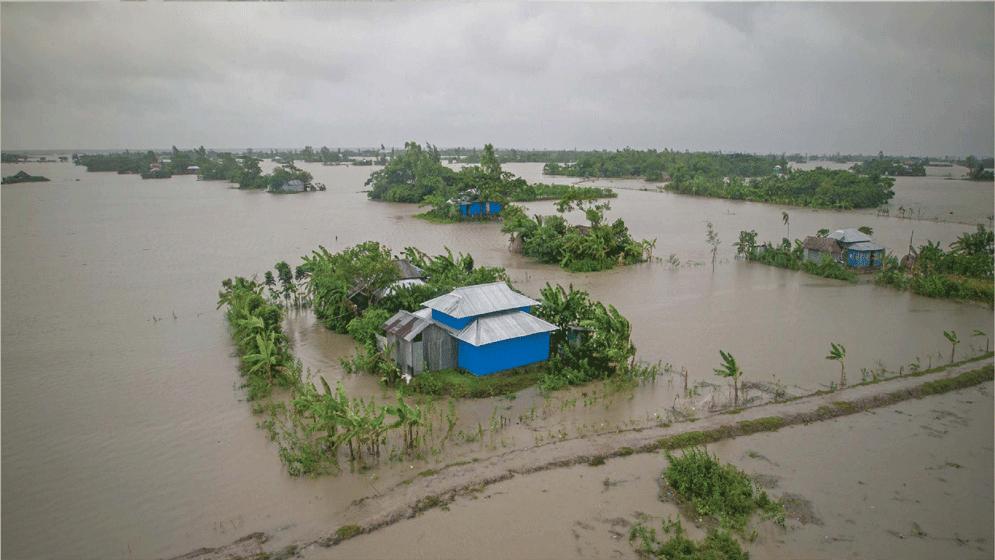
The Sundarbans also faces a sea level rise of roughly 3cm per year
The Independent
Published: 23 Aug 2026, 09:06 PM
File Photo
A UK-funded climate project in Bangladesh is being forced to close two years early after foreign aid cuts, leaving thousands of vulnerable people without support and threatening to undo work that has already been carried out, The Independent reports.
The UK Foreign, Commonwealth and Development Office
(FCDO) is in the middle of a programme of cuts to the foreign aid budget, which
is set to see the UK aid budget fall from 0.5% to 0.3% of Gross National
Income.
With a number of developing countries seeing their
UK aid relationships all-but eliminated, the cuts have been labelled a “moral
catastrophe”, with many observers particularly dismayed at the decision to cut
UK aid for climate projects.
One organisation impacted is British development
charity Practical Action. Since 2023, the charity has been managing part of a
major development project in Bangladesh, which is aiming to transform the lives
of tens of thousands of people through interventions including solar power
systems, climate-resilient agriculture and aquaculture feedstocks and
technologies, and weather information systems that can provide early warnings
for extreme rainfall and cyclones.
Situated in Bangladesh’s Sundarbans – the world’s
largest tidal mangrove forest, much of which is UNESCO World Heritage Site –
Practical Action’s project launched in 2023, and was expected to run until
2028.
In April 2026, however, the charity was told it
would have to end its project in June of this year, according to Tamanna Rahman,
climate resilience lead for Practical Action Bangladesh. That deadline was
later extended to September, after intense lobbying from the charity, she says.
Practical Action was supposed to have received £2.2m
by 2026, but ended up receiving “far less than this”, says Rahman. The project
was supposed to reach 57,000 people by the end of this year, but will in the
end only reach 37,000 people.
“This abrupt cut has threatened our reputation in
the community, which we have carefully built up over the past two and a half
years,” Rahman says. “It has also impacted the long-term stability of the
interventions that we have made, and limited our ability to plan for an
effective exit.”
The cut to Practical Action’s project forms a
fraction of overall cuts to the UK-Bangladesh bilateral aid programme, which,
it was revealed in July, is set to fall in value from £66.7 million to £31m
between 2025/6 and 2026/7.
The early exit has also been damaging due to the
fact that the target communities need as much support as possible to adapt to
the climate crisis, Rahman adds.
“Every year we are seeing more severe storms and
cyclones, while the sea is rising and soil is becoming salinated,” she says.
“There is huge demand for financing such as this, yet the ability to make these
kinds of tangible programmatic interventions is declining.”
Commenting in response to Practical Action’s
concerns, Labour MP and chair of the International Development Committee Sarah
Champion said: “If projects such as this are being ended two years early with
short notice, it begs serious questions about the UK's commitment to supporting
low-income countries as they respond to climate change.
“What’s more, this kind of action is likely to
represent poor value for money for the UK taxpayer and damage the UK’s
reputation as a reliable partner in the response to climate change.”
3cm sea level rise per year
Situated on the Ganges Delta - where the Ganges,
Brahmaputra and Meghna rivers converge before flowing into the Bay of Bengal -
the Sundarbans is a vast 10,277km² mangrove forest. It is home to 42 mammal
species, including endangered tigers and river dolphins, as well as nearly 300
species of birds.
The communities supported by Practical Action live
on the fringes of this unique ecological area, and have traditionally depended
on the forest for products including fish, firewood and honey. Many now also
farm, but widespread illiteracy and their isolation from the wider Bangladeshi
economy leave them among the country’s most marginalised communities.
Many also continue to suffer the after-effects of
Cyclone Aila, which affected an estimated 100,000 people when it hit the
Sundarbans in 2009, destroying local infrastructure and completely changing the
landscape in parts.
The Sundarbans also faces a sea level rise of
roughly 3cm per year - around double the global average - with the rapid rising
displacing communities and ruining once-fertile soil.
Bina Mondal, a villager supported by Practical
Action, who recalls how Cyclone Aila in 2009 washed away embankments and
effectively ended villagers’ ability to farm
Bina Mondal recalls how her village, Kalabogi, once
had wide roads, productive farms, and fruit trees. After Cyclone Aila, roads
and embankments washed away, and fishing is now the only viable source of
income for the family.
Fresh water is now hard to come by except through
rainwater harvesting, while smaller and smaller catches from the delta mean the
family’s income becomes ever-more stretched. The family often cooks only one
meal per day, and healthcare is currently out of reach.
A small solar panel provided by Practical Action has
provided massive support as she struggles to make ends meet. “I can continue
working after dark, and this has helped me earn more,” she says. “Before the
project started, we were earning around Tk2,000 to Tk3,000 from fishing, but
this year we are earning around Tk4,000 to Tk5,000.”
Another villager supported by Practical Action over
the past two and a half years is Bashonti Mondal, who received a new
solar-powered rice-husking machine. Previously, she says, she travelled from
farm to farm each day looking for work from local landowners. Now, she can earn
a higher income from home, while having more time to support her children.
Aid workers at the charity report how, when the
early closure of the project was announced, some members of communities cried,
while other people were confused as to why support was ending just as
interventions were beginning to bear fruit.
Interventions that will essentially go to waste
include a scheme to support a pool of 140 entrepreneurs, who have been given Tk50,000
each, and have received initial project coaching. Leaving them now will bring
them back to “ground zero”, however, as they have been provided with a “bare
minimum understanding of markets”, says Practical Action’s Rahman.
“Having two to three months' notice to wrap things
up when it was very clear that the project was to continue until December 2028
has been very difficult,” says Rahma. “Practical always has a proper exit plan
that involves community coaching and a hand-over of interventions to the local
government - but this time we have not been able to fully do this.”
No time to find new funding
Rahman is clear-sighted that – in a country of 170m
people – it is unrealistic to expect grants from foreign governments to lift
everyone in need out of poverty. The current shift by donor countries like the
UK to drive in capital through new kinds of partnerships with private investors
is understandable in that sense, she says.
“At the same time, when we are talking about the
most marginalised and vulnerable here in Bangladesh, it is very hard to see how
private capital can come,” says Rahman. “People do not have any significant
monetary income to speak of, and transportation and infrastructure remains
virtually non-existent due to Cyclone Aila, which took place as long ago as
2009.”
Rahman’s concerns have been echoed by other NGOs.
Last year, for example, the NGO Mercy Corps warned that only 3% of adaptation
finance needs in developing countries have so far been met by the private
sector, with interventions like flood defences typically considered a “public
good” that require government money to be built.
Romily Greenhill, CEO of UK development charity
network Bond, commented: "The cancellation of UK-funded humanitarian and
climate adaptation programmes lays bare the harsh reality of Labour's
short-sighted UK aid cuts, and represents a lifeline lost to communities
already suffering the worst impacts of conflict, poverty and climate crisis
worldwide.”
She added that the new Labour leadership of prime
minister Andy Burnham and foreign secretary Ed Miliband have an opportunity to
“change course” and restore the country’s “shattered reputation on
international development”.
“We urge the new prime minister and foreign
secretary to definitively rule out further cuts to the UK aid budget, set out a
roadmap for returning UK aid to 0.7% of GNI, and ensure that high-quality
international climate finance is protected,” she said.
Rahman suggests that signals from FCDO in its new
development strategy show that there is a desire to move away from giving money
to NGOs like Practical Action, to provide more support directly to the governments
of developing countries. “But I have concerns here, as the government has not
traditionally had the manpower, the capacity, and skills to access
hard-to-reach communities like those living in the forests of the Sundarbans,”
she says.
Practical Action has been looking to find
grant-funding from foundations to fill the gap left by FCDO, however, the short
notice on the closure of the project has hindered such efforts.
“As Practical Action, we do not wish to talk
negatively about FCDO, and we continue to work with them across Asia, Africa
and Latin America,” says Rahman. “We continue to need sustainable, long-term
grant finance to be able to reach the most vulnerable communities who we are
trying to support.”
In response to concerns raised in this article, an
FCDO spokesperson said: "Climate is an urgent national security threat,
and the Foreign Secretary will be bringing his international leadership on this
topic to FCDO.
“We are transitioning away from spending high levels
of grant ODA [Official development assistance], but our ambition and effort
will remain high - our bilateral programmes will focus on partnerships with governments
to strengthen systems, leverage finance and move away from reliance on aid.”