


 For all latest news, follow the Daily Sun's Google News channel.


Over 600,000 displaced Lebanese return home amid ceasefire: IOM
AFP, Beirut
Published: 03 Jul 2026, 08:06 PM
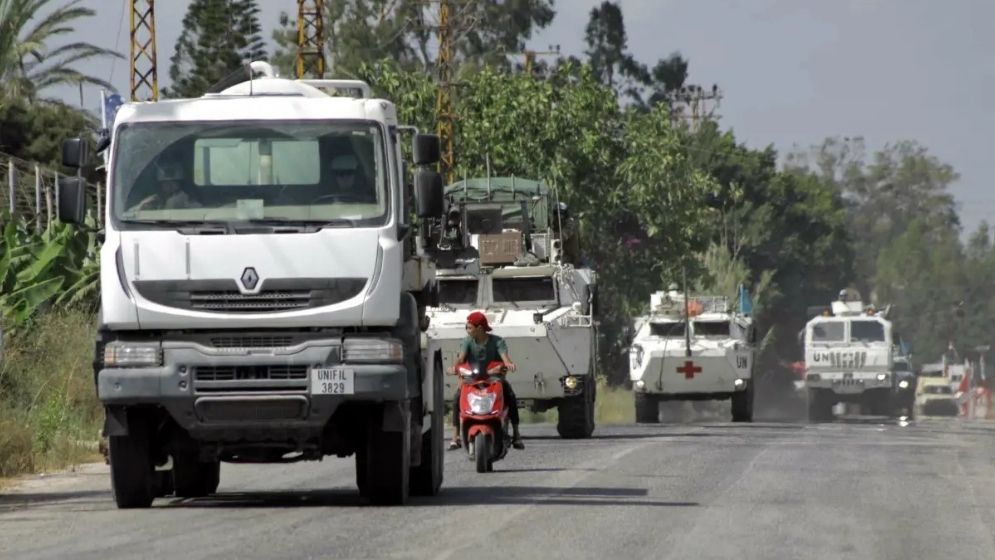
A United Nations Peacekeeping Force in Lebanon (Unifil) convoy drives through the southern Lebanese area of Al-Mansouri on 2 July. Photo: AFP
More than 640,000 displaced people in Lebanon have returned home, according to the International Organization for Migration (IOM), as clashes between Hezbollah and Israel have wound down following a deal to end the Middle East war.
Lebanon was drawn into the regional war on 2 March
when Tehran-backed Hezbollah fired rockets at Israel to avenge the killing of
Iran's supreme leader in US-Israeli strikes.
Israel responded with heavy airstrikes and an
invasion of southern Lebanon, where its troops still occupy swathes of
territory.
Lebanese authorities say Israeli attacks have
killed roughly 4,300 people and displaced over one million, particularly from
southern Lebanon and Beirut's southern suburbs.
In a report on Thursday, the IOM said
"646,107 IDPs (internally displaced persons) have begun returning to their
communities," while about 500,000 other people remain displaced, based on
data collected in coordination with local authorities since 22 June.
An agreement signed by Tehran and Washington
last month established a ceasefire in Lebanon starting 21 June.
Since then, hundreds of thousands of people
have returned to their homes in southern Lebanon and Beirut's southern suburbs.
Lebanese authorities say they have worked to
remove informal tent encampments in and around Beirut and reduce the number of
official shelters.
But it remains impossible to return to dozens
of towns and villages near the southern border, many of which have suffered
massive destruction.
Israeli officials moreover vow their forces
will remain in a "security zone" 10 kilometres (six miles) deep,
despite the ceasefire.
Last week Lebanon and Israel concluded a
US-backed framework agreement aiming to pave the way for a permanent end to the
war.
The agreement calls for the disarmament of
Hezbollah, a gradual Israeli withdrawal from southern Lebanon and the
deployment of the Lebanese army there -- starting with two "pilot"
areas.
However, the agreement -- rejected by
Hezbollah -- does not set a timetable for Israeli withdrawal.
Instead, it makes Israeli withdrawal
contingent on Hezbollah's disarmament first, a tall order that experts say the
Lebanese state cannot meet.