


 For all latest news, follow the Daily Sun's Google News channel.


Over 100 prominent citizens from India, Pakistan write to Modi, Shehbaz; seek end to ‘continued hostility’
India Today, New Delhi
Published: 01 Jul 2026, 03:52 PM
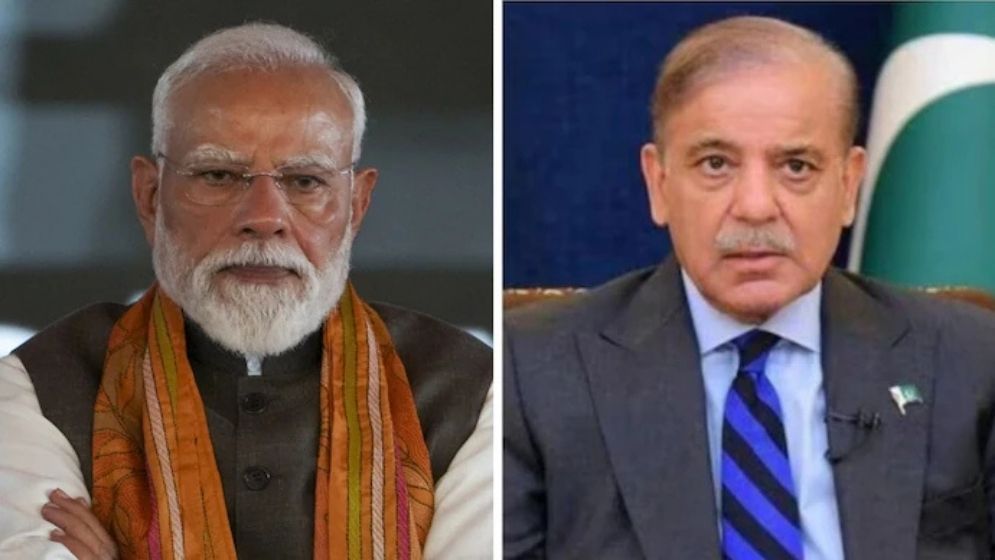
The signatories urged the two leaders to revive confidence-building measures. File Photo
A year after Operation Sindoor, over 100 prominent figures from India and Pakistan, including several politicians and public figures, have jointly appealed to Prime Minister Narendra Modi and his Pakistani counterpart, Shehbaz Sharif, to take concrete and sustained steps towards restoring peace, dialogue and normal bilateral relations between the two countries.
The appeal, issued by the Centre for Peace
and Progress and signed by 117 people, 61 from India and 56 from Pakistan,
urged the two governments to end the prolonged hostility, saying it was denying
millions of young people opportunities, prosperity and a secure future.
The Indian signatories included National
Conference chief Farooq Abdullah, separatist leader Mirwaiz Umar Farooq, PDP
chief Mehbooba Mufti, RJD MP Manoj Jha, and former TMC minister and current
AJUP leader Humayun Kabir.
Among the Pakistani signatories were former
Foreign Minister Khurshid Mahmud Kasuri, former diplomat Ashraf Jehangir Qazi,
National Assembly member Isphanyar Bhandara, and nuclear physicist and author
Pervez Hoodbhoy.
The signatories urged the two leaders to
revive confidence-building measures, including restoring full diplomatic
relations, reinstating High Commissioners in New Delhi and Islamabad, resuming
normal visa services and reopening airspace for commercial flights.
The appeal comes even as New Delhi has
repeatedly maintained that its approach towards Pakistan remains unchanged,
asserting that "terror and talks cannot coexist and terror and trade
cannot go hand in hand" while making clear that any improvement in
bilateral ties hinges on an end to cross-border terrorism.
They also sought the reopening of the
Attari-Wagah land border for trade and travel, revival of the
Srinagar-Muzaffarabad bus service and other cross-border connectivity
initiatives.
“India and Pakistan together are home to
nearly one-fifth of humanity. A large proportion of our population is young.
The people of both countries deserve a future defined by peace, development,
connectivity and cooperation, rather than perpetual mistrust and
confrontation,” the letter stated.
“Decades of estrangement has hindered our
collective potential and imposed significant social, economic and human costs.
We believe that sustained engagement and dialogue remain the only viable path
to resolving differences and building a stable and prosperous region,” it
added.
The appeal also called for resuming a
comprehensive bilateral dialogue on all outstanding issues, including Jammu and
Kashmir, revisiting the framework negotiated between 2004 and 2007, pursuing
demilitarisation and de-escalation, and addressing the legitimate security
concerns of both countries.
The signatories further urged the reopening
of the Kartarpur Sahib Corridor, access to Sharada Peeth in Pakistan's Neelum
Valley and easier travel to religious and cultural heritage sites on both sides
of the border as confidence-building measures.
“We respectfully request you to listen to the
aspirations of common people and choose engagement over isolation, dialogue
over hostility and cooperation over confrontation. The future of South Asia
should be shaped not by division and conflict, but by peace, prosperity and
shared progress,” it stated.
“This appeal is not an endorsement of any
political position. It is a call to place the welfare, aspirations and future
of nearly two billion people above conflict, confrontation, and division. We
believe that peace, dialogue and cooperation offer the surest path towards a
stable, prosperous and secure South Asia,” the letter added.