


 For all latest news, follow the Daily Sun's Google News channel.


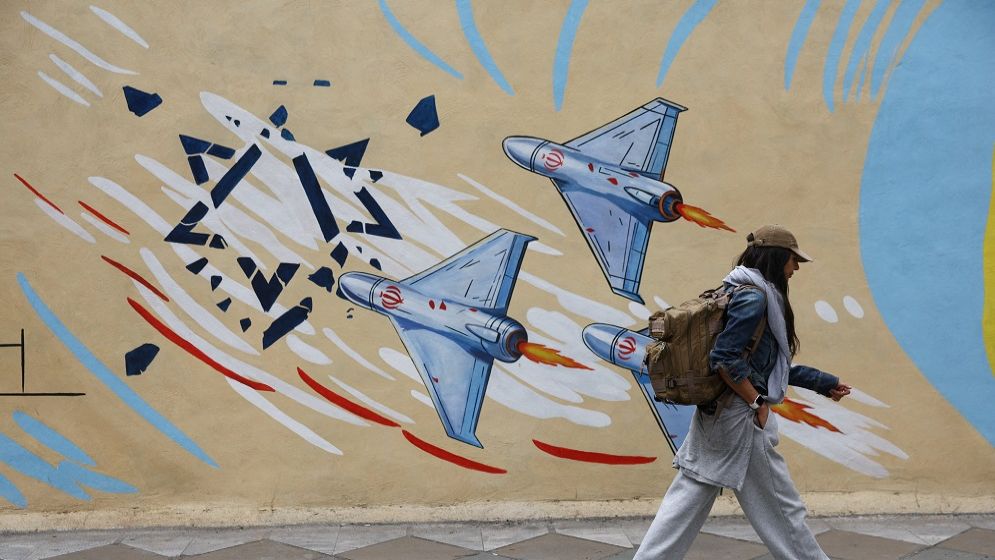
An Iranian woman walks next to an anti-Israeli mural on a street in Tehran, Iran, 5 May 2026. Photo: Reuters
The United States and Iran are closing in on an agreement on
a one-page memorandum of understanding (MoU) to end the war in the Gulf, a
source from mediator Pakistan familiar with the negotiations said.
The Pakistani source said a report earlier by the US media
outlet Axios on the proposed memorandum was accurate. The Axios report had
cited two US officials and two other sources familiar with the discussions.
"We will close this very soon. We are getting
close," the Pakistani source said.
Axios reported on Wednesday that the White House believed it
was closing in on a one-page memorandum to end the war with Iran, after US
President Donald Trump paused a three-day-old naval mission to reopen the
Strait of Hormuz.
The Axios report said the US expected Iranian responses on
several key points in the next 48 hours. The US State Department and White
House did not immediately respond to requests for comment.
Among other provisions, Axios said, the deal would involve
Iran committing to a moratorium on nuclear enrichment, the US agreeing to lift
its sanctions and release billions of dollars in frozen Iranian funds, and both
sides lifting restrictions around transit through the Strait of Hormuz.
14-point memorandum of understanding
The one-page, 14-point memorandum of understanding was being
negotiated between US envoys Steve Witkoff and Jared Kushner and several
Iranian officials, both directly and through mediators, Axios said.
In its current form, the memorandum would declare an end to
the war in the region and the start of a 30-day period of negotiations on a detailed
agreement to open the strait, limit Iran's nuclear programme and lift US
sanctions, Axios added.
Iran's restrictions on shipping through the strait and the US
naval blockade of Iran would be gradually lifted during that 30-day period,
Axios said, citing one US official who added that if the negotiations collapse,
US forces would be able to restore the blockade or resume military action.
Earlier, Trump announced a pause to "Project
Freedom", a mission announced on Sunday to guide ships through the blocked
strait. The mission had failed to bring about any significant resumption of
traffic through the waterway, while provoking a new wave of Iranian strikes on
ships in the strait and on targets in neighbouring countries.
In the latest incident, a French shipping company reported
on Wednesday that one of its container ships had been struck in the strait the
previous day, and that injured crew had been evacuated.
In announcing he was pausing the mission, Trump cited
"great progress" in negotiations with Iran, without giving further
details.
"We have mutually agreed that, while the Blockade will
remain in full force and effect, Project Freedom (The Movement of Ships through
the Strait of Hormuz) will be paused for a short period of time to see whether or
not the Agreement can be finalized and signed," Trump wrote on social
media.
Trump had launched the naval mission to guide ships through
the strait after saying he was likely to reject Iran's latest proposal. The
Iranian offer, made last week, also contained 14 points. It called for setting
aside discussion of nuclear issues until after the war ended and the shipping
dispute was resolved.
In comments on a visit to China on Wednesday, Iran's Foreign
Minister Abbas Araqchi made no mention of Trump's latest remarks, but said
Tehran was holding out for "a fair and comprehensive agreement".
Araqchi also said in a social media post that he had spoken
by phone with the foreign minister of Saudi Arabia and had stressed the
importance of diplomacy among regional states to prevent escalation.
Strait shut since end of February
Iran has effectively shut the strait to all shipping apart
from its own since the United States and Israel launched the war on 28 February.
In April, Washington imposed its own separate blockade of Iranian ports.
Trump's Project Freedom mission to use the US Navy to open
the strait failed to persuade merchant ships that it was safe, while provoking
new attacks from Iran, which said it was expanding the area under its control
to include swathes of the coastline of the United Arab Emirates, on the
strait's far side.
While the mission was in effect, Iranian drones and missiles
hit several ships in and around the strait, including a South Korean cargo
vessel that reported an explosion in its engine room.
Tehran also repeatedly struck targets in the UAE, including
the only major Emirati oil port on the coast beyond the strait, which has
allowed some exports without crossing through it.