


 For all latest news, follow the Daily Sun's Google News channel.


Back to books - Sweden's schools cutting back on digital learning
BBC
Published: 16 Apr 2026, 09:40 PM
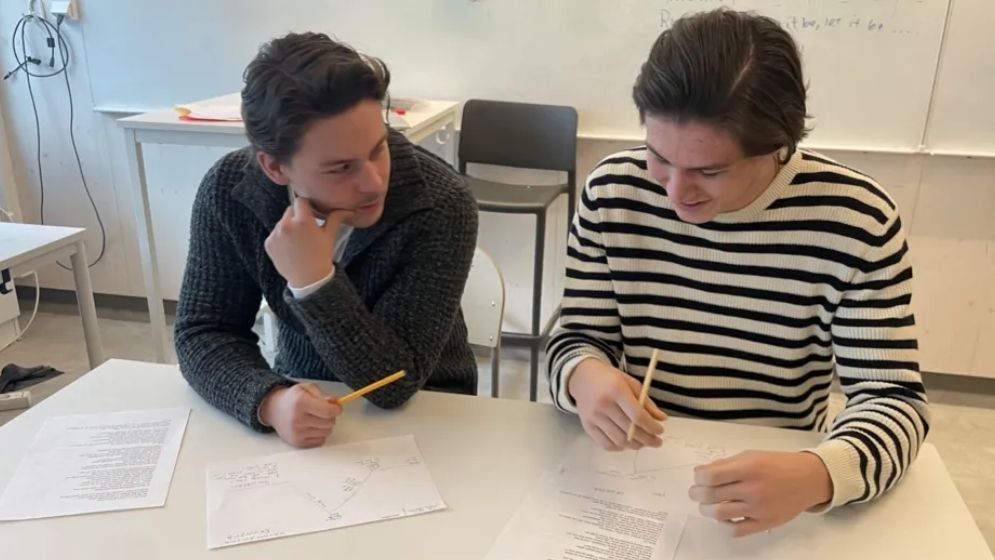
Photo: Collected
Sweden's government is championing a renewed focus on physical books, paper and pens in classrooms, designed to reverse falling literacy levels.
But doubling down on analogue tools has drawn
criticism from tech companies, educators and computer scientists, who argue it
could impact pupils' employment prospects, and even damage the Nordic nation's
economy.
At a high school in Nacka just outside
Stockholm, final-year students are unpacking laptops from rucksacks and tote
bags, alongside items they say they used less frequently a few years ago.
"I now go home from school with new
books and papers often," says Sophie, 18. She says one teacher "has
started printing all the texts that we use during the lesson", while a
digital learning platform in maths lessons has been swapped out for
textbook-only teaching.
It's an image that clashes with Sweden's
reputation as one of Europe's most tech savvy societies, thanks to high levels
of digital skills, and a thriving tech start-up scene.
Back to books: Sweden's digital backlash
Laptops became mainstream in Swedish
classrooms in the late 2000s and early 2010s. By 2015, around 80% of pupils at
municipal state-funded high schools had individual access to a digital device,
according to official data.
The compulsory use of tablets in pre-schools
was included in the curriculum in 2019, as part of the previous Social
Democrat-led government's mission to prepare even the youngest children for an
increasingly digital work and private life.
But the current right-wing coalition, which
came to power in 2022, is moving teaching in a different direction.
"We're trying, actually, to get rid of
screens as much as possible," says Joar Forsell, an education spokesperson
for the Liberal party whose leader is Sweden's education minister.
"With higher ages in school you might
use them a little bit more, but with lower ages, or in school, I don't think we
should use screens at all."
The government has frequently used the slogan
"från skärm till pärm", which sounds catchy in Swedish, and translates
to "from screen to binder".
It argues that screen-free lessons create
better conditions for children to concentrate and develop their writing and
reading skills.
Since 2025, pre-schools are no longer
required to use digital tools, and tablets aren't given to children under the
age of two.
Later this year a ban on mobiles in schools –
even for educational use – comes into force.
Schools have already been allocated more than
2.1 billion krona ($200m; £157m) in grants to invest in textbooks and teacher
guides. A new curriculum designed to enforce textbook-based learning is due in
2028.
"Reading real books and writing on real
paper, and counting with real numbers on real paper, is much better if you want
kids to get the knowledge they need," argues Forsell.
The shift in approach followed a consultation
in 2023 involving academic researchers, teaching organisations, public agencies
and municipalities.
"There's been an increased awareness of
the disruption that technology is causing in classrooms," says Dr Sissela
Nutley, a neuroscientist affiliated with the Karolinska Institute in Stockholm,
who is amongst those who have raised concerns about the use of digital tools.
The government hopes the shift back to more
traditional teaching methods will help improve Sweden's standing in the Pisa
rankings - the Organisation for Economic Co-operation and Development's
(OECD's) benchmark for core educational subjects. Once a star performer,
Sweden's scores plummeted in 2012, and after a brief recovery, saw another
significant dip in maths and reading in 2022.