
 For all latest news, follow the Daily Sun's Google News channel.


India seeks Beijing’s assurance against transit harassments
Reuters, New Delhi
Published: 08 Dec 2025, 09:11 PM
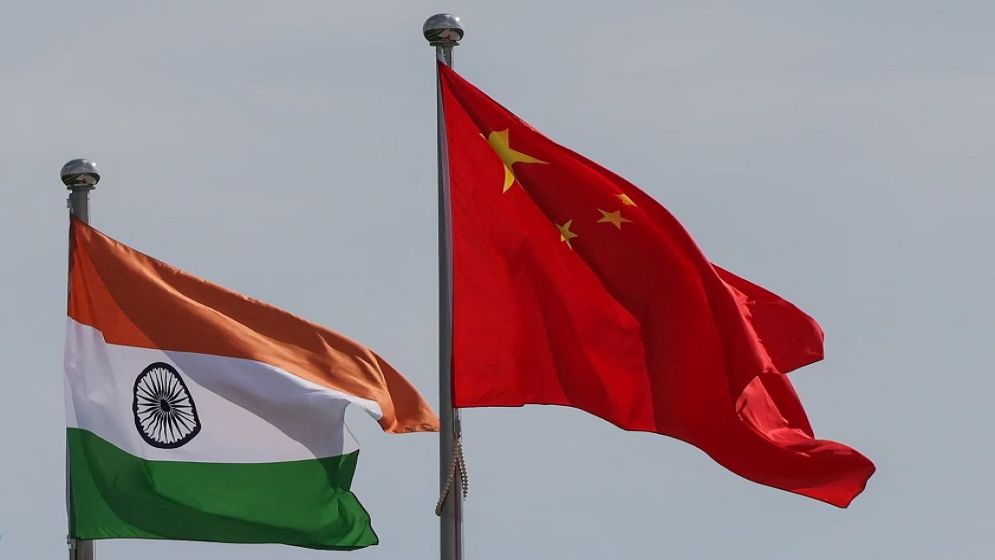
National flags of China and India fly next to the Meijiang Convention and Exhibition Center, a venue for 2025 Shanghai Cooperation Organisation (SCO) summit in Tianjin, China, 30 August 2025. Photo: REUTERS
India said on Monday it expects China to provide assurances
that Indian nationals transiting through Chinese airports will not be
"selectively targeted, arbitrarily detained, or harassed," after an
Indian citizen was detained at Shanghai airport last month.
New Delhi had lodged a strong protest with Beijing over what
it called the arbitrary detention of an Indian citizen at the airport, saying
such incidents undermine efforts to rebuild ties.
Indian media reported that Prema Wangjom Thongdok, a
UK-based woman with an Indian passport, was stopped during a layover on 21
November and told her passport was invalid because she was born in the eastern
state of Arunachal Pradesh.
She was prevented from boarding her onward flight to Japan
and held for 18 hours.
Beijing says Arunachal Pradesh, which it calls Zangnan, is a
part of southern Tibet, a claim India rejects.
"We expect the Chinese authorities to provide
assurances that Indian citizens transiting through Chinese airports will not be
selectively targeted, arbitrarily detained, or harassed, and that regulations
governing international air travel would be respected," Indian foreign
ministry spokesperson Randhir Jaiswal told reporters at a weekly media
briefing.
He also advised Indian nationals to "exercise due discretion"
when traveling to or through China.
The Chinese foreign ministry did not immediately respond to
a request for comment on Monday. Last month, Beijing said airport checks were
conducted in accordance with laws and regulations.
Cautious rapprochement
India and China have been cautiously improving ties after
years of tension, marked by high-level visits including Prime Minister Narendra
Modi's trip to China in August – the first in seven years – where he and
President Xi Jinping pledged partnership over rivalry.
Relations soured after a 2020 Himalayan clash that killed 20
Indian and four Chinese soldiers in hand-to-hand combat. The two countries
share a 3,800 km (2,400-mile) disputed border.