


 For all latest news, follow the Daily Sun's Google News channel.


UN peacekeepers are preparing to leave southern Lebanon
AP, Naqoura
Published: 28 Nov 2026, 12:00 AM
Among the few buildings still standing in the Lebanese border town of Naqoura are an abandoned hotel occupied by Israeli soldiers, its walls draped with anti-drone netting, and the compound housing the headquarters of the UN peacekeeping force.
The roads passing through the once-idyllic seaside town, now largely reduced to rubble, are empty except for the occasional military patrol or convoy of peacekeepers escorting civilians or supplies.
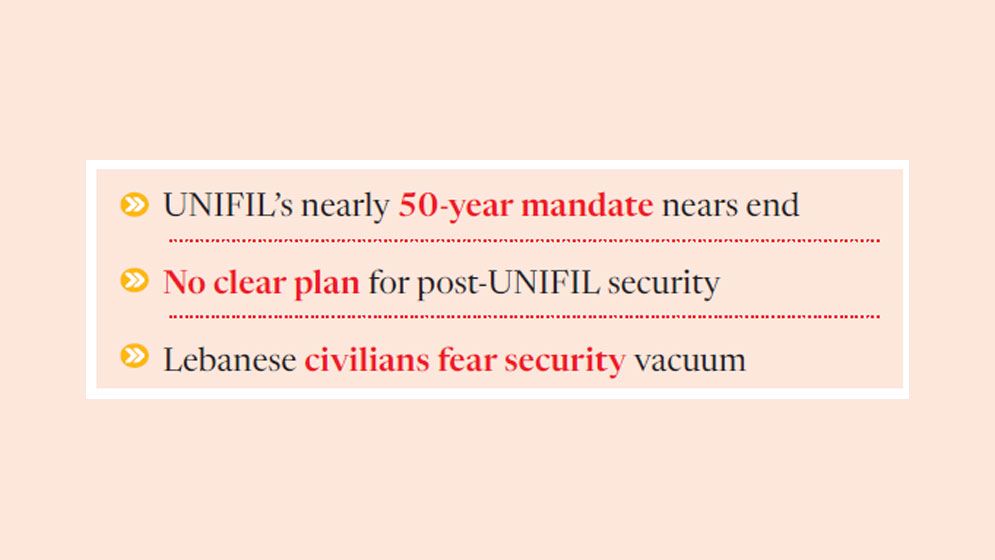
The end of the nearly 50-year mandate of the UNIFIL peacekeeping force is looming in just over a month, and still there is no plan for what comes after it.
The peacekeepers’ impending exit, in parallel with an ongoing occupation by Israeli forces and a debate over the disarmament of the Hezbollah militant group, leaves the future of southern Lebanon in limbo.
Lebanon wants the UN force to stay. But the UN Security Council voted last year to terminate UNIFIL’s mandate at the end of 2026, bowing to demands from the United States and its close ally Israel.
Israel says the mission was a failure, citing Hezbollah’s military buildup over the years. The peacekeepers say they helped preserve calm for 17 years before Hamas’ 2023 attack on southern Israel ignited a regional conflict.
“My mandate is not to disarm Hezbollah,” UNIFIL’s commander, Maj. Gen. Diodato Abagnara, told The Associated Press in an interview. “My mandate is to support the Lebanese Armed Forces, to create the best conditions for the Lebanese Armed Forces to take full control here in the south. It’s not to fight against Hezbollah.”
UNIFIL is set to begin a gradual drawdown of its 7,500 peacekeepers on Jan. 1. Whatever comes after that, he said, “It’s very important to avoid a security vacuum in the south.”
Lebanese civilians fear a future without UNIFIL
UNIFIL wasn’t able to stop Hezbollah from launching missiles or Israel from carrying out airstrikes in two recent wars. But many residents of southern Lebanon say they still feel safer with its presence.
Mohammed Aoun was late to start harvesting his olive groves this year in the village of Halta, just outside of the Israeli-occupied area. On the first day of harvest earlier this month, as a UNIFIL patrol stopped at the orchard, an Israeli drone was buzzing overhead. The thud of a distant airstrike echoed through the valley.
Aoun said he was hesitant to start picking, but he had already lost out on the previous two years’ harvests. He is apprehensive about the impending departure of UNIFIL forces.
“Of course we feel more secure when we see patrols coming and going; it’s a sort of protection,” he said. “Their presence is important with regards to the security situation. We don’t know what will happen after they leave.”
The question of Hezbollah’s weapons remains
In January, the Lebanese army announced that it had finished removing Hezbollah weapons caches from the border area south of the Litani River.
Hezbollah did not actively oppose the effort but has refused to give up its weapons elsewhere in the country and threatened to fight any attempt to forcibly disarm it.
The Lebanese army has been cautious about any move that might provoke a civil conflict. A Lebanese security official, who spoke on condition of anonymity to discuss sensitive matters, said the army’s current policy is to stop weapons shipments from moving around the country—a change from the past, when Hezbollah freely transported arms—but not to raid the militant group’s storage sites.
Hezbollah supporters in the past accused UNIFIL of spying for Israel and sometimes attacked peacekeepers. Now the group says it would accept UNIFIL or another UN-mandated force, but not a private security contractor or a force seen as supporting Israel’s occupation.