



 For all latest news, follow the Daily Sun's Google News channel.


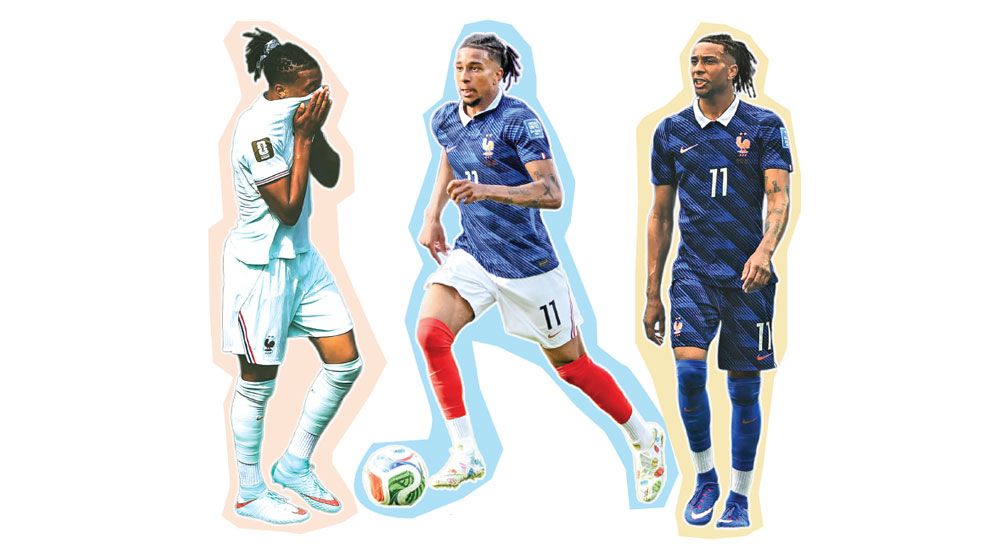
Michael Olise and the gambler in the song “Shape of the heart” by Sting are just the same man wearing different costumes.
Sting wrote the song about a gambler who deals not for money, not for respect, but to chase something ineffable hiding in the mathematics of chance. He doesn't play for the money he wins - the song goes - doesn't play for respect. He deals the cards to find the answer, the sacred geometry of chance.
One sits at a green felt table. The other glides across immaculate grass at the Allianz Arena, boot meeting ball with the casual menace of someone flicking away a cigarette.
When Didier Deschamps tried to describe his 24-year-old winger at a press conference in French earlier this month, he reached for the word “introverti”, then quickly corrected himself: "He is not introvert on the pitch. He has a lot of personalities." The contradiction is precisely the point.
To understand where this dissociation comes from, we must implore the improbable, a Japanese anime series, a boy raised in West London, and the burden of being exceptionally gifted before the world knew it.
Back to it, our dive into Olise’s psyche starts with Fubuki Shirou. Who is described in Inazuma Eleven as having a princely type of character, undeniably handsome, a great gentleman still internally fractured, haunted by the ghost of perfection.
Fubuki carries two personalities within him: his own gentle, timid self and the explosive, aggressive spirit of his deceased brother Atsuya, who comes alive every time Fubuki needs to strike.
As a child who grew up watching this show being an introvert in his formative years, being a Chelsea academy reject absorbed things from Fubuki.
Like Fubuki's Atsuya, the striker switches on. After a match-winning performance for Reading, he told a reporter: "I think I just shot, it went in, and that's it."
Fubuki's obsession with perfection, his drive to fill both roles, to be everything, to require no one, was rooted in the grief of losing his brother.
Olise's version of that same obsession is quieter, less tragic, more architectural. Despite wearing Nike boots, he has no personal sponsorship with any equipment manufacturers. He signs nothing with his personality.
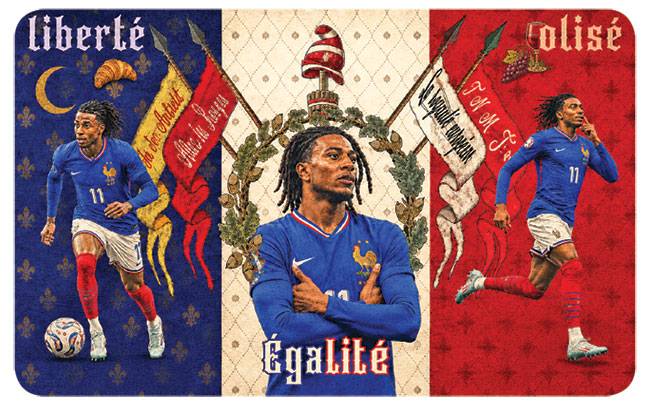
He endorses nothing with his name. He turns up, does the thing, and goes back inside. And says a big “damn you” to the big corporations at every step of the way that broke his heart in the academy days.
Part of that lies with him following the Parisian sports photographer Florence Pernet — renowned for her high-fashion approach to athletic imagery. She was unexpectedly denied official tournament accreditation by FIFA's media committee. Locked out, she did not go home.
She transformed her salon into a studio and began photographing directly through the screen of her television.
The result was revolutionary. Working in close collaboration with creative director Lukas Korschan, Olise began posting Pernet-style lo-fi television screenshots of himself ahead of his matches.
His pieces align his boots or kit in tone and texture, creating a polished, cohesive look that reinforces his personal brand through minimalism rather than branding. He rejected millions in endorsement deals to preserve the freedom to match his boots to his kit without a logo making the decision for him
The viral DM exchange is the piece of Olise lore that his defenders protest and his detractors quote. A girl messaged him during his Reading days — breathless with fandom, asking whether he truly played for a Championship club. He confirmed it. She told him that was too small for him. He did not disagree. He said he was moving to the Premier League in summer. He said he was onto bigger things. He called Reading a small Championship club. His PR team has disputed the screenshots. The screenshots endure in the internet's memory regardless. And here is what makes the story culturally perfect — whether it happened or not, it is utterly believable. Not because he is arrogant, but because he has always known precisely what the shape of his arc looks like.
Reading was too small. He knew. The girl knew. The hidden law of a probable outcome knew.
A boy released by Chelsea at 14 who rebuilt himself through Reading and Palace into the player Bayern paid a reported 58 millions of the queen’s finest for. A father who once played cricket for Nigeria. A mother who taught him chess and still beats him at cards. A player who, by his own account, simply refuses to say anything unless he means it — which is its own kind of honesty, rarer than eloquence.
He just cares about football. His focus is clearly in the right place.
He doesn't play for the money he wins. He doesn't play for respect. He deals the cards to find the answer — the geometry,