


 For all latest news, follow the Daily Sun's Google News channel.


The Next Frontier in Education
Priorities should be on education, not profit: UGC chairman
Published: 12 May 2025, 12:02 AM
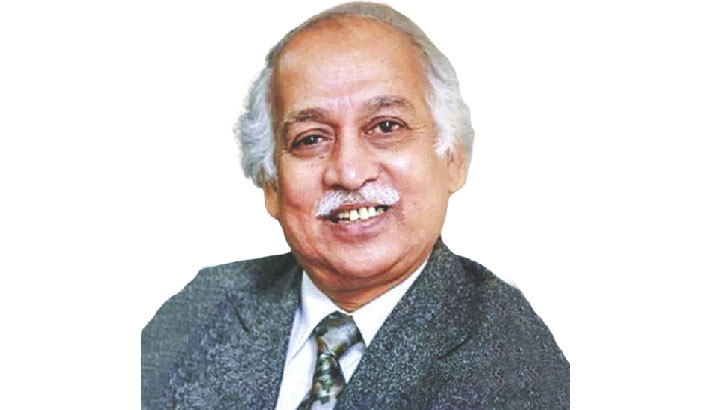
Private universities are increasing in number across the country. However, corresponding improvements in educational facilities are not being observed. There is a shortage of qualified teachers relative to the growing student population. Since the July 2024 mass uprising, private higher education institutions have been facing even greater challenges. Students are initiating protests over minor issues, resulting in disruptions to academic activities. In this context, Prof Dr SMA Faiz, chairman of the University Grants Commission (UGC), spoke with the Daily Sun about the overall state of education in private universities.
Daily Sun : How would you evaluate the current academic environment in private universities?
Prof SMA Faiz: There are more private universities in the country than public ones. Some of these institutions are performing quite well. However, almost all of them are charging students exorbitant fees. At the same time, we are deeply disappointed with several universities, which appear to have become business enterprises rather than educational institutions. They are not providing the level of care and attention students rightly deserve.
Our educational philosophy has always been that individuals who have been privileged by society should give back to it. In that spirit, they would act as patrons and establish private universities. Unfortunately, we’ve seen many using private universities instead as means to generate personal wealth, rather than contributing back to society. This is unacceptable. Even if it takes time, we are determined to put a stop to this. A university must be an academic institution, not a commercial one.
Today, students from remote and underprivileged backgrounds are seeking higher education. Yet, in the name of education, private universities are imposing burdensome tuition fees and development charges, which is a form of exploitation. These private entrepreneurs are not acting out of social responsibility. We have lost our moral compass. The UGC is working to restore that. We are raising awareness and will extend cooperation to those institutions acting responsibly. For those who are not, we will push them to meet higher standards. If they still fail to comply, we will have to take stricter measures.
Daily Sun : Since the July-August uprising, we’ve seen students launching protests over minor issues, leading to disruptions in academic activities. What is the way out of this situation?
SMA Faiz: We were amazed to see the tremendous role private university students played in the 5 August mass uprising. At one point, it seemed the movement might lose momentum, but students from private universities came forward to revive it, driven by their sense of national duty. This was the first time we saw such strong participation from private university students. We must not forget their contribution to the July uprising.
That said, I believe private university students had been in a sort of confinement until now — they lacked freedom. After the events of 5 August, they’ve felt a sense of relief and gained the freedom to express themselves. They now have a platform to voice their concerns regarding various issues in academia. We see this as a positive development, but it must be underpinned by sound reasoning. Students must also remember the boundaries of their role. The ultimate goal must always be the advancement of education. Students must ensure their actions do not hinder academic progress. This is a crucial time for us to move forward as a nation under a new system. The country, the nation, and their homeland are looking toward these young people with high expectations. We believe today’s students will shape the future of the nation. So now is the time to develop themselves into capable individuals. Our students are highly talented, and we believe they can succeed.
Daily Sun : The number of lecturers in private universities is decreasing. There is a lack of adequate teachers in proportion to the number of students. What steps will the UGC take in this regard?
SMA Faiz: Several measures can be taken to retain quality teachers in universities. One of the key ones is ensuring appropriate salaries and a proper working environment. In public universities, teachers’ pay and allowances are quite low. In contrast, most private universities are in a better financial position, which often attracts public university teachers to take up roles there. However, after a while, they often return to their original institutions. This results in a shortage of experienced teachers in private universities. So, there’s no alternative to improving salary structures and the overall teaching environment.
Another issue is that we are failing to retain bright minds who initially enter the teaching profession. Many of them are migrating abroad. Therefore, we need to provide an academic and research environment similar to that found in foreign institutions, to the best of our ability. This includes good medical facilities and retirement benefits. While we may not be able to fully match foreign standards, we must at least ensure a comparatively decent setup. Teachers now think globally, and they will go where the opportunities are better. However, I believe that if we can ensure the right environment and conditions, talented teachers will choose to stay in the country.
Daily Sun : Discussions have been ongoing for years about introducing PhD programmes in private universities, and the government has also shown a willingness. What is the latest progress?
SMA Faiz: A UGC committee is already working on the issue of launching PhD programmes in private universities. We have also had discussions with a committee representing private university founders, and we found many of their points to be reasonable. We are proceeding positively and with serious attention to the matter. The committee’s work is in its final stages. We hope to start PhD programmes in private universities very soon. We are quite optimistic about this.
Initially, some universities may have to collaborate with public universities to launch their PhD programmes. However, if private universities can develop the necessary facilities, they will be allowed to offer PhDs independently. Additionally, they will be permitted to run these programmes in collaboration with foreign universities.
Daily Sun : The Private University Association has long been demanding the withdrawal of all VAT and taxes imposed on private institutions. What is the UGC’s position?
SMA Faiz: The UGC regularly consults with the Private University Association to resolve various issues. They also cooperate with us. If VAT and taxes increase the financial burden on students, we do not support it. The reality is that the impact of VAT and taxes on private universities ultimately falls on the students. However, if we see that reducing taxes results in lower tuition fees or better facilities for students, we will recommend that the government consider tax reductions. We are working with that aim in mind.
Daily Sun : Private universities are doing well in rankings. In fact, sometimes they even outperform public institutions. However, none seem to be able to sustain their ranking. How do you evaluate this?
SMA Faiz: We view the rise of universities in rankings very positively. At the same time, we notice that no single university can maintain its position consistently—there are constant shifts. Still, we are hopeful, as the capacity for improvement is there. Institutions are taking this seriously and working to raise their standards. Moreover, bright students are increasingly opting for private universities. Despite higher tuition compared to public institutions, guardians are showing greater interest in quality education and a good environment. As a result, they are enrolling their children in these universities. We take this trend seriously and see it as a positive development.
Daily Sun : Most universities have yet to move to permanent campuses. Although the UGC has been monitoring this, progress has been slow. Is there any new initiative to ensure all universities move to permanent campuses?
SMA Faiz: We are constantly monitoring to ensure universities move to permanent campuses. We’re also providing necessary support and guidance. Still, many universities are failing to complete the process. In this situation, we are trying to take a more nuanced view of the law rather than applying it rigidly.
For instance, if a university hasn’t moved to a permanent campus within 12 years, but there is visible progress and active effort, we will allow them more time. But if we see that a university has made no effort and is only pursuing commercial interests, then we will take strict action. However, we will always prioritise the future of students. We will ensure that no decision of ours negatively affects their academic path.