



 For all latest news, follow the Daily Sun's Google News channel.


Uthman (RA)’s strategies for business success
Muhammad Nahidul Islam
Published: 29 Nov 2026, 08:45 AM
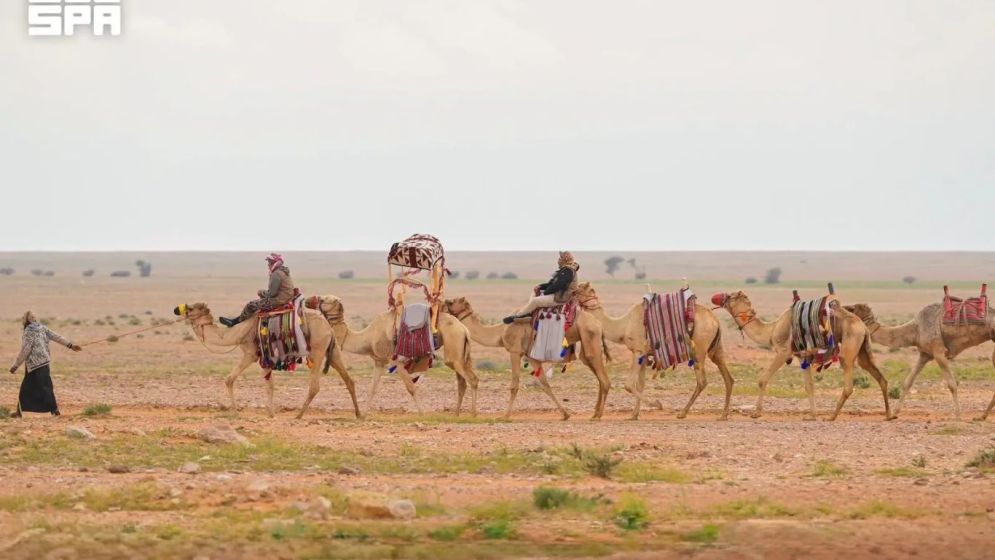
Photo: Collected
We know Uthman ibn Affan (RA) as the third caliph of Islam. But before assuming the caliphate, he was one of the successful businessmen of Makkah.
An analysis of his business life highlights important principles such as honesty, reputation, risk management, market demand, the social use of wealth and ethical economics. Examining his life through the lens of modern economics makes the significance of these principles even clearer.
Reputation as capital
Money and products are not the only assets in business. A businessperson’s honesty, credibility and social acceptance are also valuable assets. Modern sociologist Pierre Bourdieu showed through his concepts of social and symbolic capital that social relationships and prestige can become effective resources for individuals.
Uthman (RA)’s business life can be examined in light of these concepts. When customers trust a businessperson, transactions become less burdened by suspicion, uncertainty and the need for additional verification. This creates opportunities for lasting business relationships.
According to economist Oliver Williamson’s Transaction Cost Economics, the costs of gathering information, verification, negotiation and contract enforcement are part of transaction costs.
A businessperson’s reputation can help reduce these costs.
Honesty, therefore, is not merely a matter of personal morality; it is also an important factor in business efficiency.
The foundation of Islamic ethics
Allah says, “O you who believe, do not consume one another’s wealth unjustly, but only through trade by mutual consent.” (Surah An-Nisa, verse 29)
These principles have important similarities with modern business ethics, particularly the concepts of honesty, transparency and accountability. Business success, therefore, should be assessed not only by the amount of profit earned but also by the methods used to earn it.
Risk management and diversified trade
Diversifying investments rather than concentrating all capital in one place helps offset losses in one sector with gains in another. This principle was reflected in the trading practices of the Quraysh. The Quran refers to their seasonal journeys:
“Because of the accustomed security of the Quraysh, their accustomed security in the winter and summer journeys.” (Surah Quraysh, verses 1-2)
They travelled to Yemen in winter and to the Levant in summer, conducting trade in two different markets and reducing their dependence on a single market or route. The core idea behind Harry Markowitz’s modern theory of portfolio diversification is similar.
Uthman ibn Affan (RA) was one of the successful and far-sighted traders of the Quraysh. His trade extended to markets in various regions, including the Levant. This diversification helped protect his wealth. Evidence of this can be seen during a famine in Madinah. When his large trading caravan arrived from the Levant, merchants offered to buy the goods at high prices. However, he distributed the entire stock among the poor for the sake of Allah. The incident demonstrates that his business was well-organised and capable of weathering crises, while he also viewed wealth as a means of serving humanity.
Mudarabah and ethical partnership
Under a mudarabah contract, one party provides capital while another contributes labour and expertise. Profits are shared according to a pre-agreed ratio. In the event of a loss, the investor loses the capital, while the manager loses the effort and time invested, provided the manager is not guilty of negligence or misconduct. If negligence or breach of trust occurs, the manager may be liable for the loss.
The arrangement is based on trust and mutual consent. A Hadith Qudsi states, “Allah says, I am the third of two partners as long as one of them does not betray the other.” (Sunan Abu Dawud)
The Quran also makes the principle clear: “But trade by mutual consent is permissible.” (Surah An-Nisa, verse 29)
Understanding demand but knowing the limits of profit
When demand for a product rises while supply remains unchanged, its price generally increases. Conversely, an increase in supply may put downward pressure on prices. This interaction between demand and supply plays an important role in determining market prices.
Prices also serve as signals for businesspeople. When a product is scarce in one region, traders can earn profits by sourcing it from another region and supplying the market. In economics, buying and selling goods by taking advantage of price differences across markets is known as arbitrage.
The food-laden caravan during famine
According to a traditional account, a food-laden trading caravan belonging to Uthman (RA) arrived in Madinah during a food crisis. Merchants were eager to buy the food and offered him higher prices. However, the account says he decided not to sell the goods and instead distributed them among people in need.
The incident is widely cited in Muslim tradition as an example of his generosity and trust in Allah.
From an economic perspective, the incident illustrates that high demand and rising prices do not necessarily mean maximising profit must be the sole objective. A businessperson’s personal ethics, social responsibility and the urgent needs of people can also influence business decisions.
This analysis, however, does not establish that Uthman (RA) always conducted business by systematically analysing market demand.
Market freedom and social responsibility
A narration in Hadith describes how the Companions approached the Prophet Muhammad (PBUH) during a period of rising prices and asked him to fix market prices. He emphasised the importance of fair pricing without compromising people's wealth and rights.
Islamic tradition also condemns artificially creating shortages by withholding essential goods. This reflects an ethical position that recognises the importance of normal market operations while opposing unjust profiteering at the expense of people in distress.
Fair trade
Allah says, “Woe to those who give less in measure, who take full measure when they receive from people, but give less when they measure or weigh for them.” (Surah Al-Mutaffifin, verses 1-3)
This verse is a clear warning against fraud in business, short-changing customers and depriving others of their rights. In Islam, fair trade goes beyond accurate measurement and weighing. It also encompasses honesty, justice, avoiding greed and showing compassion for people's needs.
Uthman (RA)’s life offers a remarkable practical example of this Quranic principle. During a famine in Madinah, he brought a large shipment of food grains from Syria. Local merchants approached him and offered 12 in return for 10, subsequently raising their offer to 15 for every 10. But Uthman (RA) said he had already received a better offer—10 in return for every 1 from Allah. Rejecting the merchants' lucrative offers, he donated the entire shipment of food grains to poor and needy Muslims.
He sought to break market monopolies
When a few companies or individuals dominate a market and charge excessively high prices, consumers often have little choice but to pay because of a lack of alternatives. At such a point, a new entrepreneur or competitor entering the market with lower prices or consumer-friendly offers can quickly change the market landscape.
This can weaken the dominance of established players while building strong consumer trust in the new entrant, which may eventually fuel substantial business growth. A similar strategic approach can be seen in Uthman (RA)’s purchase of the Ruma well in Madinah.
To break the monopoly over the city's only source of fresh water, he did not resort to confrontation or conflict but used a market-based strategy. He purchased partial ownership of the well and arranged for people to access water free of charge on his designated days. This made the owner's high-priced water business less viable, eventually prompting him to relinquish the entire well.
In modern business terms, this can be described as breaking a market monopoly, building brand value and achieving long-term growth through customer trust.
Overall, Uthman (RA)’s business life offers an important insight into the relationship between commerce, ethics and social responsibility in early Islamic society. His reputation and honesty demonstrate how ethical conduct can serve as the foundation of business trust.