


 For all latest news, follow the Daily Sun's Google News channel.


A mosque is not merely a restricted space for ritualistic prayers; it is the vibrant epicentre of Muslim community life. Following his blessed migration to Madinah, the Prophet Muhammad (PBUH) established Masjid an-Nabawi, which functioned not only as a prayer hall, but also as Islam’s very first university, a supreme court for social justice, a seat of governance and a sanctuary for humanitarian aid. The true essence of a mosque lies in fostering social welfare, dispensing justice, spreading knowledge, and nurturing a healthy, interconnected society. Below are several key social welfare and community service roles a mosque can fulfil:
Centre for social welfare
During the era of our beloved Prophet (PBUH), the mosque served as a hub for social welfare alongside its role as a place of worship. Whenever substantial tax revenues or wealth arrived, Allah’s Messenger (PBUH) would instruct that it be placed in the courtyard or on the floor of Masjid an-Nabawi. After concluding the prayer, the Prophet (PBUH) would sit and personally distribute the wealth to every needy person and seeker of aid until not a single coin remained.
Anas ibn Malik (RA) narrated: “Some goods came to Allah’s Messenger (PBUH) from Bahrain – it was the largest amount of goods Allah’s Messenger (PBUH) had ever received. The Prophet (PBUH) ordered the people to spread them in the mosque. He left for prayer and did not even look at them. After finishing the prayer, he sat by those goods and gave from them to everybody he saw… Allah’s Messenger (PBUH) did not get up until the last coin was distributed.” (Sahih al-Bukhari: 421).
The lesson from this hadith is that every mosque should establish a structured social welfare system for the poor, widows and helpless within its locality. A dedicated Zakat fund should be formed to support vulnerable and destitute individuals. Furthermore, mosques should organise initiatives to distribute winter clothing and stand beside communities during floods and natural disasters.

Centre for community healthcare
During the Prophet’s (PBUH) era, the mosque’s role extended to community healthcare and medical aid. During times of battle, the Prophet (PBUH) ordered the setup of a specialised medical tent directly inside the courtyard of Masjid an-Nabawi. This pioneering mobile field hospital was placed under the expert supervision of a skilled female companion, Rufaydah al-Aslamiyah (RA). There, wounded soldiers received emergency treatment, surgeries and dedicated post-injury care under the direct oversight of the Prophet (PBUH).
Aishah (RA), the mother of the believers, said, “Sa'd was wounded on the day of Al-Khandaq [the Battle of the Trench, which took place in the fifth year after Hijrah] when a man of Quraysh shot him in the medial arm vein. The Messenger of Allah (PBUH) pitched a tent (khaimah) for him in the Masjid so that he could visit him close at hand.” (Sunan an-Nasa'i: 710).
Modern mosques can similarly play a vital role in providing accessible healthcare to underprivileged locals. By engaging volunteer Muslim doctors from the community, mosques can organise free weekly medical camps. Trained mosque staff, such as the mu’azzin or khadim, alongside local young volunteers, can also offer daily routine check-ups (such as measuring blood pressure, blood sugar, temperature and oxygen levels) after obligatory congregational prayers. Furthermore, mosques can establish a "Medicine Bank" funded by Zakat, Sadaqah, affluent locals and pharmaceutical representatives to distribute essential medicines free of charge to needy patients with prescriptions. Finally, Imams can utilise the pulpit during Friday khutbahs to raise vital awareness regarding disease prevention, hygiene, vaccination and maternal nutrition – messages people naturally take to heart when shared from a religious perspective.
Centre for social justice and arbitration
A mosque also plays a crucial role in building brotherhood and resolving conflicts within a community. According to numerous hadiths, mosques during the era of our beloved Prophet (PBUH) served as venues for delivering justice and resolving family disputes alongside daily prayers. The Messenger of Allah (PBUH) frequently mediated disputes and offered counsel inside the Prophet’s Mosque. For instance, it is narrated that the Prophet (PBUH) settled a loud debt dispute between Ka'b ibn Malik and Ibn Abi Hadrad by gesturing to Ka'b to forgive half the debt and instructing the other to pay the remainder (Sahih al-Bukhari: 457). In another narration, when Jamila, the wife of Thabit ibn Qays, came to the mosque seeking a divorce (khula), the Prophet (PBUH) finalised their separation in exchange for her returning the garden she had received as her dowry (Sahih al-Bukhari: 5273).
Following this prophetic tradition, mosques in our society should establish structured systems for dispute resolution and community counselling. To achieve this, each mosque can form an “Arbitration and Counselling Committee” comprising the local Imam, Khatib, and respected, educated and neutral elders of the neighbourhood. On a designated day of the week or after daily prayers, this committee can meet with conflicting parties to peacefully mediate family feuds, marital misunderstandings or minor neighbourhood disputes in light of Islamic principles and mutual fairness.
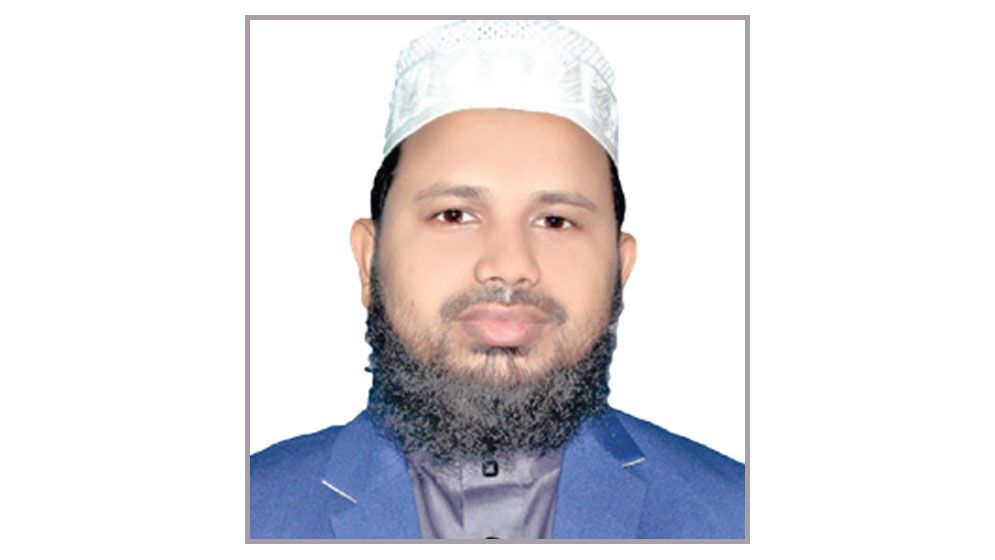
The writer is an M.Phil researcher, Kahtib of Baitus Shafiq Mosque and principal of Baitul Hikmah Academy, Gazipur
Read More